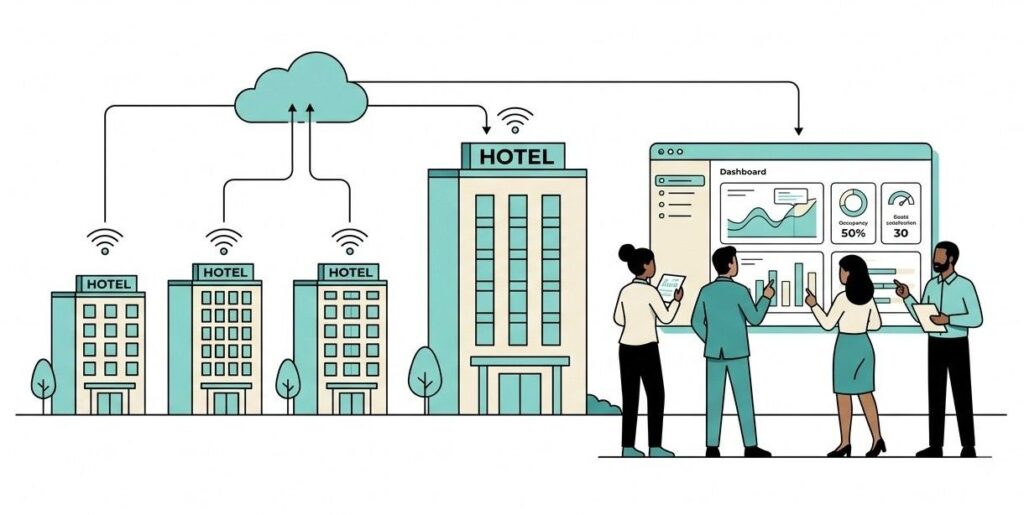
A single property can pick a software tool in a week. A hotel chain cannot. Once a group decides Geedesk might work for them, the conversation moves from the operations team to IT, legal, and procurement. The demo went well. The GM is convinced. Now someone in a head office wants answers in writing about data hosting, backups, uptime, access control, and GDPR.
This post answers those questions the way we answer them in real procurement reviews. No gloss. Where something on our side is still in progress, we say so, because that is exactly what your security team needs to know before a rollout across ten properties.
These questions are not obstacles. Guest complaints and requests carry names, room numbers, preferences, and sometimes health or accessibility details. Any platform that touches this data at scale should expect scrutiny, and a vendor who gets defensive about it is telling you something useful.
Where your data lives
Geedesk hosts and processes data, including personal information, in the United States and the European Economic Area. In some cases, third parties that help us run the service process data in other countries. Our privacy policy states this openly, and your legal team can read it before anyone signs anything.
Why does this matter for a chain? Because your properties may operate under different rules. A group with hotels in Dubai, Chennai, and London answers to more than one regulator, and each of them may ask where guest related data sits. The practical question for your compliance file is not “where is the server” but “can we document the data flow.” With Geedesk, you can. Ask us for the hosting details that apply to your setup and we will document them for your file.
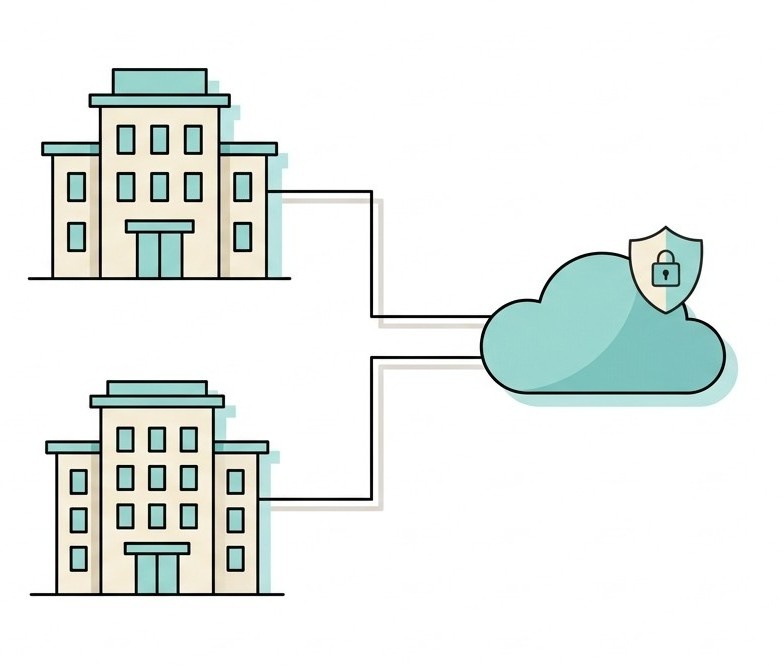
One more point your data protection officer will care about. You retain ownership of your data. If you ask us to correct, amend, or delete data, we respond as soon as possible. That commitment sits in our privacy policy, not in a side email from a sales rep.
What happens to your data if something breaks
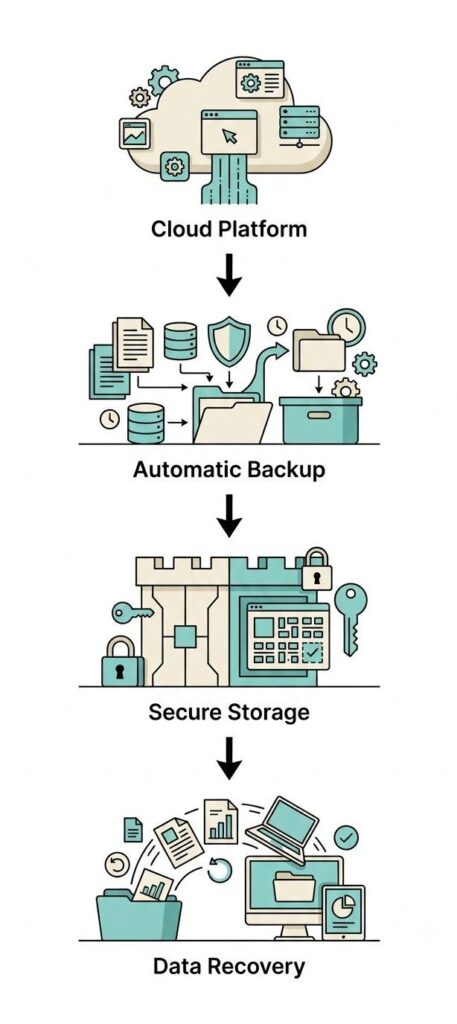
Backup and recovery questions usually come from IT, and they deserve a straight answer rather than a reassuring paragraph.
Geedesk runs fully on the cloud. There is no server sitting in a back office at your property that can fail during a power cut, get soaked during a monsoon, or disappear during a renovation. Your teams reach the platform through a browser, and the Geedesk mobile app syncs automatically with the web app. The tickets your night manager sees at 2 am match what the GM sees the next morning.
For the specifics your IT team will ask about, such as backup frequency, retention periods, and recovery timelines, raise them during your security review.
We would rather walk your team through the actual setup on a call than publish a vague promise in a blog post. Bring your own recovery requirements to that conversation. If your group needs defined recovery commitments in the contract, negotiate them before signing, not after an incident.
There is also a quieter question hiding inside this one, and smart procurement teams ask it out loud. What happens to our data if we leave? Since you own your data, the exit path stays open. A vendor relationship where your ticket history is held hostage is not a partnership, and we have no interest in running one that way.
Uptime during your busiest weekend
An outage on a quiet Tuesday afternoon is annoying. An outage during a sold out wedding weekend shows up in your reviews. Enterprise buyers are right to push hard on this question.
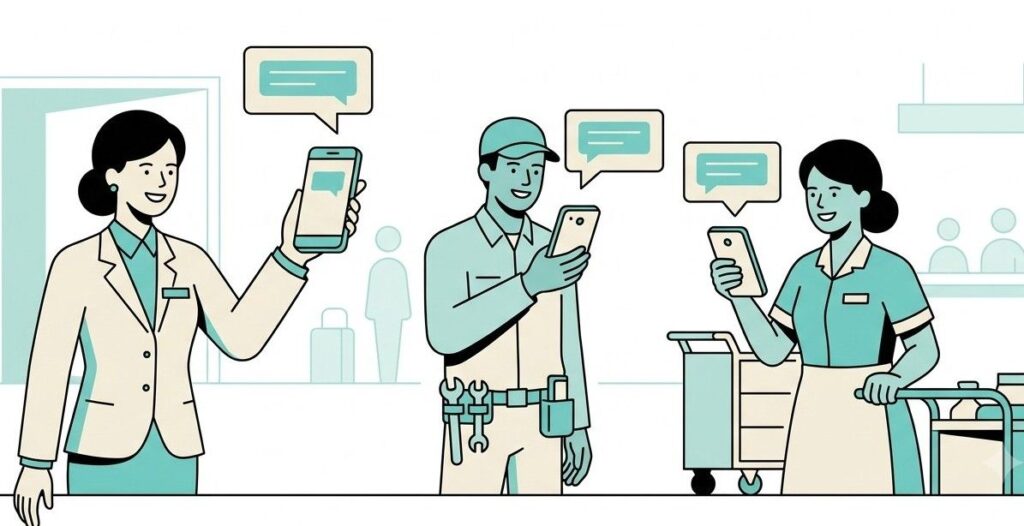
The answer has a product half and a contract half. On the product side, Geedesk sends escalation alerts over SMS, WhatsApp, and the Geedesk mobile app. Staff without smartphones still get job orders by SMS, so a connectivity issue on one channel does not silence the whole workflow. Work keeps moving even when conditions on the ground are not perfect.
On the contract side, we do not print an uptime number in this post, because a percentage without context tells you very little. A vendor can quote a yearly average that hides an outage during your single busiest week. Instead, do what experienced procurement teams do. Ask us for uptime history during your evaluation, and make service commitments part of your agreement. Any vendor who resists putting uptime terms on paper has already answered your question.
For a chain, there is one more angle. When ten properties run on the same platform, reliability stops being a property level concern and becomes a group level one. That is a reason to test the platform under real load at one property before scaling, which is exactly how we suggest you evaluate Geedesk. More on that below.
Who can see what inside Geedesk
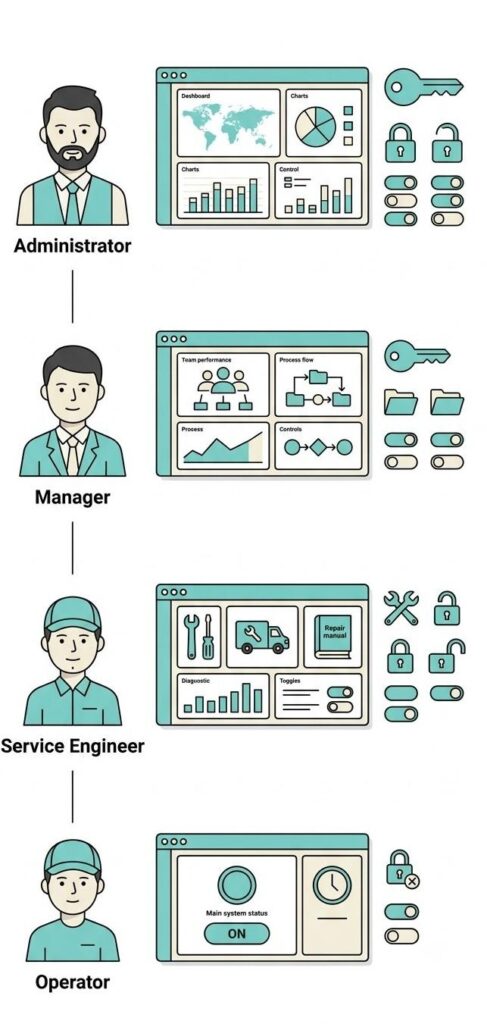
Access control inside a hotel matters more than most software buyers expect. A front office trainee should not be able to change escalation rules. A department head should see escalations without holding admin rights.
Geedesk handles this through defined user roles. An Admin role, usually held by the systems team, controls configuration. A Manager role goes to supervisors and department heads, including the people who receive escalation messages when a ticket crosses its time limit. A Service Engineer role goes to the staff who receive and resolve job orders.
An Operator role can create tickets and view tickets across departments, which fits a front office or telephone operator who logs guest requests all day.
Every user maps to a department, so job orders route to the right team automatically. For a chain, the practical part is rollout. You can bulk import users through a CSV file, which means onboarding 300 staff members across properties does not mean 300 manual entries. Leadership gets visibility through the GM dashboard and Manager dashboard without anyone handing out admin access to keep people informed.
GDPR compliance for international hotel groups
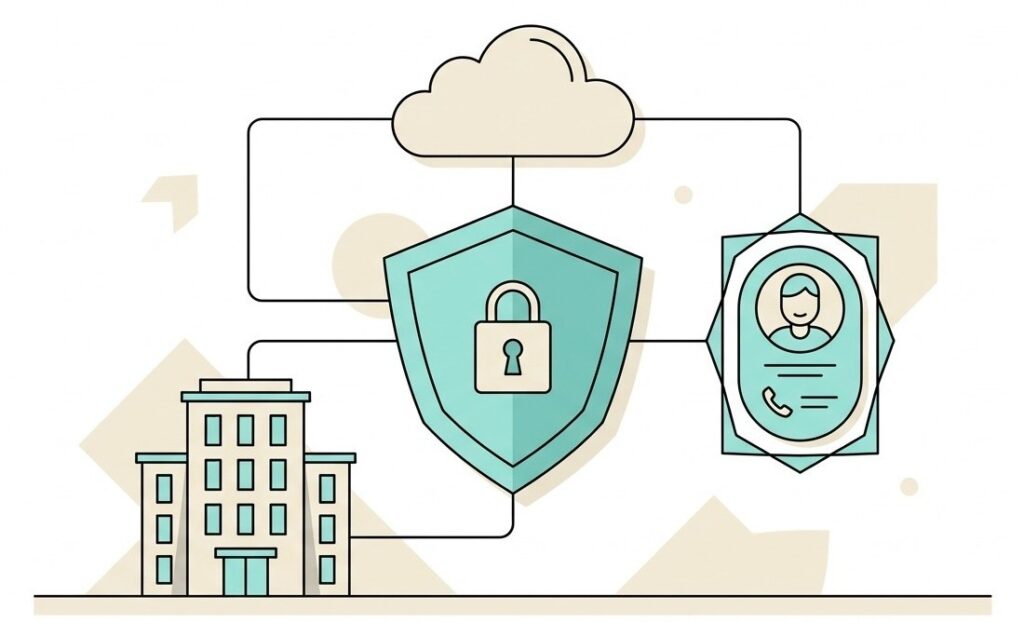
Yes, Geedesk is GDPR compliant. We have implemented the processes needed to meet both our Data Controller and Data Processor obligations under the regulation.
Here is the part most vendors skip, and it is worth thirty seconds of your time. GDPR has no accredited certification method. There is no official certificate any vendor can hand you, no matter what their sales deck implies. When a vendor says “GDPR certified,” treat it as a yellow flag, because the regulation itself offers no such thing.
What a serious vendor can show you instead is how they meet their obligations. On our side, that includes data protection controls such as encryption of data in transit, security practices that follow industry standards, and regular testing of the product to find and fix vulnerabilities before they become problems. We also give you a direct channel for GDPR questions, so your data protection officer talks to the people responsible for compliance rather than a support queue.
For a group running properties in or serving guests from the EU, this is the review your legal team should run on every tool in your stack. We are comfortable being held to it.
Where Geedesk stands on SOC 2
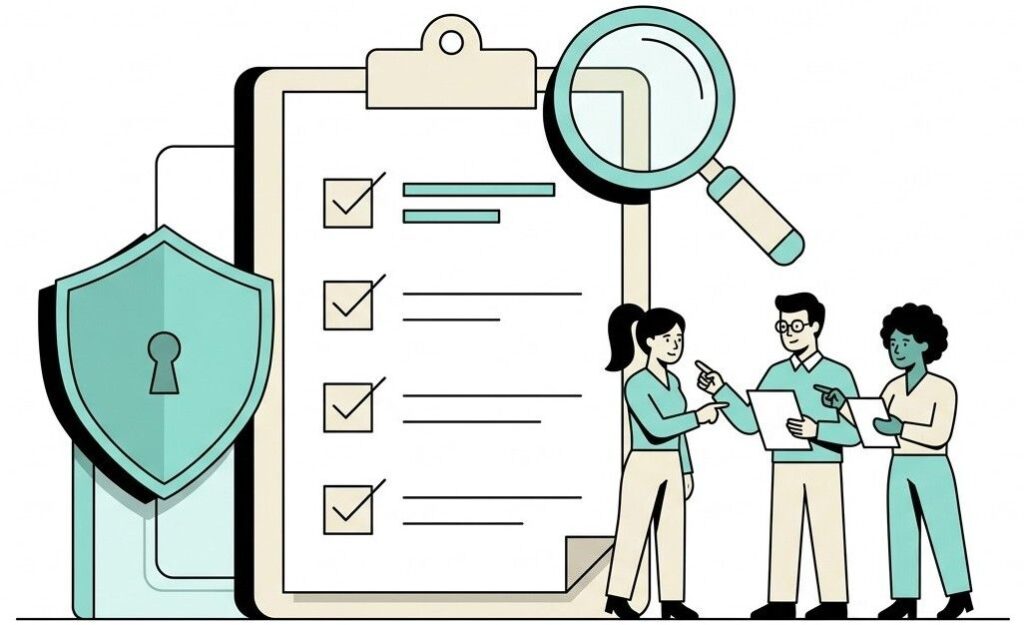
Enterprise procurement checklists increasingly ask for a SOC 2 Type 2 report. Here is our honest answer: our SOC 2 Type 2 process is in progress. We will not claim a report we do not yet hold, and you should be suspicious of any vendor who blurs that line, because a company willing to stretch the truth on an audit will stretch it elsewhere.
If your checklist requires the report, ask us about current status and timing during your evaluation. If your checklist requires strong security practices, the sections above give you concrete material to assess right now, and your security team can probe each claim on a call with us.
How to evaluate Geedesk at enterprise scale
You do not have to take any of this on faith. Geedesk offers a paid trial with full access to every feature our customers use, and our technical consultants handle setup and staff training so the trial reflects real operations rather than a half configured sandbox. Your team works with the same escalation rules, dashboards, and alerts that a live property runs on every day.
The approach that works best for chains is simple. Pick one property. Run Geedesk there with real guest requests for a full cycle, including at least one high occupancy stretch. Let your IT team watch how it behaves, let your department heads live with the escalation flow, and let your front office judge whether logging a ticket is faster than the WhatsApp group it replaces. Then bring your findings, and your security checklist, to the scaling conversation.
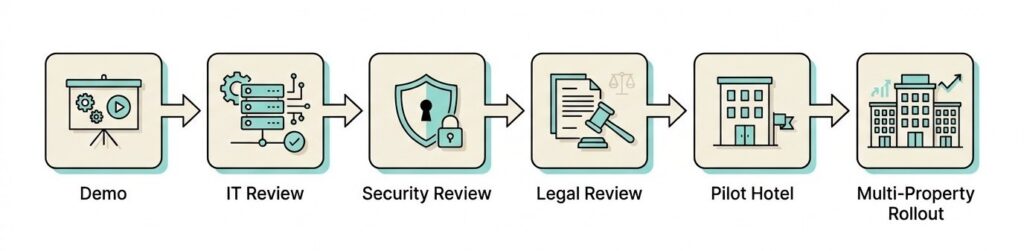
Book a Geedesk demo, bring your IT lead and someone from legal to the same call, and put us on the spot with every question in this post plus the harder ones we have not thought of.