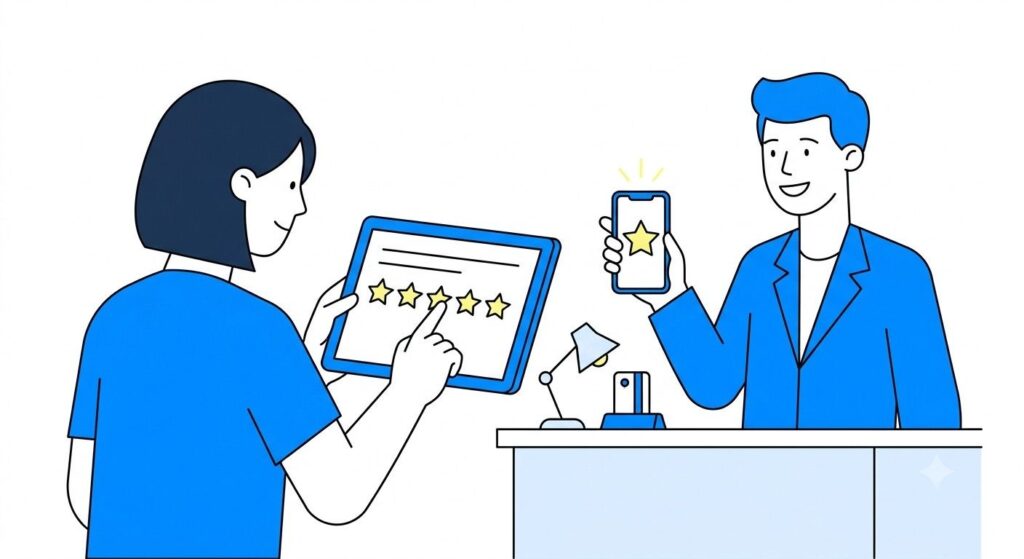
A complaint you hear about at checkout is a problem. A complaint you read on TripAdvisor a week later is a verdict. By then the guest has left and the review is public. Nothing your team does can change how that stay ended.
The gap between those two moments is where hotels lose reviews they could have saved. Geedesk closes that gap in two places: when the guest first gives feedback, and again after a complaint has been resolved. This article walks through both. It starts when a guest taps a rating on a tablet. It ends with the follow-up call before they hand back the key card.
The feedback form that arrives too late
Most feedback reaches hotels after it can do any good. A paper form filled in at checkout gets read that evening, if at all. Meanwhile, an email survey lands three days after the guest is home. Either way, the bad breakfast from day two is long past fixing.
The feedback itself is usually honest. However, the timing kills it.
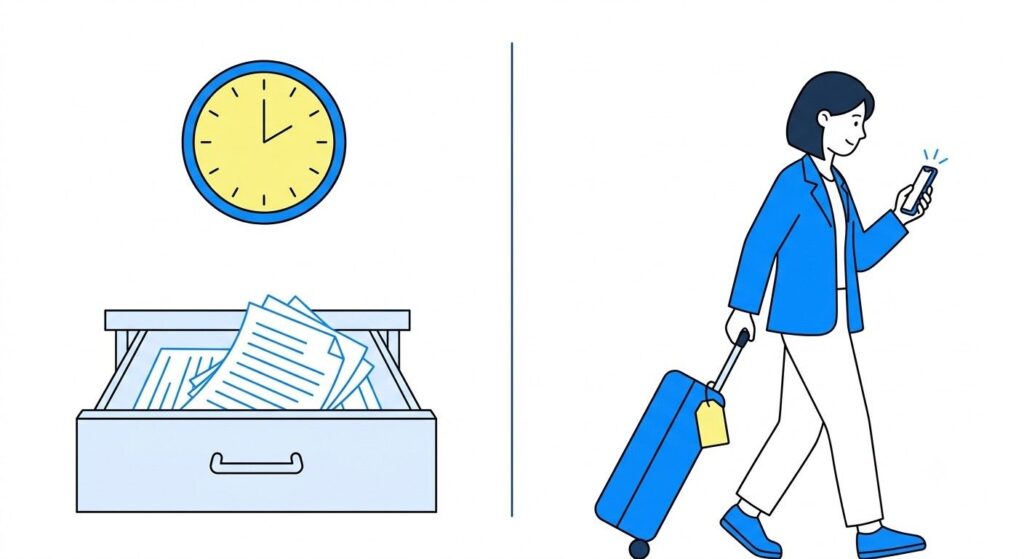
Guests are not patient about this either. Research from BCV Social, cited by Geedesk, found that 79% of guests expect a response to complaints within 24 hours. A paper form that gets typed up on Thursday cannot meet that expectation. Neither can a survey email that arrives once the guest has unpacked at home. By then, their opinion of the stay is final.
So the real question for a hotel is not whether to collect feedback. It is whether the feedback arrives while the guest is still someone you can help.
Collecting feedback while the guest is still in the building
Geedesk Feedback (Guest) replaces the paper form with a digital one. First, your team configures a custom feedback form with the questions that matter to your property. Then guests fill it in on a tablet at the front desk, the restaurant, or anywhere else you place one. The app is built for tablets but also works on a smartphone. So a duty manager can offer it in the lobby if that is the natural moment to ask.
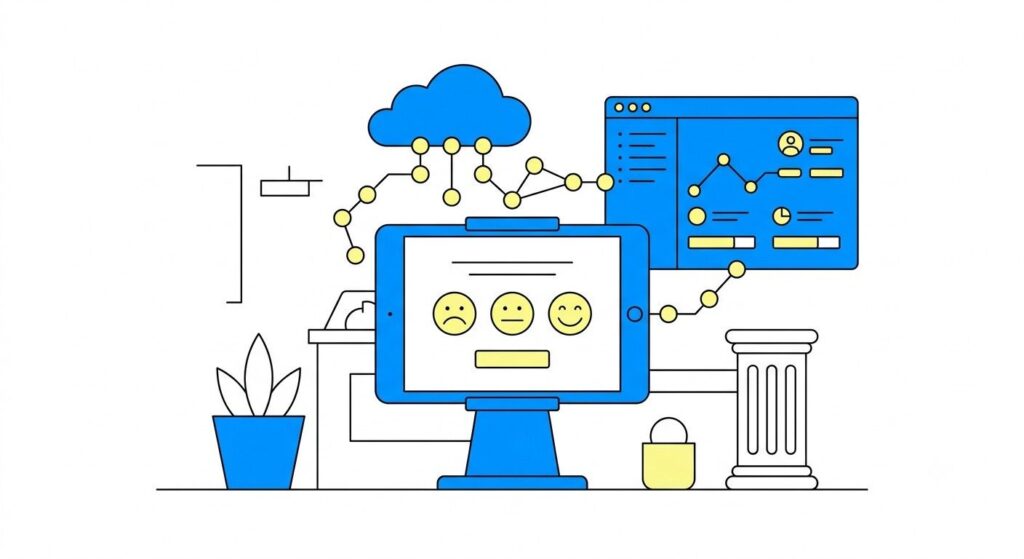
Every submission lands on your dashboard the moment the guest taps submit. As a result, no stack of forms waits for someone to type them up after a shift. There is no gap between what the guest said and what your team can see. Instead of surfacing in a batch after the guests have gone, feedback arrives over the course of the day.
Because the app runs entirely on the cloud, there are no additional hardware or software licences to buy. A tablet and a login are enough to take the whole process paperless. For a hotel that has been filing paper forms in a drawer, that is the entire migration.
A negative rating triggers an alert, not a filing
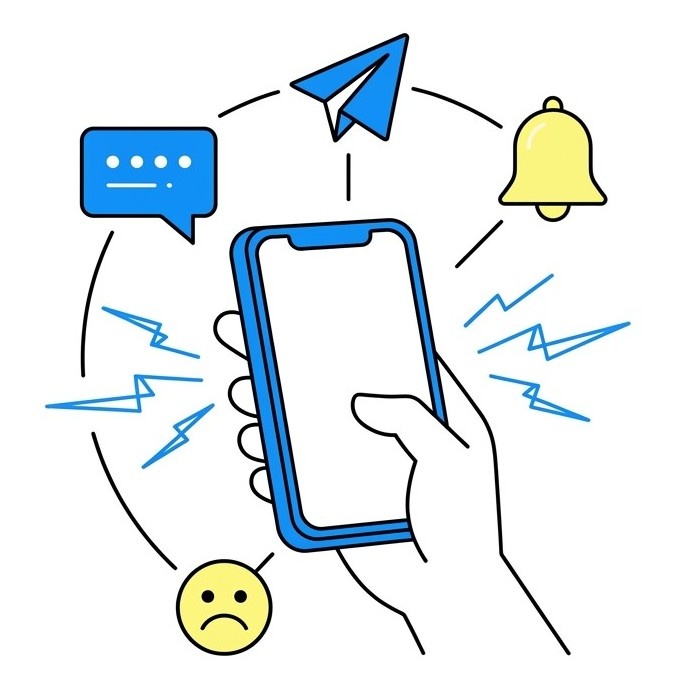
The moment a guest leaves negative feedback, a manager receives an alert. It arrives as an SMS, a Telegram message, or a mobile notification.
That alert is the interception point. The guest has not checked out. The review has not been written. For example, say a guest rates their room cleanliness poorly on the lobby tablet at 9 am. The duty manager knows before the guest is back on their floor. Housekeeping can then be in that room within the hour. That is service recovery on your terms, not damage control on a review site.
Without the alert, the same feedback sits on a dashboard until someone thinks to check it. Dashboards reward the person who looks at them, and on a busy morning nobody looks. With the alert, however, negative feedback behaves like what it actually is: an operational event that needs a response now. It sits in the same category as a maintenance call or a VIP arrival.
From the manager’s alert to an assigned ticket
An alert only matters if something happens next. This is where the rest of Geedesk takes over. The manager who receives a negative-feedback alert raises the issue as a ticket in Geedesk. That is the same complaint and request management platform the hotel already runs its day on. In other words, the recovery does not happen in a separate tool or a WhatsApp group. It happens inside the system that already knows who is on shift.
From there, the machinery your staff already use daily kicks in. Geedesk’s Auto Assign module routes the ticket to the right staff member, in the right department, on the current shift. So nobody has to work out whose problem a 9 am housekeeping complaint is. The module also learns which staff members resolve which types of complaints best. It then adapts as shifts change and workloads move around.
The assigned staff member gets an SMS or WhatsApp alert on their phone the moment the ticket lands. Because the alert can arrive as a plain SMS, it works on a basic shift phone too. As a result, the person who needs to act finds out immediately, not at the next briefing.
Escalation policies sit behind all of this. If a ticket stays unresolved past its time limit, Geedesk automatically notifies the next manager up. So a complaint that started as a tap on a tablet cannot quietly stall in someone’s queue.
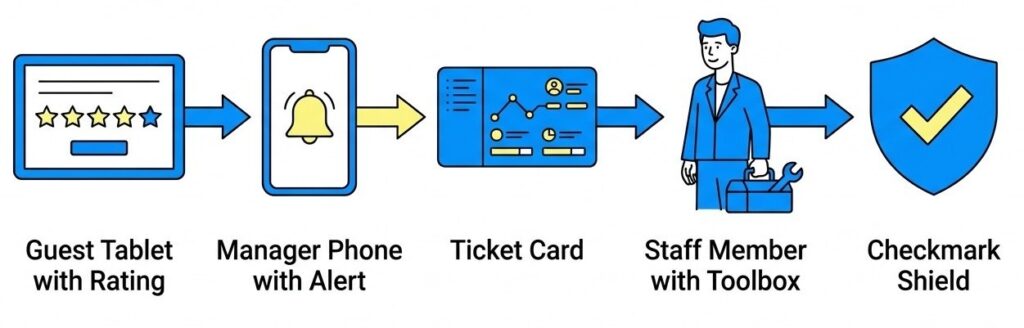
Geedesk reports its own numbers on what this does to speed. In a March 2024 case study, hotels on the platform cut the time taken to address complaints by 75%. Treat that as Geedesk’s figure rather than an independent audit. Still, the mechanism behind it is plain enough. A ticket that assigns itself and escalates itself gets worked faster than one waiting for a morning meeting.
The follow-up call that happens before checkout, not after
Feedback collection is one half of the picture. The other half sits inside Geedesk after a complaint has been resolved. Most hotels skip this part entirely.
Geedesk’s Ticket Audit Log builds a list of tickets from the past 24 hours. It shows the actions taken, the staff responsible, and the timeline for each one. Your front office coordinator works through that list and calls each guest to ask about the service they received. Then the coordinator logs the response in the guest feedback audit inside Geedesk.
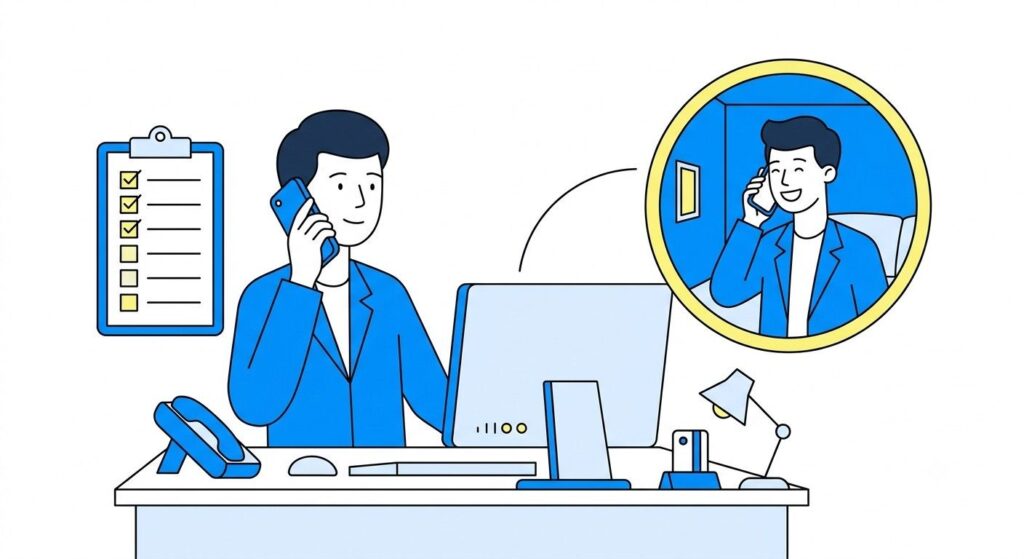
This is the quiet discipline that separates hotels that think they resolved a complaint from hotels that know they did. To the guest, a fixed air conditioner that still rattles is an unresolved complaint with a courtesy call on top.
The value of doing the audit in real time is simple. If a guest says the fix did not work, the hotel finds out while they are still on site. The coordinator raises the ticket again, and it flows straight back into the loop above. Auto Assign routes it to the right person on shift. The SMS or WhatsApp alert goes out, and the escalation clock starts running. As a result, the issue gets a second, proper resolution before the guest reaches the checkout desk. Not after they reach for their phone to write about it.
The reports that show whether recovery is working
Individual saves are satisfying. Patterns, however, are more valuable. Geedesk’s reports module gives managers a view across staff performance, guest satisfaction levels, and escalated ticket counts.
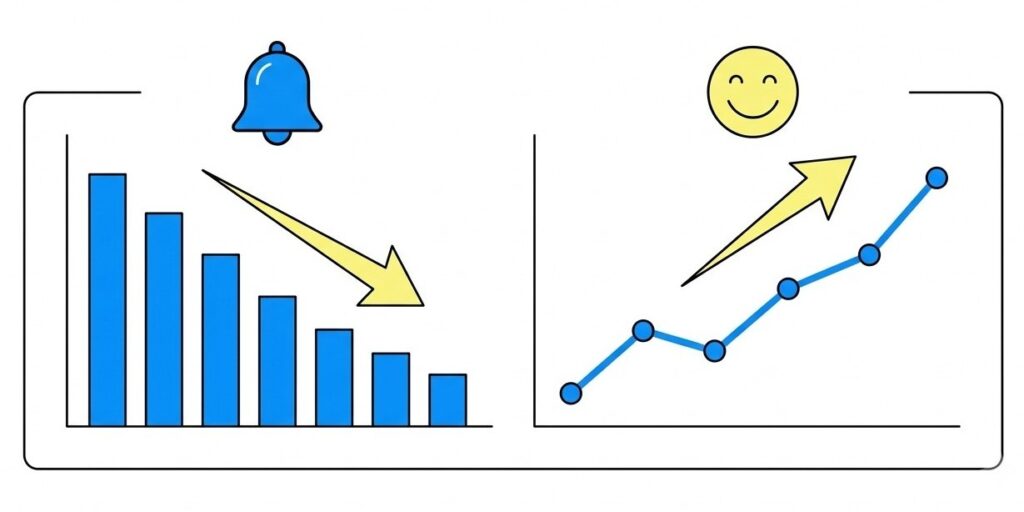
Over weeks, those reports turn the feedback loop into something a general manager can actually manage. For example, if cleanliness complaints cluster on one floor, the data shows it. If one department’s tickets keep escalating past their time limits, the data shows that too. As a result, in-stay feedback stops being a series of individual rescues. It becomes an early-warning system for the whole operation.
Guests leave with issues resolved, not reviews pending
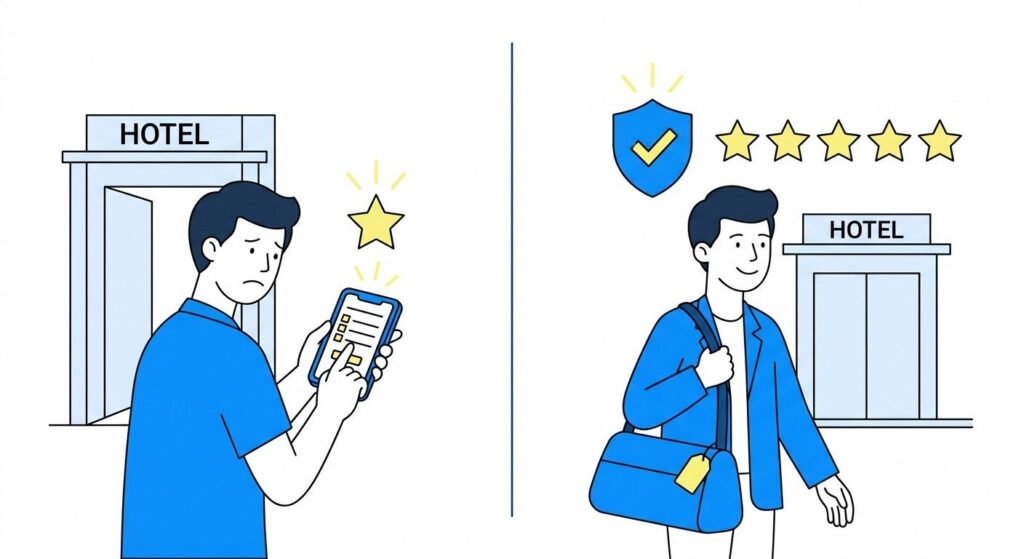
Put it all together and the shape of a stay changes. Feedback comes in while there is still time to act on it. Negative ratings reach a manager as alerts, not entries in a report someone reads next week. Meanwhile, complaints route themselves to the right person on shift and escalate if they stall. Finally, resolved tickets get verified with the guest directly. Anything that slipped through gets a second pass before departure.
Guests leave with their issues already handled. So the reviews that follow reflect the recovery, not the complaint.
If you want to see how in-stay feedback would work at your property, book a Geedesk demo. We will walk you through it, from the tablet in your lobby to the follow-up call.