Picture a farmer in rural Tamil Nadu waking up at 5 AM, coffee in hand, checking his phone before he checks the sky.
Not social media. Not the news. He is checking soil moisture levels, rainfall predictions, and crop health reports, all generated overnight by sensors buried in his fields and satellites passing overhead. He adjusts his irrigation schedule, flags one section of his farm for attention, and finishes his coffee before the sun is fully up.
Ten years ago, that sentence would have sounded like science fiction. Today, it is Tuesday.
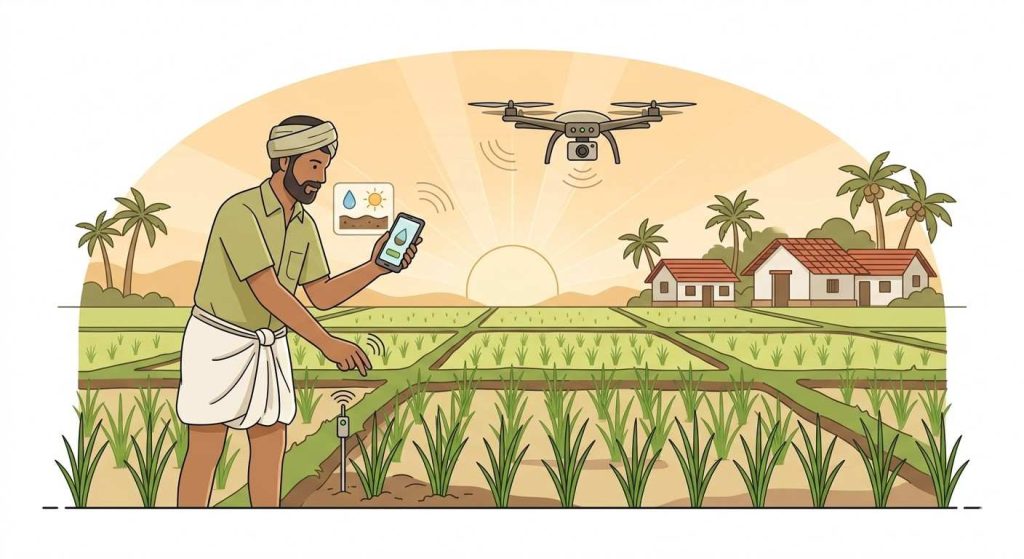
This is what real technological transformation looks like. Not robots walking down the street. Not flying cars. It is a farmer in Tamil Nadu making smarter decisions at 5 AM because technology handed him tools that used to belong only to billion-dollar corporations.
On this National Technology Day, we are not here to talk about what technology might do someday. We are here to look at what it is doing right now, across every industry, to people who probably never thought of themselves as part of a revolution.
The Old Story No Longer Holds
There was a version of this story we all grew up hearing. Technology belongs to tech companies. It lives in Silicon Valley. It helps young people build apps. Everyone else waits and watches.
That story is dead.
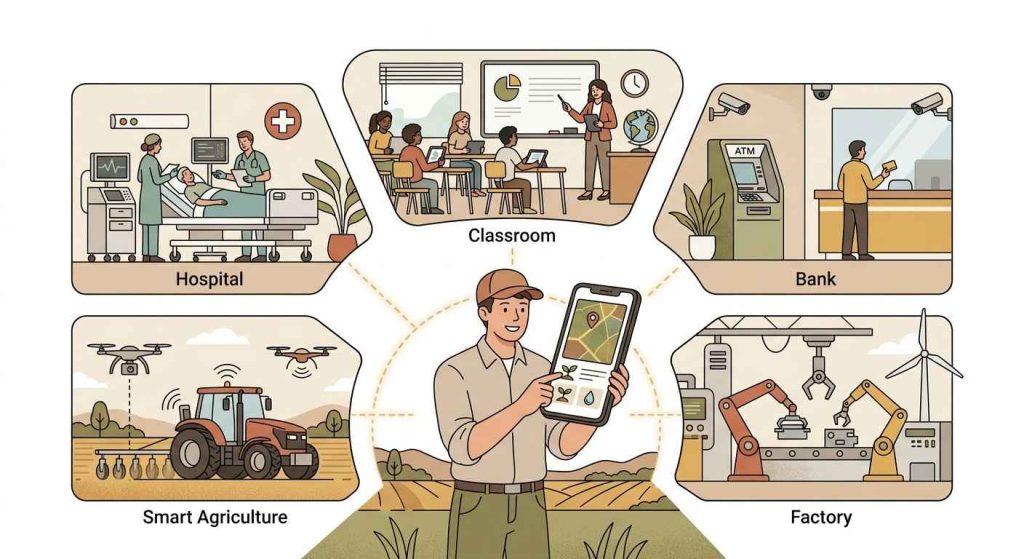
Walk into a hospital in Bengaluru, a classroom in Jaipur, a factory floor in Pune, or a bank in Chennai today and you will find the same thing. Technology is not waiting at the door. It is already inside, running the place.
The businesses that understood this early are operating on a completely different level now. The ones still treating technology as optional are not just falling behind. They are becoming irrelevant. And the gap between those two groups widens every single day.
“The advance of technology is based on making it fit in so that you don’t really even notice it, so it’s part of everyday life.” – Bill Gates
Healthcare: The Doctor Who Never Sleeps
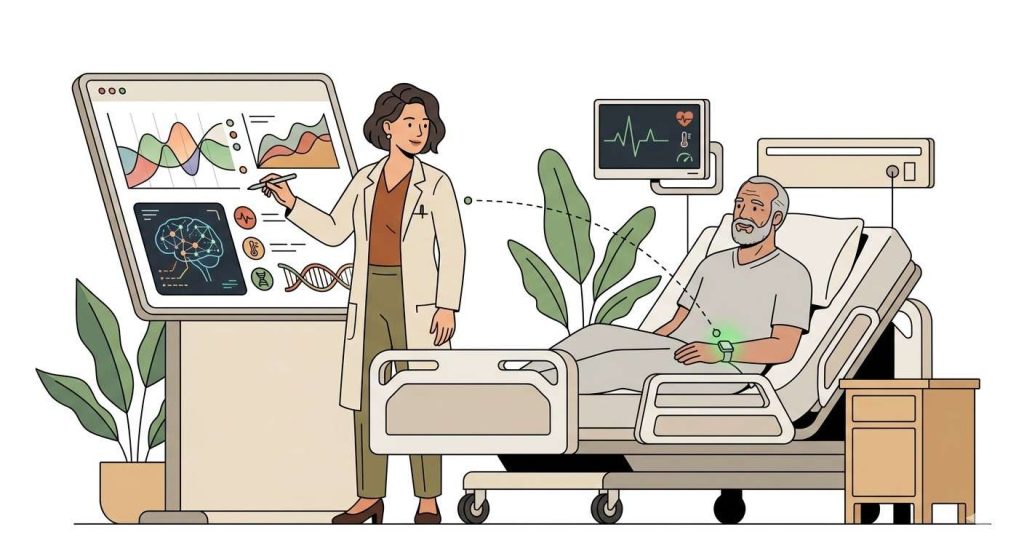
Imagine having a doctor watching over you twenty-four hours a day. No lunch breaks. No missed calls. No waiting three weeks for an appointment.
That is not a fantasy. That is what AI-powered healthcare looks like right now.
Hospitals today use machine learning tools that read patient records and flag warning signs before a patient even feels unwell. Wearable devices track heart rate, oxygen levels, and blood pressure in real time and send alerts the moment something shifts. Surgeons rehearse complex, high-risk operations inside virtual reality environments before they ever pick up a scalpel.
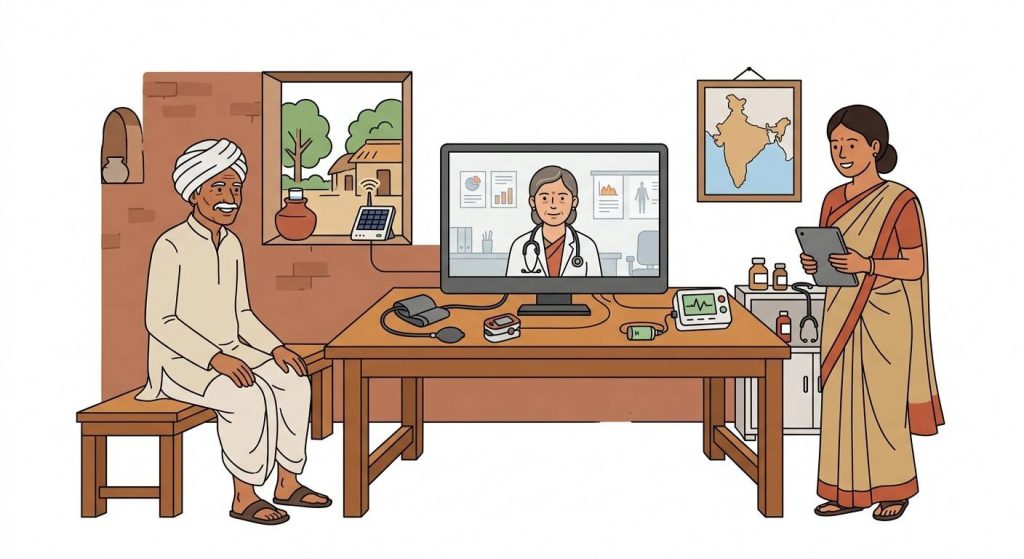
In rural areas, remote diagnostics bring specialist-level care to patients who live hours away from the nearest city. A cardiologist in Mumbai can now review a patient’s ECG from a village clinic in Rajasthan and send a diagnosis within minutes.
Healthcare used to chase illness. Technology is turning it into a system that hunts illness down before it has a chance to start.
“The greatest medicine of all is teaching people how not to need it.” – Hippocrates
Education: Finally, a Classroom Built for Every Child
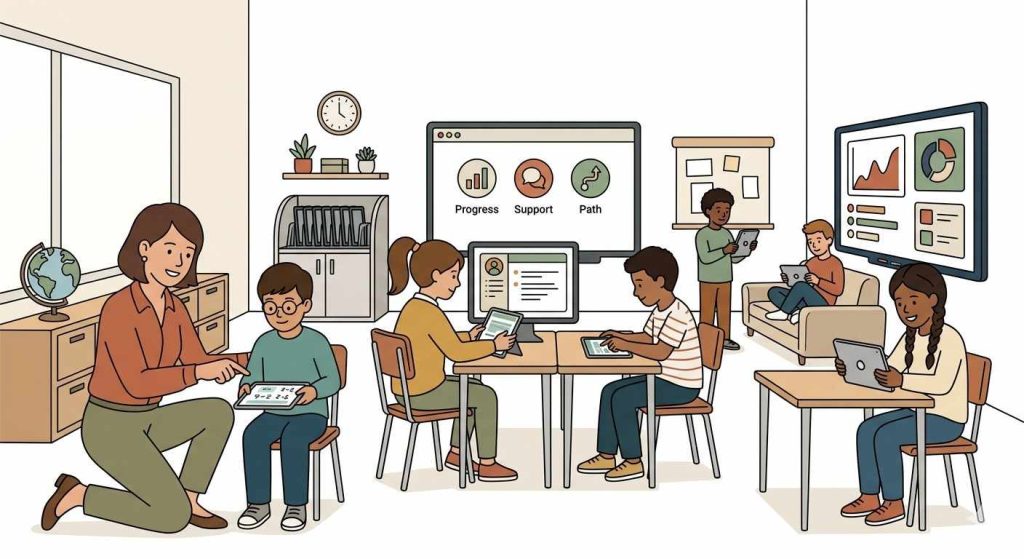
Think about the student who always sat in the back row. Smart, curious, but struggling to keep up because the lesson moved too fast. Or the student who grasped everything in ten minutes and spent the next forty bored out of their mind.
Traditional classrooms served neither of them well.
Adaptive learning platforms now study how each individual student responds to content and adjust in real time. Struggling with quadratic equations? The platform slows down, tries a different explanation, and gives more practice problems before moving ahead. Already mastered it? You move on immediately, no waiting required.
Teachers, freed from repeating the same lesson thirty times, now spend their time doing what only a human can do in a classroom. They inspire. They mentor. They notice the student who is quietly struggling and do something about it.
And for the first time in history, geography is no longer destiny. A student in a small town in Jharkhand can access the same quality of education as a student in any world-class city. The classroom walls came down. Technology walked through.
“Education is not the filling of a pail, but the lighting of a fire.” – W.B. Yeats
Finance: The Bank That Finally Showed Up
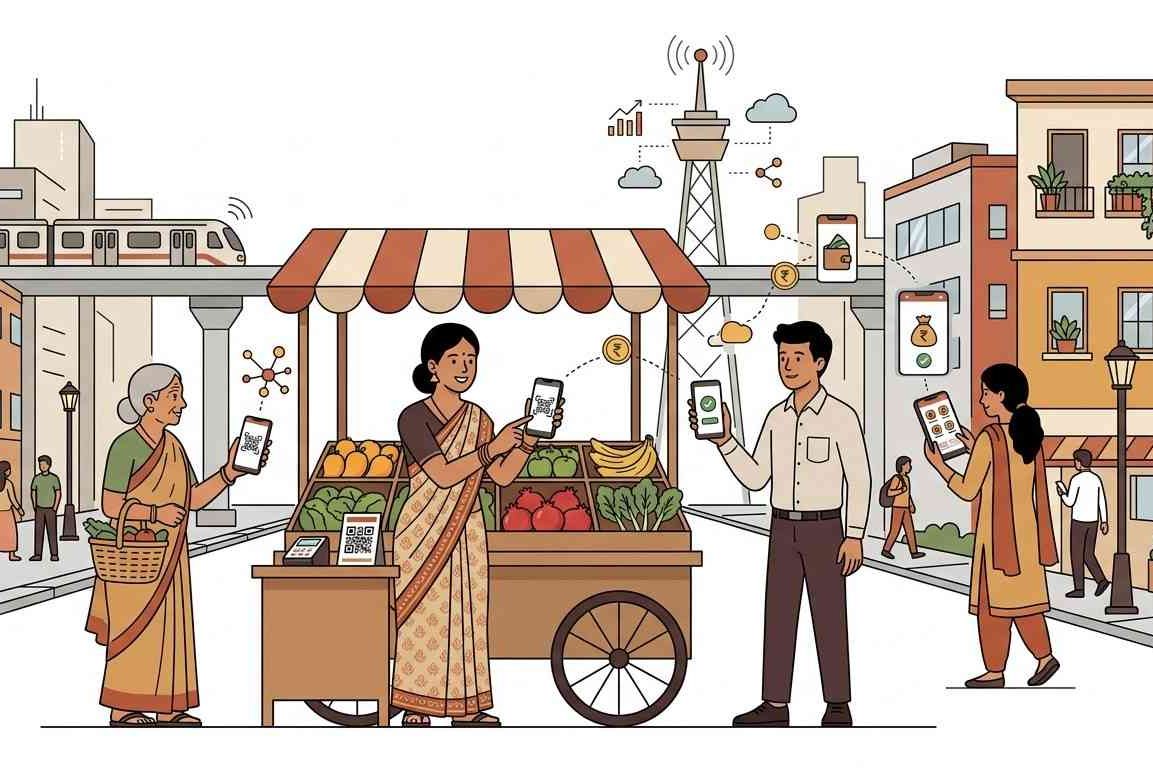
There are still millions of people in India who have never held a credit card, taken a formal loan, or had a savings account. Not because they did not want one. Because the system made it nearly impossible for them to get one.
Long queues. Endless paperwork. Loan officers who said no without explanation. Branches that closed at 3 PM in towns where people worked until sunset.
Technology looked at that system and said: we can do better.
Today, a small business owner can apply for a loan from a mobile app, get an AI-powered credit assessment in seconds, and have money in an account within hours. Fraud detection systems scan millions of transactions every hour and catch suspicious activity before a single customer loses a single rupee. Digital payment platforms have put financial tools in the hands of street vendors, auto-rickshaw drivers, and first-time earners who had no place in the old system.
The bank finally showed up. It just arrived on a phone screen instead of a street corner.
“The biggest risk is not taking any risk. In a world that is changing quickly, the only strategy that is guaranteed to fail is not taking risks.” – Mark Zuckerberg
Manufacturing: The Factory That Thinks
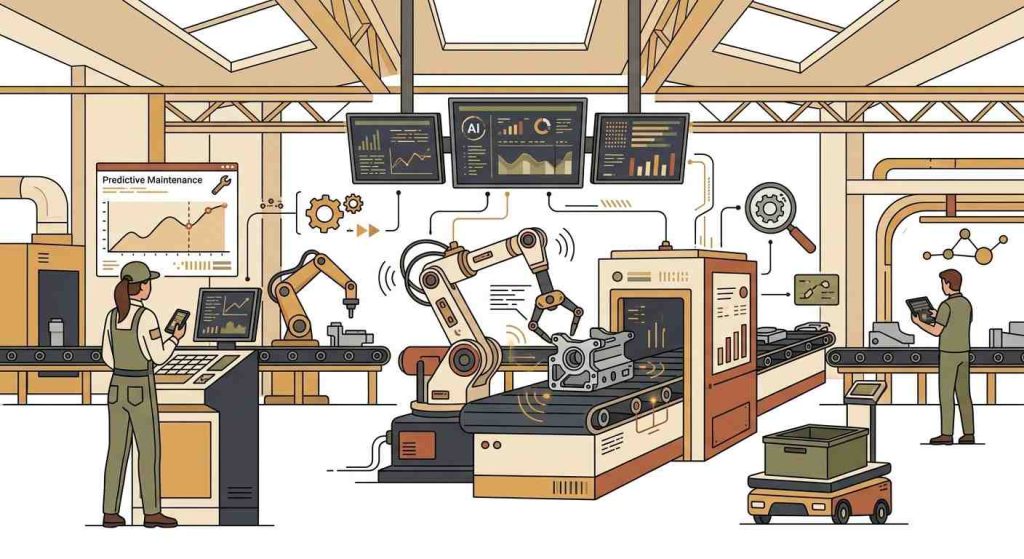
Old factories broke down and nobody knew it was coming. A machine would run perfectly for months, and then one morning it would stop. Production halted. Deadlines missed. Teams scrambled to find the problem and fix it while customers waited.
Modern factories do not wait to break down. They see it coming.
Sensors attached to every major machine send a continuous stream of data. AI systems read that data and issue maintenance alerts days before a failure occurs. Robots handle tasks that require speed and precision that human hands simply cannot match at scale. Computer vision systems scan every product moving down the line and catch defects that the human eye would miss.
The result is a factory floor that wastes less, produces more, and rarely gets caught off guard. What used to be a floor that ran on schedules and hope now runs on intelligence. Technology did not just speed up manufacturing. It made manufacturing smart.
“The factory of the future will have only two employees, a man and a dog. The man will be there to feed the dog. The dog will be there to keep the man from touching the equipment.” – Warren Bennis
Agriculture: The Farmer Who Sees Everything
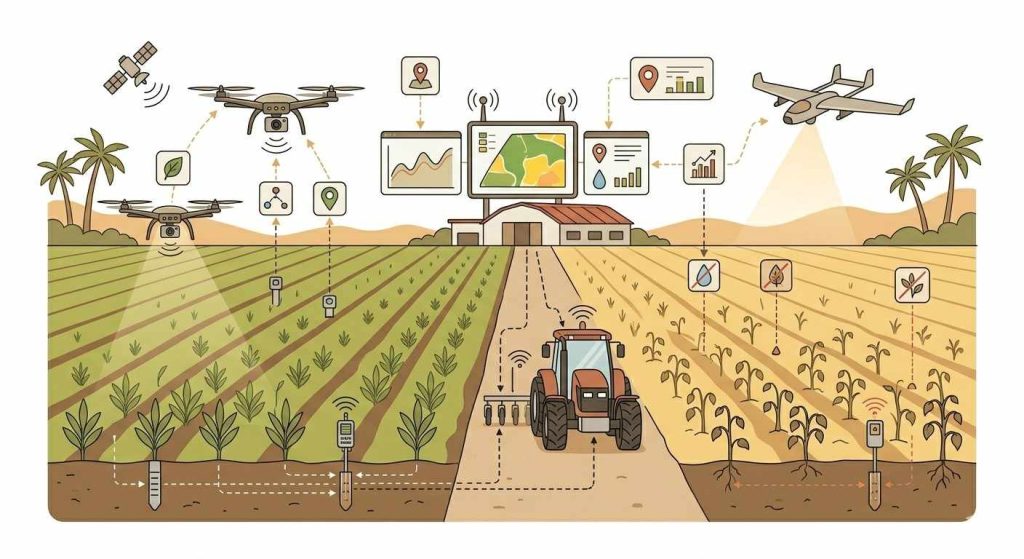
Back to that farmer in Tamil Nadu.
Before technology entered his field, quite literally, he made decisions based on what the sky looked like, what his father taught him, and what the uncle two villages over had heard from someone else. Sometimes it worked. Sometimes a bad decision cost him an entire season.
Now his fields talk to him.
Drones fly overhead and send back images that reveal dry patches, pest activity, and nutrient deficiencies invisible at ground level. Soil sensors measure exactly how much water and fertilizer each section of land needs. Weather prediction tools trained on decades of local climate data tell him when to plant and when to wait.
He is not guessing anymore. He is deciding. There is a world of difference between the two.
Technology handed this farmer the same quality of agricultural intelligence that used to live exclusively in corporate research labs. It did not just improve his yield. It gave him confidence that his knowledge, combined with data, is enough to build something lasting.
The Pattern That Connects Everything
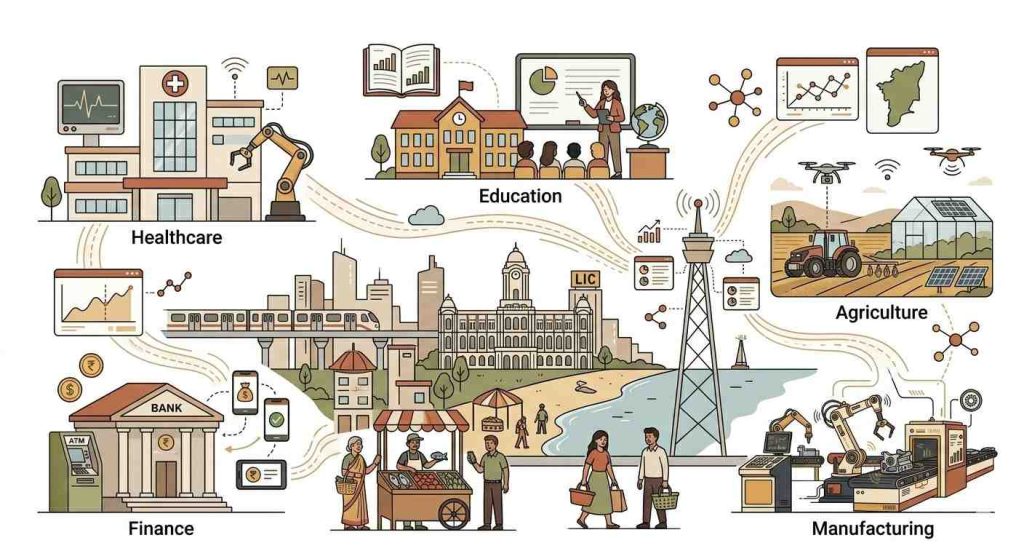
Look across every one of these industries and the same story plays out.
Technology arrives quietly, solving one small problem. Then another. Then one day you look up and the entire system works differently and nobody can quite remember how it worked before. The businesses winning in this moment are not the ones that chased every new tool. They are the ones that stayed clear about what problem they were actually trying to solve and let technology answer it.
Three things separate the companies building the future from the ones watching it.
They start with the problem, not the product. A tool that looks impressive in a boardroom but changes nothing in practice is just expensive decoration.
They invest in people as much as in platforms. The best system falls flat when the people using it are not ready for it. Culture matters as much as code.
They build for change. Rigid systems crack under fast-moving technology. Flexible ones evolve and keep delivering value long after launch day.
“It is not the strongest of the species that survives, nor the most intelligent. It is the one most responsive to change.” – Charles Darwin
One Building, Built by Everyone
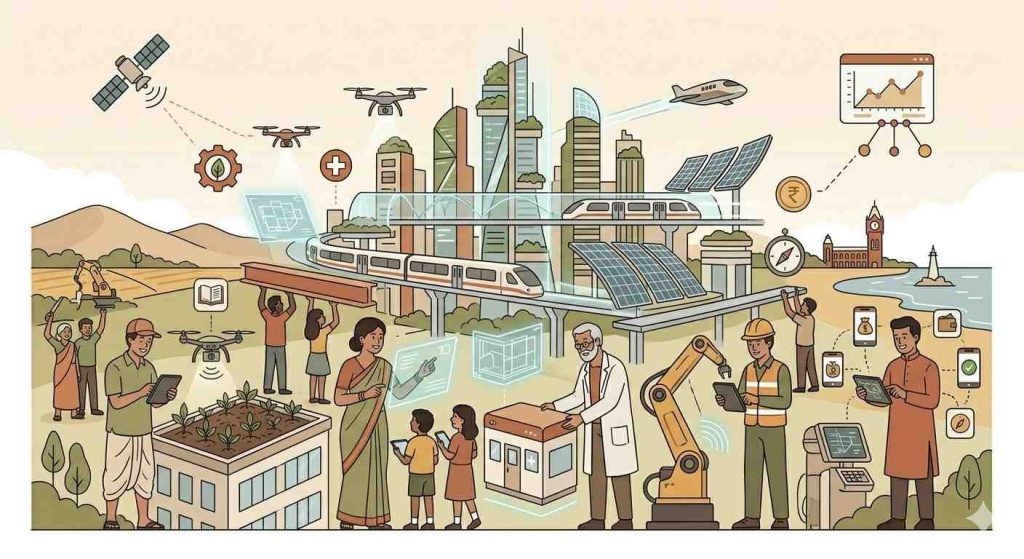
The architecture of tomorrow is not a project waiting for approval. It is already under construction, in every industry, in every city, in every decision being made today about where to invest, what to build, and who to bring along.
That farmer checking his phone at 5 AM is building it. So is the hospital flagging a patient’s risk before symptoms arrive. So is the teacher finally reaching the student who always sat in the back row.
On this National Technology Day, the real question is not whether technology will reshape your world. It already is. The question is whether you are holding the blueprint or waiting to walk into a building someone else designed.
Start building. The tomorrow you shape today is the one everyone else will live in.
Happy National Technology Day. Here is to building better, together.