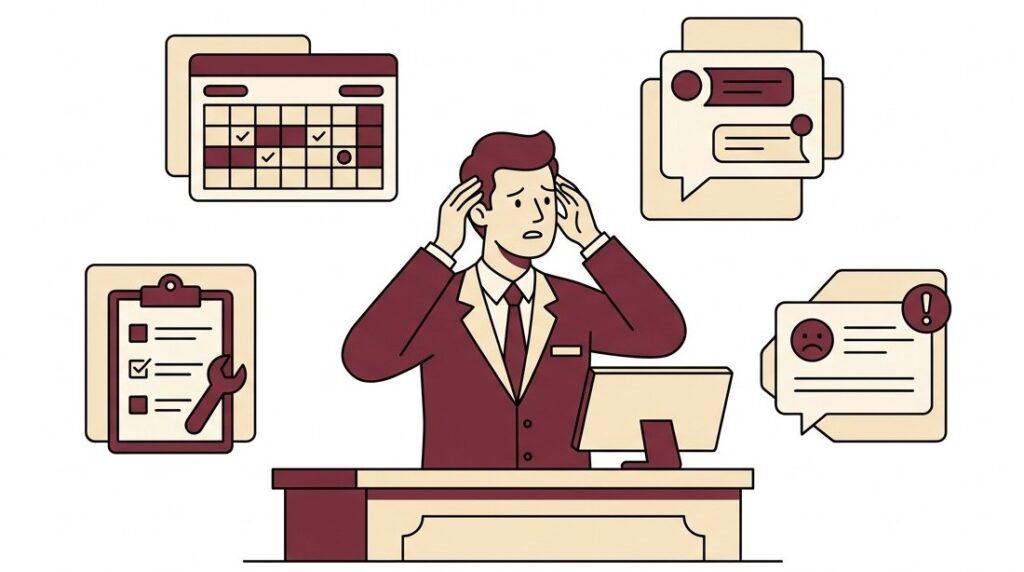
It is 7:40 on a Tuesday morning. The GM opens the PMS to check arrivals, then jumps to a WhatsApp group to see what happened overnight. A spreadsheet of open maintenance jobs comes next. Last stop is the complaint tool, to find out which guests are unhappy. Four screens give four versions of the same property, and none of them agrees on what needs attention first.
Most hotels run this way today. Every tool does its own job well enough, but nobody owns the picture that sits between them, so the GM builds it by hand every morning, from memory and phone calls.
The PMS built the first generation of hotel technology
For a long time, the property management system was the hotel’s technology. It handled reservations, room status, billing and night audit. Also, systems like Oracle Opera made the front desk faster and the books cleaner, and that was a real gain.
The design made sense for its time, because a PMS answers one question: who is staying, and what do they owe? It centres on the reservation, not on what happens to the guest after check in. For example, if a guest’s air conditioner stops at 11 pm, the PMS has no natural place for that problem to live.
So hotels worked around it. Phone calls, paper slips, radio sets and later WhatsApp groups carried everything the PMS could not. Those workarounds still run many properties today.
Departmental tools fixed single problems and created a coordination problem
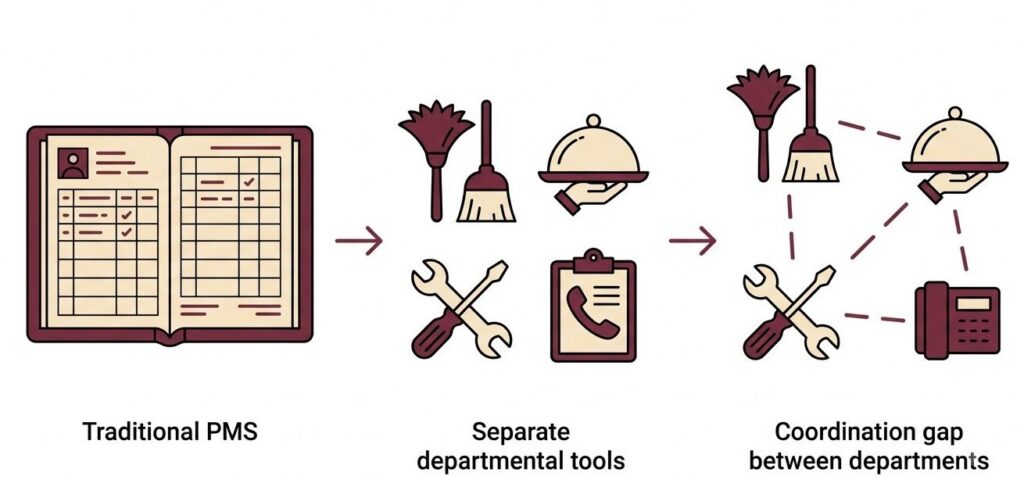
The next wave brought specialists. A feedback app here, a housekeeping tracker there, a separate register for maintenance, a messaging tool for guests. Each one solved a real problem for one department.
However, the trouble showed up between departments. Say a guest complains about a dirty bathroom. Housekeeping sees the request in one tool. The duty manager hears about it on a call. Meanwhile, maintenance gets a message about the leaking tap that caused the mess. Three people work on one problem, yet nobody sees all of it.
Hotel technology had moved from record keeping to departmental tools. It never reached the thing that actually runs a hotel, which is the handoff between people. After all, a guest does not care which department owns the problem. They care how long it takes to fix.
What the gap costs a property every week
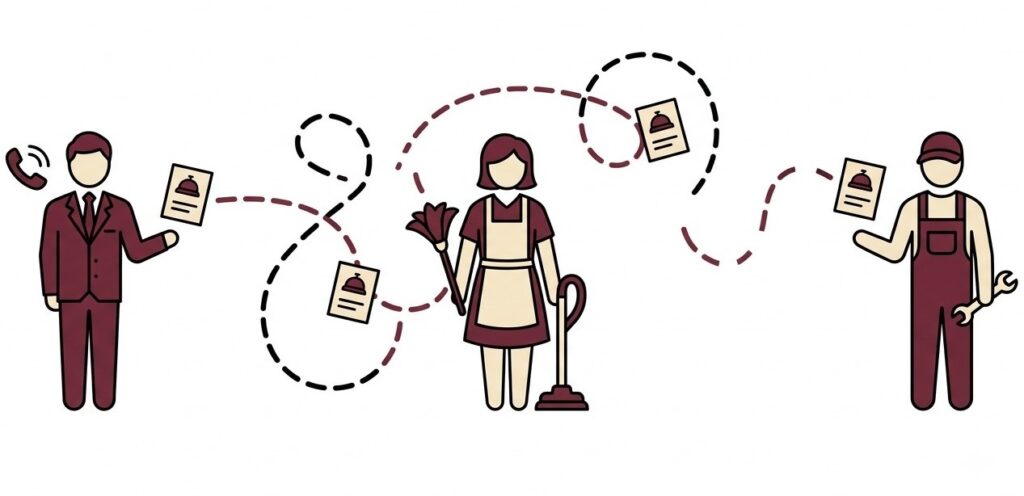
The cost rarely arrives as one big failure. Instead, it arrives as small delays that nobody measures. A request waits twenty minutes because it went to the wrong person first. A manager learns about an angry guest from the guest’s review instead of from the team. The same room produces the same complaint twice because the first job closed without anyone checking the cause.
Staff feel it too. When ownership is unclear, people spend the shift explaining who should have done what. Over time, that wears a team down.
Reviews carry the final bill. A Cornell School of Hotel Administration study found that each one point rise in a hotel’s review index went with a 1.42% rise in RevPAR, the revenue a hotel earns per available room. The study dates from 2012, but the link between guest satisfaction and revenue still holds up. So every small problem that goes unresolved has a path to that number.
A complaint tool is a big step up, and it still has a ceiling
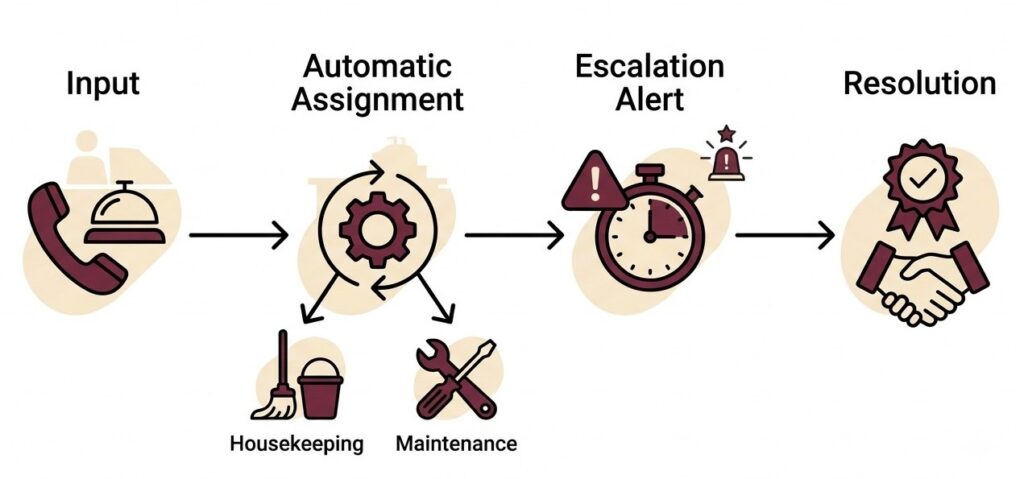
Complaint management deserves credit, because moving from notebooks and phone calls to a system that logs every complaint, assigns it automatically and escalates it when it sits too long changes how a property behaves. As a result, staff stop guessing who owns a problem. Managers also stop hearing about issues at checkout.
Geedesk began here, and this core still matters. Automatic assignment puts each issue in front of a named person. Escalation policies push it up when nobody acts. VIP and VVIP alerts flag important guests to the right managers, and the rule engine decides who handles what.
But a complaint tool only knows what guests complain about. Therefore, it sees the problem after the guest has already felt it. It does not see the room housekeeping has not released, the maintenance job open for four days, or the VIP landing in two hours. Those things turn into complaints later. A complaint tool records the damage, but it cannot prevent it.
That is the ceiling, and no amount of tuning raises it, since the tool is reactive by design.
What a hotel operating system covers that a complaint tool never could
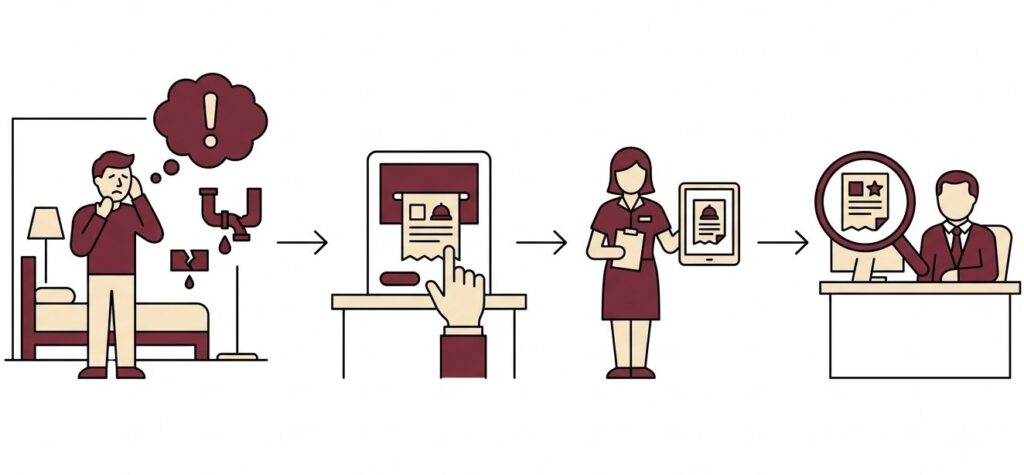
Think about how a phone operating system works. It does not replace your apps. Instead, it gives them one place to run, one set of rules and one way to talk to each other. A hotel operating system follows the same idea for operations.
In practice, four differences matter.
It handles work that starts before a complaint
Requests, tasks, housekeeping jobs, maintenance jobs and lost items all enter the same system, so the property can fix things while the guest is still happy.
It sits alongside the tools you already own
Geedesk integrates with Oracle Opera, WinHMS, IDSNext, SAP, DigiValet, Hudini and Milanity. Your PMS stays the record of the stay, and the operating system handles the work around it.
One set of rules covers every department
The rule engine lets you decide who gets which job, how long they have, and who hears about it next. Because you write that logic once, it holds everywhere.
Alerts reach people on the phones they carry
Escalations go out through SMS, WhatsApp and the Geedesk mobile app, and the platform works on feature phones. The night supervisor without a smartphone still gets the message.
A complaint tool can do some of this. However, an operating system does all of it together, and the combination is the point.
One command center changes the first hour of a GM’s day
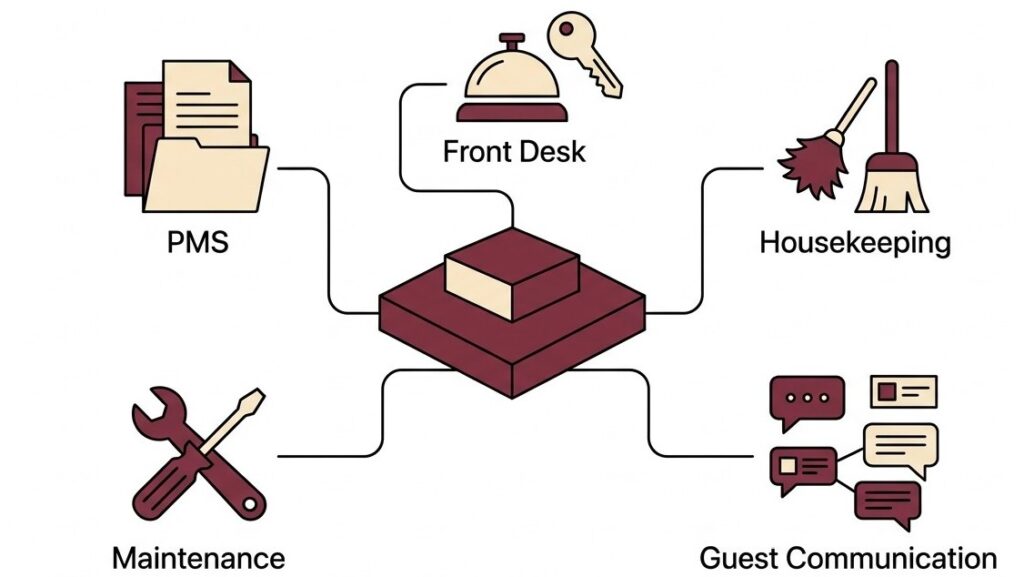
In many ways, a general manager’s job is mostly noticing. That means spotting the delay before the guest does, or the department that is quietly slipping. A single command center turns noticing from a personal skill into something the system supports.
The GM dashboard gives the general manager a property wide view of open work, so the question changes from “who do I call?” to “what do I fix first?” The Manager dashboard gives each department head the same picture for their own team.
Here is a small illustrative example. Say a 120 room hotel has eleven open items at 8 am, and the ones that matter are two escalated complaints, a delayed room release, a lift fault and a VVIP arriving at noon. In the old setup, the GM pieces this together over twenty minutes of calls. In a command center, the GM reads one list, notices the VVIP room is not ready, and fixes it before anyone phones.
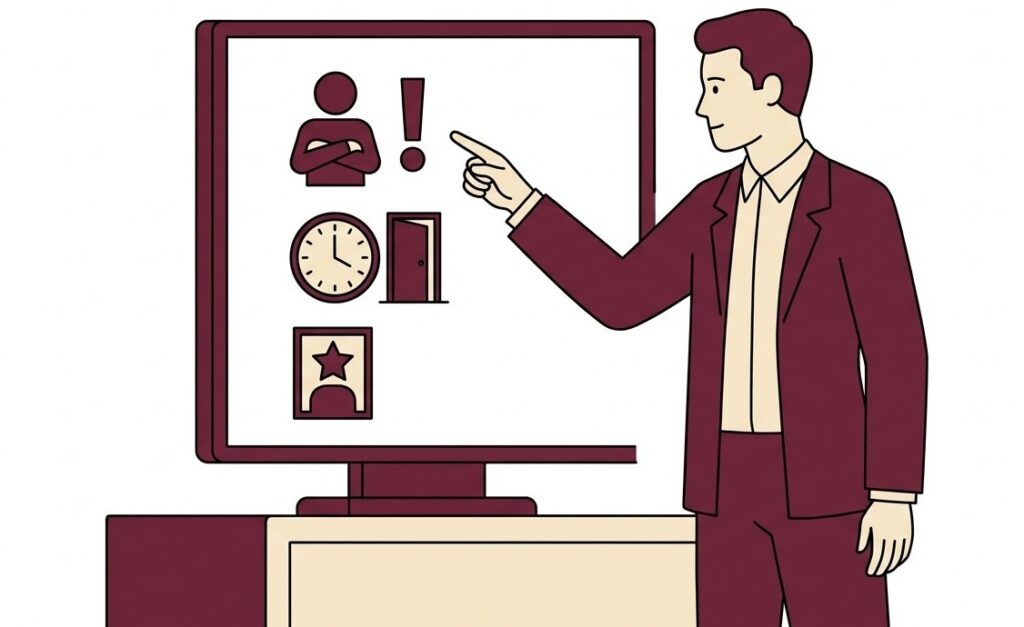
The morning meeting changes too. Instead of a round of “any issues?”, it becomes a review of what the system already shows. People then spend the time deciding instead of reporting.
How real hotel workflows map to platform capabilities
Front office: stop chasing requests by phone
A guest reports slow Wi-Fi in the room. The desk logs it, and automatic assignment sends it to the engineer on shift. If nobody acts within the set time, escalation policies move it to a supervisor. Therefore, the desk never picks up the phone to chase.
Housekeeping: one list instead of two
A room is not ready for an early check in. The Housekeeping add-on brings those jobs into the same system as guest requests, so the front desk is not working from a separate list.
Maintenance: trace repeat complaints to the open job
Take the leaking tap from earlier. The Maintenance add-on puts that job in the same system as the complaint it caused. When the same room produces another complaint, the team can trace it back to the open job instead of starting from zero.
VIP arrivals: no surprises at noon
Picture a VVIP landing at noon. VIP and VVIP alerts flag the guest to the managers who need to know, and escalation policies keep the follow up from slipping.
Guest side: hear it during the stay
Geedesk Feedback (Guest) gives guests a way to share feedback during the stay, and Geedesk Messenger supports guest communication. The goal is simple: the problem reaches the hotel while the guest is still in the room.
Internal work: jobs no guest ever raised
TeamTasks covers everyday internal jobs, such as a deep clean before a wedding block. Lost and Found logs found items so they stop living in a drawer at the front desk.
Five questions to ask before you call any product an operating system
The phrase gets used loosely now, so a few direct questions help cut through it.
First, can it handle requests and tasks that never became complaints? If it only starts at a guest’s grievance, then it is a complaint tool with a bigger name.
Second, will it sit alongside your PMS instead of asking you to replace it? A hotel should not rip out its record of stay to get better operations.
Third, can one set of rules cover every department? Otherwise, separate rule sets in separate tools recreate the coordination problem you started with.
Fourth, do alerts reach staff on the phones they actually carry, including basic ones? A system that only works on smartphones leaves part of the night shift out.
Last, does the GM get one view without asking three people for updates? If the GM still has to ask around, the information is not in one place yet.
Start with one property and your last ten escalations
You do not need to rebuild your technology to test this idea. Instead, pick one property. Take the last ten escalations and list every tool and every person that touched each one. Then count them. That count makes the argument better than any brochure.
Now picture your GM on a Tuesday morning with one screen instead of four. If you want to see how that maps to your own departments, book a demo with the Geedesk team. We will walk through your workflow and your problems, rather than run a scripted tour.