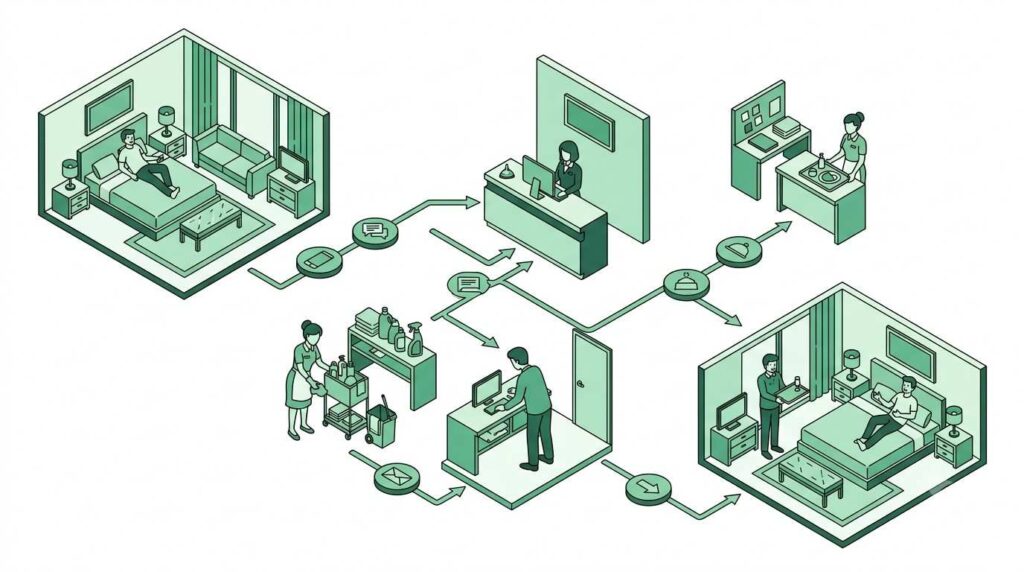
A guest calls the front desk at 11 PM to request extra towels. The front desk team logs the request and moves on to the next task. Somewhere between logging and action, the request sits untouched. By morning, the guest has already formed an opinion about the hotel’s service, and no apology at checkout can fully undo that experience.
These situations are often the biggest threat to guest satisfaction. Guests rarely leave disappointed because of a major service failure. More often, frustration comes from a simple request that gets delayed, forgotten, or lost between departments.
Hotels that still rely on phone calls, handwritten logs, spreadsheets, and WhatsApp groups to manage guest requests are often working with processes that lack accountability and visibility. As operations become more complex, many hotels are exploring Artificial Intelligence (AI) and automation to improve efficiency and gain better insight into daily operations. However, technology only delivers value when it helps teams respond to guest requests quickly and consistently.
Geedesk is a 100% cloud-based guest complaint and request management platform that turns every guest request into a trackable ticket, automatically routes it to the right team, and flags delays before they become guest complaints.
Here are eight ways Geedesk helps ensure that no guest request ever goes unanswered.
1. Automatic Ticket Assignment
The moment staff log a guest request or complaint in Geedesk, the system automatically assigns it to the right team member in the appropriate department. No one has to decide where it goes. No one has to call a colleague and ask who is on shift.
This matters because manual handoffs are where delays begin. A front desk agent juggling three check-ins at the same time does not have the bandwidth to think about which floor the maintenance team covers. Geedesk removes that decision entirely.
Hotels that switch from manual processes to Geedesk consistently report faster resolution and fewer dropped requests, not because staff work harder, but because every request reaches the right person without anyone having to direct it there.
2. Escalation Policies
Automatic assignment routes each request to the right person. Escalation policies ensure the team resolves it on time.
If a ticket stays open or on hold beyond a set time threshold, Geedesk automatically alerts the relevant managers by SMS and email. The system supports up to four escalation levels, and each level can include multiple managers or stakeholders.
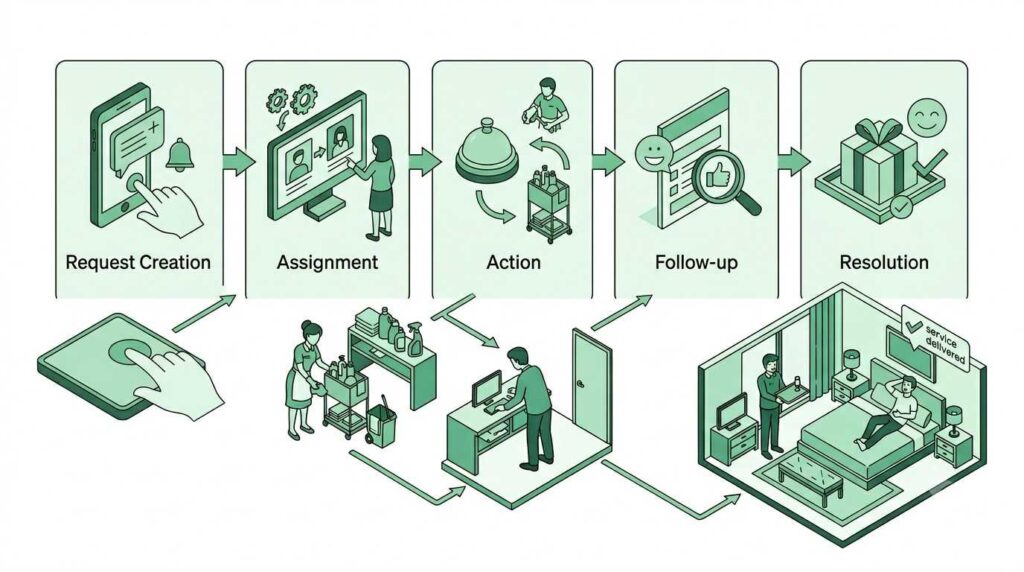
Each level has a defined time limit, and the system automatically involves the right people at the right moment without requiring anyone to monitor tickets manually.
You can also set different escalation rules for different ticket priorities. A missing towel and a broken air conditioner in the middle of summer are not the same level of urgency, and Geedesk does not treat them the same way.
When staff know that unresolved tickets move up the chain automatically, response times tighten across every shift and every department.
3. VIP and VVIP Alerts
When a VIP guest checks in, every relevant team needs to know. The problem is that telling everyone individually requires a chain of calls, messages, or announcements that can take longer than the guest’s walk from the lobby to their room.
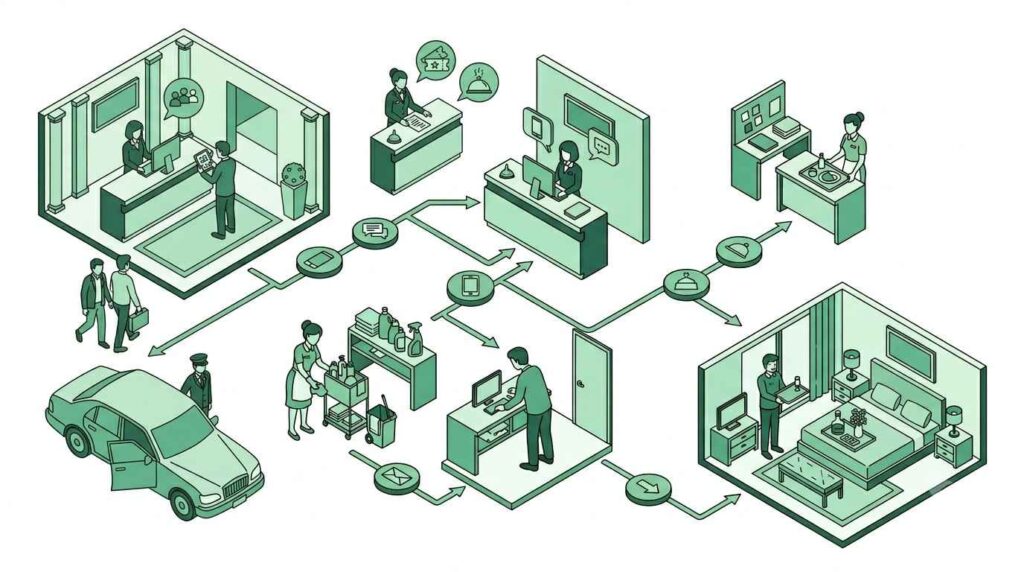
Geedesk lets the front office send VIP and VVIP alerts directly through the platform. The right teams across housekeeping, F&B, concierge, and any other department receive the alert instantly through the same system they already use to manage tickets. No separate communication tool. No relay chain.
Beyond VIP and VVIP, the front office can also send Handle With Care alerts for guests who need extra sensitivity, whether they have a medical concern on record, have raised a complaint on a previous visit, or have any other note attached to their profile. These alerts run through the same workflow, so they reach people who are already looking at the system during their shift.
4. The Rule Engine
No two hotels operate exactly the same way. A 50-room boutique property handles escalations differently from a 400-room business hotel. A resort with multiple dining outlets routes F&B requests differently from a city hotel with one restaurant. Generic software forces hotels to bend their operations around the tool’s logic.
Geedesk includes a built-in rule engine with over 10 configurable parameters. Hotels can configure how they create, categorize, route, and manage tickets to match their actual operational setup. If the housekeeping team operates by floor, the rule engine automatically assigns requests based on that structure. If the maintenance schedule changes on weekends, the system adjusts routing and assignments accordingly.
This level of configurability is what allows the automation in Geedesk to be accurate rather than just fast. A request going to the wrong person instantly is no better than a request going nowhere at all.
5. Scheduled Tickets
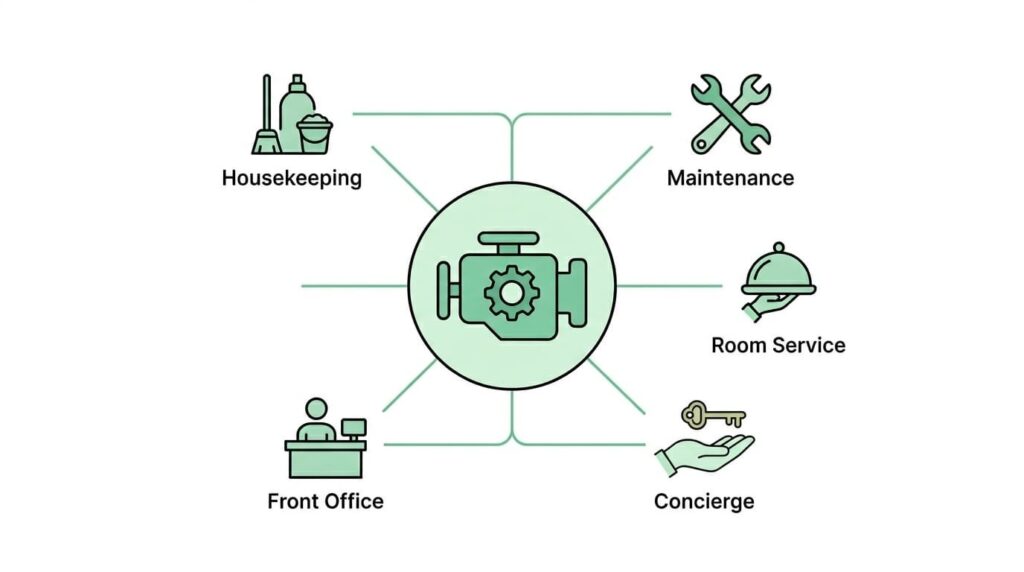
Not every request is urgent, but many are time-bound in ways that are easy to forget across a shift change.
A guest calls at 10 PM to request a wake-up call at 6 AM and a coffee delivery shortly afterwards. While the request is straightforward, teams can easily miss it during the shift handover from night to morning staff.
Geedesk lets staff schedule tickets in advance. The system holds the ticket and assigns it to whoever is on duty at the scheduled time, not the person who originally logged it. The morning agent who takes the shift does not need to be told about the request. The system tells them automatically, at exactly the right moment.
Scheduled tickets help teams manage VIP room setups, follow housekeeping preferences recorded at check-in, and coordinate pre-arranged services across multiple shifts.
6. Multichannel Workflow
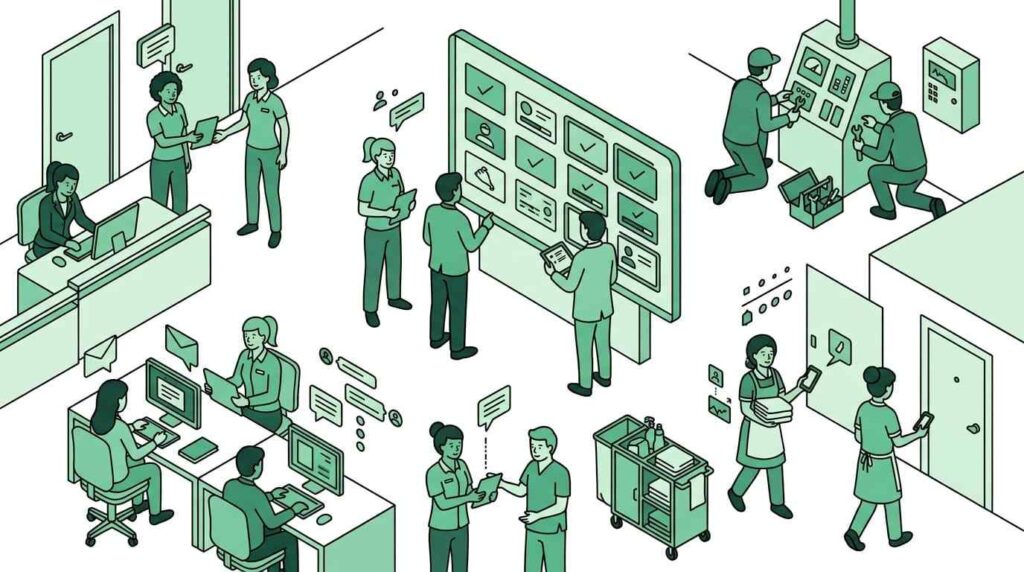
Not every hotel employee carries a smartphone on shift. Maintenance teams, floor staff, and housekeeping often work with basic feature phones. A guest request management system that locks staff into a single channel cuts out a large part of the workforce that needs to receive and act on those requests.
Geedesk meets staff wherever they are. The system sends ticket assignments and notifications through SMS, WhatsApp, and the Mobile App. Staff receive, update, and resolve tickets through whichever channel fits their role and their device. A maintenance technician on a basic phone gets the same ticket notification as a department manager checking the app on a tablet.
Hotels can run all three channels at the same time. No one needs to standardise devices across the team or push everyone onto the same platform. The system adapts to the workforce, not the other way around.
When the right person cannot receive a notification, the ticket effectively dies before anyone acts on it. Geedesk keeps that from happening by delivering every request across every channel, so device limitations never become a reason for a guest request to go unanswered.
7. GM and Manager Dashboards
A general manager cannot improve what they cannot see. When staff route guest requests and complaints through informal channels, leadership sees only a filtered and delayed picture of daily operations. By the time a pattern becomes visible, it has already affected multiple guests.
Geedesk gives every manager a live dashboard tailored to their level of access. The GM dashboard shows the full hotel, including open tickets, resolution times, escalated calls, and staff performance across all departments. Department managers see only their area. Both dashboards update in real time.
For hotel groups, the Property Dashboard connects multiple properties into a single view. Corporate teams can track the performance of every hotel against guest servicing benchmarks and filter down to any individual property without switching platforms.
The reports module covers staff performance, guest satisfaction levels, number of escalated tickets, and end-of-day summaries. Managers who review this data regularly can see exactly where delays cluster, which departments need attention, and whether the improvements they make are actually working.
8. SOC 2 Type 2 Certified Cloud Infrastructure
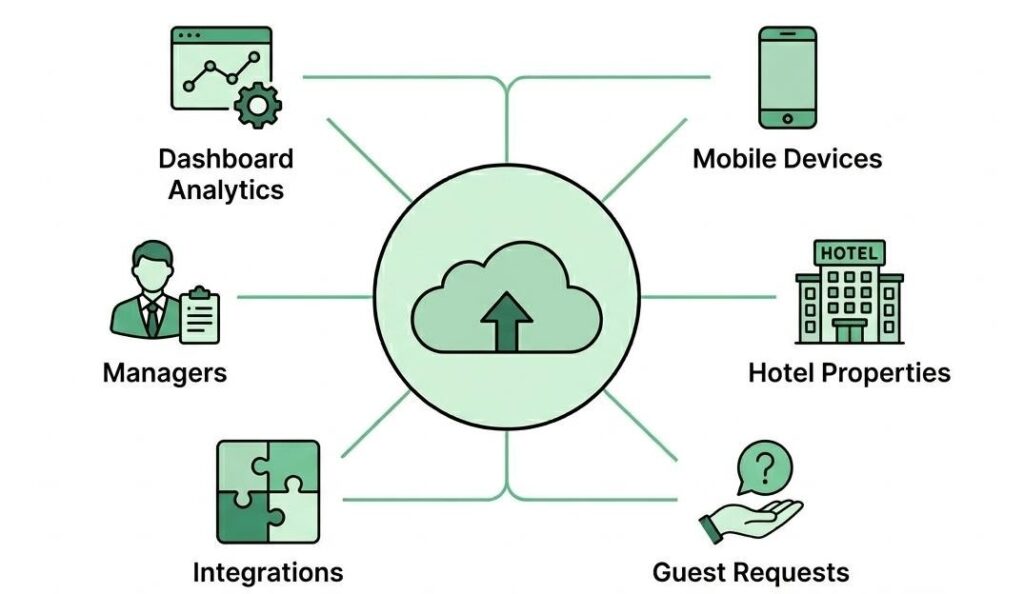
Every feature described above only works if the system is always available and always secure. A server-based solution creates operational gaps when it goes offline during a holiday weekend or requires maintenance downtime. Geedesk eliminates those gaps with a fully cloud-based architecture that runs on SOC 2 Type 2 certified infrastructure.
SOC 2 Type 2 certification means an independent auditor has verified that Geedesk’s systems meet rigorous standards for security, availability, and data confidentiality over a sustained period of time. For hotels that handle guest data every hour of every day, that verification matters. It is not a claim Geedesk makes about itself. It is a standard a third party has confirmed.
On the operational side, Geedesk requires no servers to set up, no software licences to purchase, and no installation process. Staff access it through a browser from any device with an internet connection. For a hotel that already runs on tight margins and limited IT resources, this removes a significant barrier to adoption.
Geedesk pushes updates automatically. Hotels never need to schedule downtime for upgrades or worry about running an outdated version. The system stays current without any additional effort from the property’s side.
Geedesk is also built to be integration friendly. It connects with property management systems, in-room guest concierge platforms like DigiValet and Hudini, and hotel management software like WinHMS and IDS. The REST API allows hotels to link their existing systems without rebuilding workflows from scratch.
The System Behind Consistent Guest Service
Hospitality has always been a people business. Great service depends on attentive staff, efficient operations, and a genuine commitment to guest satisfaction. Yet even the most dedicated teams can struggle when requests are tracked across phone calls, spreadsheets, and disconnected communication channels.
Geedesk provides the operational structure that keeps guest service consistent. It automatically routes requests to the right people, escalates delays before they become problems, and gives managers complete visibility into what is happening across every department.
The result is not just faster ticket resolution. It is greater accountability, stronger coordination between teams, and a more reliable guest experience from check-in to check-out.
Hotels do not lose guest satisfaction because they lack effort. They lose it when requests disappear between shifts, departments, and communication channels. Geedesk closes those gaps by creating a single system of accountability for every request, every team, and every property.
If your hotel is still managing guest requests through phone calls, spreadsheets, and group chats, it may only take one busy weekend for a small oversight to become a negative guest review. Request a demo and see how Geedesk helps hotels deliver faster responses, better visibility, and more consistent service across every department.