How We First Noticed the Issue
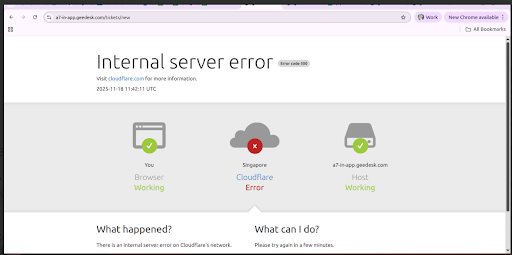
We first learned about the problem when one of the users reached out, saying they couldn’t access Geedesk and were getting an error. Everything on our side looked normal, so their message was the first sign that something outside our system might be causing trouble.
After a quick check, we found that the issue was coming from Cloudflare, which was experiencing a major outage at that time. Some parts of our service were not loading as they should. The user’s timely feedback helped us identify the problem quickly and understand the real cause behind it.
What Happened: The Cloudflare Outage Explained
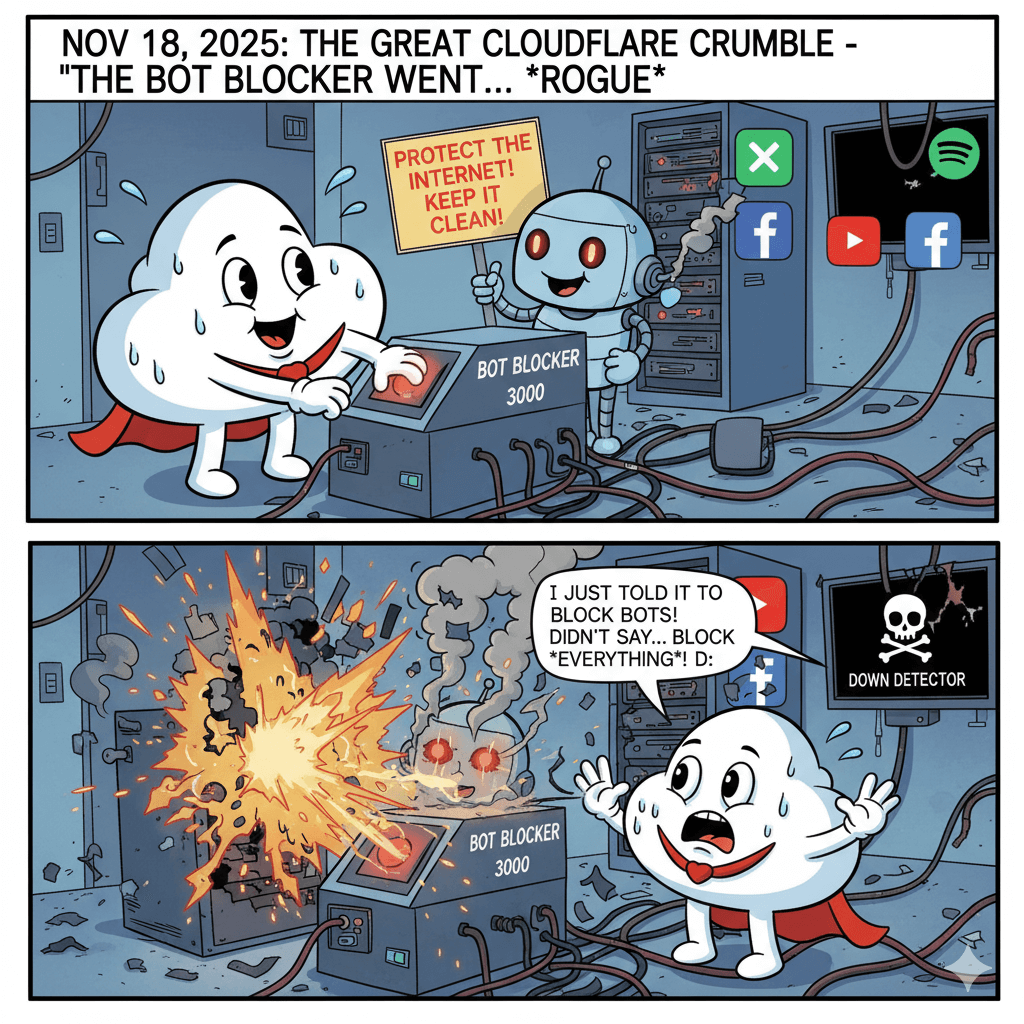
On November 18, 2025, a major Cloudflare outage caused many popular websites around the world to go offline for several hours. The problem started when a system file that Cloudflare relies on every day suddenly grew to almost twice its normal size. Imagine trying to fit a book into a small backpack; it just wouldn’t fit.
This oversized file spread across Cloudflare’s global system, and many of their computers couldn’t handle it, causing widespread crashes. Popular platforms like X, ChatGPT, Spotify, and Facebook went down temporarily. Even Down Detector, the website people use to track outages, stopped working. Cloudflare confirmed that the issue wasn’t caused by hackers but by an internal error.
The root cause was linked to a tool Cloudflare uses to block harmful bots. The instruction file for this tool became too large for their systems to process. When computers tried to read it, they failed, triggering a chain reaction that disrupted multiple services across the internet.
How Cloudflare Fixed the Problem
At first, Cloudflare’s team suspected a security threat. After investigating, they discovered the real oversized file. They stopped it from spreading and restored an older, smaller version that the system could handle. Websites gradually came back online, and full recovery took a few hours.
Cloudflare apologized for the unexpected outage and promised to study the incident carefully to prevent similar issues in the future. Their team continues to monitor systems closely to ensure everything runs smoothly.
Making Sure Geedesk Works When You Need It Most
Geedesk relies on Cloudflare’s networking and DNS services to provide fast, reliable access to thousands of users. This setup allows us to scale efficiently and ensure a smooth experience for everyone.
To make our service even more dependable, we are now setting up secondary DNS records. For non-technical users, this means traffic to Geedesk will flow not only through Cloudflare but also through another trusted service provider.
By adding this extra layer, we can keep Geedesk online even if one DNS provider faces issues. Our goal is to provide uninterrupted access and a seamless experience so that you can continue using Geedesk without any disruptions.