Introduction
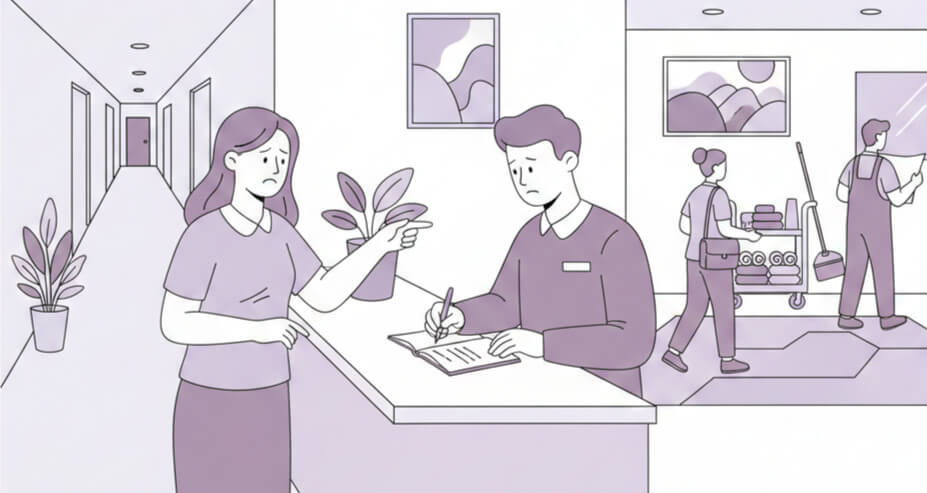
What happens to a guest complaint after it leaves the front desk?
Does your team route the complaint to the right department, resolve it within minutes, and close the loop before checkout? Or do they leave it in a notebook, mention it during shift change, and only revisit it after the guest calls again in frustration?
Most hotel owners and general managers already understand that complaints influence reviews, retention, and revenue. The real issue is not whether complaints matter. What truly matters is how you structure, track, and consistently manage the complaint-handling process.
In many properties, complaint handling still relies on informal coordination. A note written down. A message sent in a group chat. Staff pass a verbal reminder to maintenance or housekeeping. These methods may work occasionally, but they create gaps. Managers lack real-time visibility. Trends remain hidden. Accountability becomes blurred.
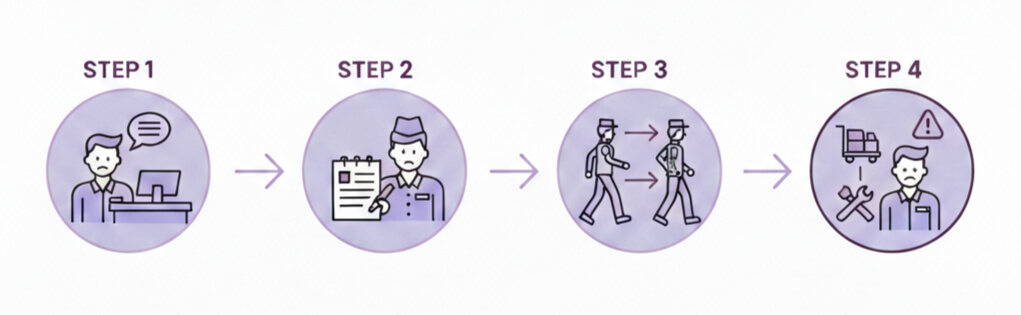
A complaint does not damage your reputation. An unmanaged complaint does.
Most hotels do not struggle with effort. They struggle with visibility.
This is where software for managing guest complaints becomes relevant. It introduces structure, accountability, and measurable control into daily hotel operations.
What Is Guest Complaint Management Software?
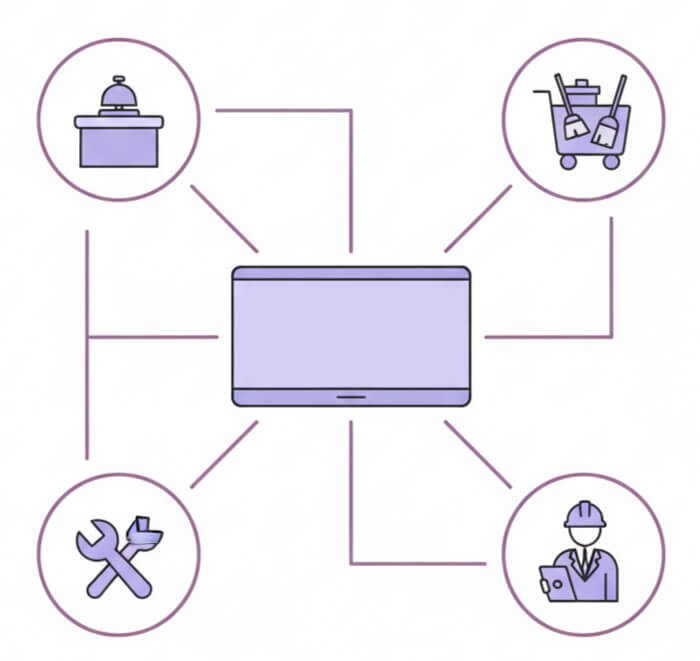
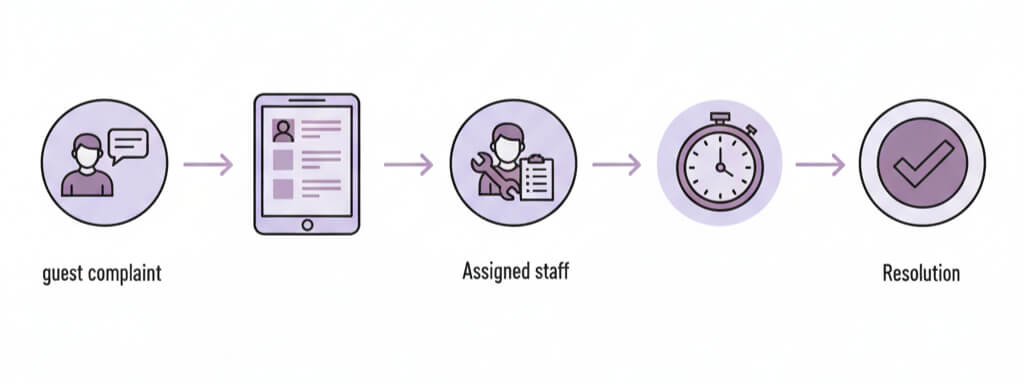
Guest complaint management software records, assigns, tracks, and analyzes guest complaints from the moment guests report them until the team fully resolves them.
Instead of treating complaints as isolated conversations, the system converts each issue into a structured ticket.
The system logs the complaint with complete details, assigns it to the appropriate team member or department, sets a timeline when required, and monitors it until the team resolves it. The system documents every action taken.
Many hotels attempt to manage complaints through paper logs, spreadsheets, email threads, or messaging apps. While these tools may function at low volumes, they create operational blind spots. There is no automated escalation. Reporting is manual and inconsistent. Historical data is difficult to analyze. Leadership cannot easily see how well service recovery is actually performing.
Resolution without visibility is not control. It is a coincidence.
A hotel complaint management system centralizes this entire process. It ensures that no complaint disappears between shifts and no resolution goes undocumented. More importantly, it transforms complaint handling from reactive coordination into a measurable operational workflow.
Types of Complaint Management Tools
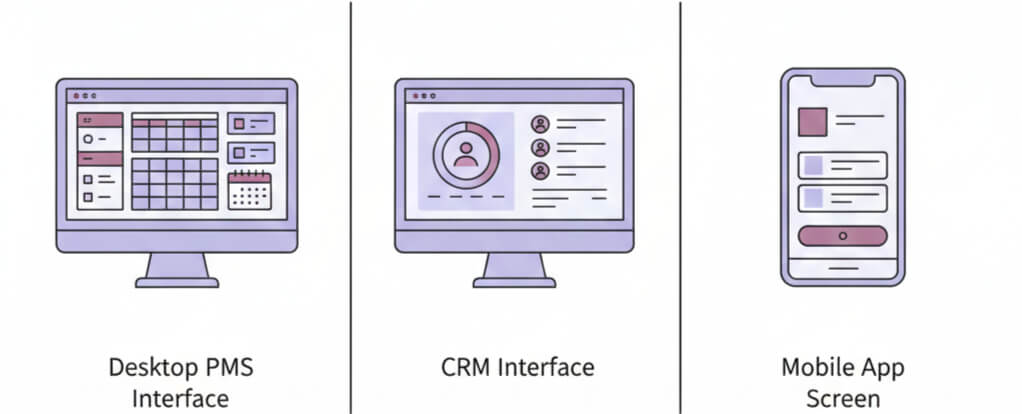
Not all systems operate the same way. The right choice depends on hotel size, structure, and operational complexity.
Standalone complaint management systems
These platforms focus specifically on complaint tracking and workflow control. They often offer strong reporting and escalation features. Independent hotels or smaller properties that want focused functionality without replacing core systems may find this suitable.
PMS-integrated tools
Some property management systems include built-in complaint modules or support third-party integrations. This connects complaint records directly to guest profiles and reservations. Larger properties often benefit from this tighter operational alignment.
CRM-based solutions
Customer relationship management platforms handle complaints as part of the broader guest lifecycle. Multi-property groups that emphasize long-term guest relationships and personalized communication may prefer this approach.
Reputation management platforms with internal tracking
Some reputation tools allow hotels to convert online reviews into internal tickets. While useful for public feedback, internal operational tracking may not be as detailed as in dedicated systems.
Mobile-focused staff communication tools
These tools prioritize real-time coordination via mobile devices. They are practical for fast-paced properties where teams need instant updates on the go.
Independent boutique hotels often prioritize simplicity and cost efficiency. Larger hotels and corporate groups usually require deeper reporting, integrations, and multi-property visibility.
Key Features That Matter
When evaluating guest complaint management software, features should be assessed based on the operational control they create.
Control and Visibility
The system creates tickets in real time and logs complaints immediately, whether guests report them at the front desk or through guest feedback software. Clear task assignment eliminates ambiguity about responsibility. SLA tracking measures response and resolution times against defined standards.
Together, these capabilities provide operational transparency. Managers monitor open tickets, identify delays, and pinpoint bottlenecks in the process.
If you don’t track an issue, you can’t improve it, and if you don’t assign it, your team rarely resolves it on time.
Accountability and Communication
Each complaint should have a named owner. The system automatically escalates missed deadlines to supervisors and reinforces accountability.
Internal team communication within the ticket keeps all updates in one place, creating a documented history of actions taken.
The absence of structured tracking does not mean complaints are rare. It often means they are invisible.
Insight and Improvement
Reporting and analytics dashboards transform individual complaints into patterns. Hotel managers can analyze trends by department, issue type, time of day, or room category. Integration with hotel guest feedback software ensures that survey responses and in-stay feedback feed directly into the tracking workflow.
For multi-property groups, centralized dashboards provide visibility across locations. Leadership can compare performance and identify systemic issues.
Automation and alerts reduce reliance on manual follow-ups, ensuring urgent complaints receive timely attention.
These features do more than organize tasks. They create consistency and help improve guest satisfaction in a measurable way.
Benefits for Hotel Operations
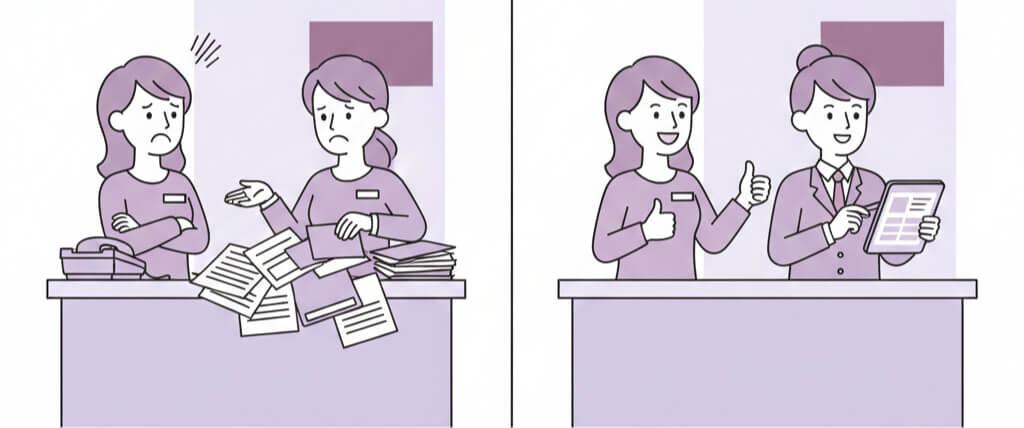
A structured hotel complaint management system influences operations at multiple levels.
Faster resolution times
Clear ownership and automated reminders reduce delays. Guests experience quicker service recovery, which strengthens their overall perception of the stay.
Stronger team accountability
When you assign and track every complaint, you make responsibility visible and turn service recovery from informal coordination into disciplined execution.
Higher online ratings and fewer negative reviews
Many negative reviews stem from unresolved issues rather than the original problem itself. Guests rarely leave because of a single issue. They leave because the response felt disorganized.
Lower compensation costs
Delayed resolutions often lead to room discounts, refunds, loyalty point compensation, or even lost repeat business. When your team controls and standardizes resolution times, compensation costs usually decrease. For many properties, unresolved complaints do not just damage reputation. They quietly erode margins.
Data-driven operational improvements
Complaint tracking tools for hotels reveal recurring operational weaknesses. Repeated maintenance issues in specific rooms, housekeeping delays during peak check-in, or consistent F&B service complaints highlight root causes that require structural fixes.
Service recovery is not a soft metric. It directly influences retention, ratings, and revenue stability.
Over time, structured tracking also shapes culture. When you measure response times and outcomes, you turn service recovery into an operational discipline instead of treating it as an afterthought.
Practical Use Cases
In day-to-day operations, the system integrates naturally into workflows.
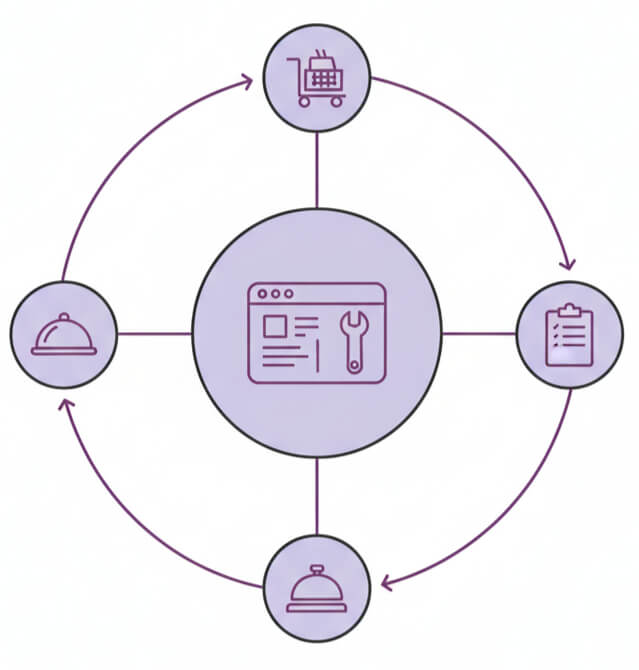
A front desk agent logs a noise complaint. The system assigns it immediately to security and sets a response target. Supervisors can monitor progress without making multiple calls.
The system records and tracks housekeeping delays. If room readiness frequently misses promised times, managers receive clear evidence to adjust staffing or processes.
The system monitors maintenance requests against clear deadlines. Repeated issues in the same room trigger deeper inspection rather than temporary fixes.
The team categorizes F&B complaints and reviews them monthly. If slow breakfast service appears consistently, management can review staffing levels or service flow.
Corporate teams can review complaint trends across properties, identifying training gaps or systemic operational challenges.
How to Evaluate the Right Solution

Before selecting a solution, evaluate your property’s size and complexity. A single independent hotel may not require advanced multi-property reporting, while a hotel group likely does.
Assess integration capabilities. Does the system connect smoothly with your PMS and existing hotel guest feedback software? Seamless data flow reduces duplication and manual errors.
Consider the budget carefully and evaluate the return on investment realistically. The value often lies in preventing revenue leakage, protecting online ratings, and improving efficiency rather than generating direct revenue.
Ease of use is critical. If department heads and frontline staff find the interface complicated, adoption will suffer. Involve operational leaders in demonstrations and pilot testing.
Finally, consider scalability. As you expand operations or add new properties, choose a system that supports growth without requiring replacement.
Careful evaluation ensures long-term alignment with operational goals.
Conclusion
Complaints are inevitable in hospitality. Disorganized handling is not.
The difference between reactive hospitality and operational maturity is visibility.
Guest complaint management software is not simply a digital logbook. It is an operational control framework that strengthens accountability, consistency, and long-term performance.
Hotels that measure service recovery improve it. Hotels that do not measure it assume it is working.
To assess your current approach, consider:

- Can you see every active complaint across your hotel in real time?
- Can you clearly identify recurring issues and measure resolution performance?
- Do you use complaints to drive operational improvement, or do you only resolve them one by one?
Your answers will indicate whether it’s time to implement a structured system.