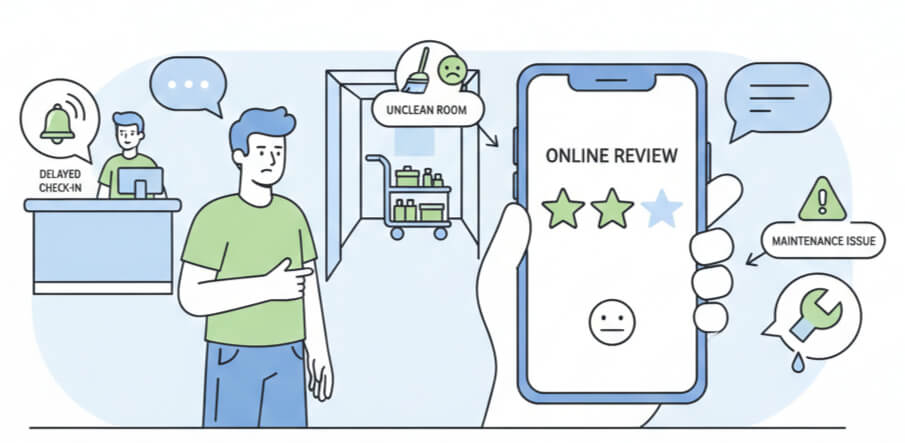
A guest books your hotel after browsing your photos. They choose your property with real excitement. They arrive, check in, and something goes wrong. By the time they reach home, they have posted a two-star review that will sit on the internet for years.
You never intended to disappoint anyone. But somewhere between booking and check-out, the hotel fell short.
Negative reviews follow predictable patterns. Hospitality researchers have studied and documented these patterns for decades. Once you understand them, you can act on them before the next guest ever reaches for their phone.
Guests Arrive with Expectations Your Listing Created
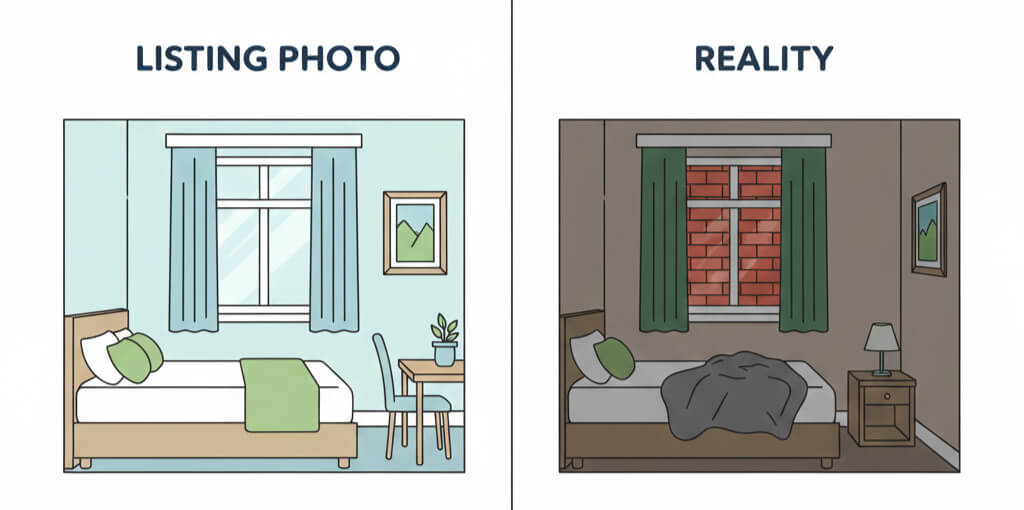
Before a guest packs a bag, they have already formed a clear picture of their stay. That picture comes from your website photos, your room descriptions, your star rating, and the reviews they read. When the actual stay falls short of that picture, disappointment follows automatically.
Hospitality researchers call this Expectancy Disconfirmation Theory, a model developed by Richard Oliver and applied widely in guest satisfaction studies. The core idea is straightforward: the wider the gap between what a guest expected and what they received, the stronger their dissatisfaction.
Consider a guest who booked a “bright, spacious room with a view” and arrived to find a narrow room facing a concrete wall. The room may be clean and fully functional. Yet the guest feels misled. That emotional gap between expectation and reality is what drives the review, not the room itself.
You can do a great deal to close that gap. Review your listings at least twice a year and ensure every room type has a clear, accurate description. State if the pool closes in winter. Mention if a room faces the street. Update photos that are more than three years old.
Cleanliness Problems Push Guests Straight to a Review
Guests will overlook a slow lift or a thin pillow. They will not overlook a dirty bathroom.
Research published in a comprehensive analysis of hotel guest reviews found that 85% of guests ranked cleanliness as the primary factor shaping their overall stay experience, placing it ahead of location, price, and even staff friendliness.
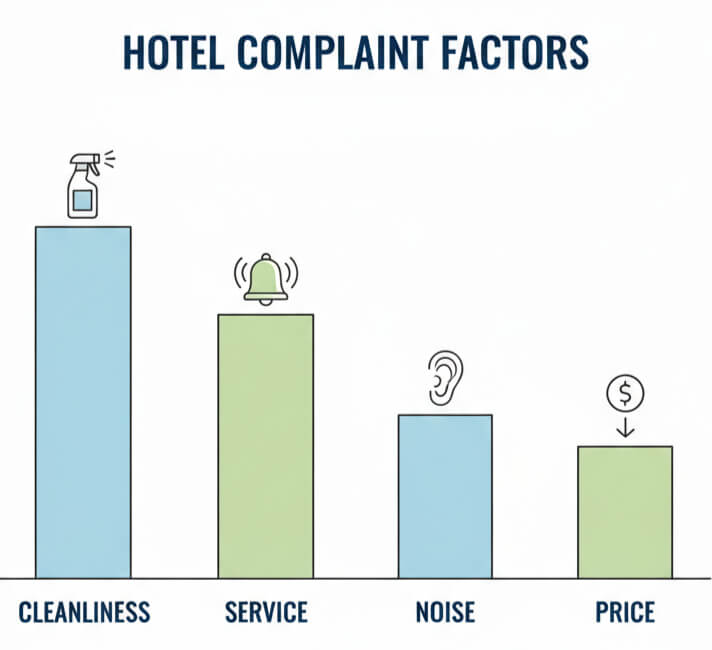
A study in the International Journal of Hospitality Management examined thousands of verified negative hotel reviews and confirmed that cleanliness and service complaints carry the highest negative impact on guest satisfaction. Above noise complaints. Above pricing concerns. Cleanliness sits at the top.
Hotels do not usually fail at cleanliness through carelessness. They fail during busy periods, when housekeeping teams turn over rooms faster than normal. One rushed clean produces a missed toilet rim, a smudged mirror, or a stained towel, and that single detail becomes the headline of a guest’s review.
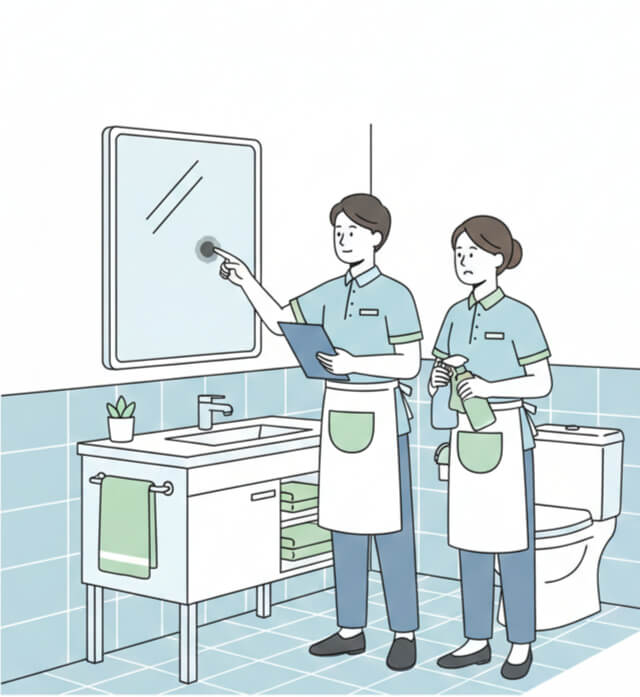
The solution requires consistency rather than complexity. Introduce a room-by-room checklist that housekeeping staff complete every single time, not just when they remember. Run unannounced inspections during your peak periods, when the pressure to rush is highest.
When a guest flags a cleanliness issue during their stay, respond within the hour. A room resolved quickly is almost always forgiven. A room left unaddressed becomes the opening line of a one-star review.
“A room resolved quickly is almost always forgiven. A room left unaddressed becomes the opening line of a one-star review.”
How Staff Treats Guests Decides the Tone of the Entire Stay
A guest with an average room but a warm, attentive team will often leave a four-star review. A guest with a comfortable room but one dismissive encounter at the front desk will often leave a two-star review.
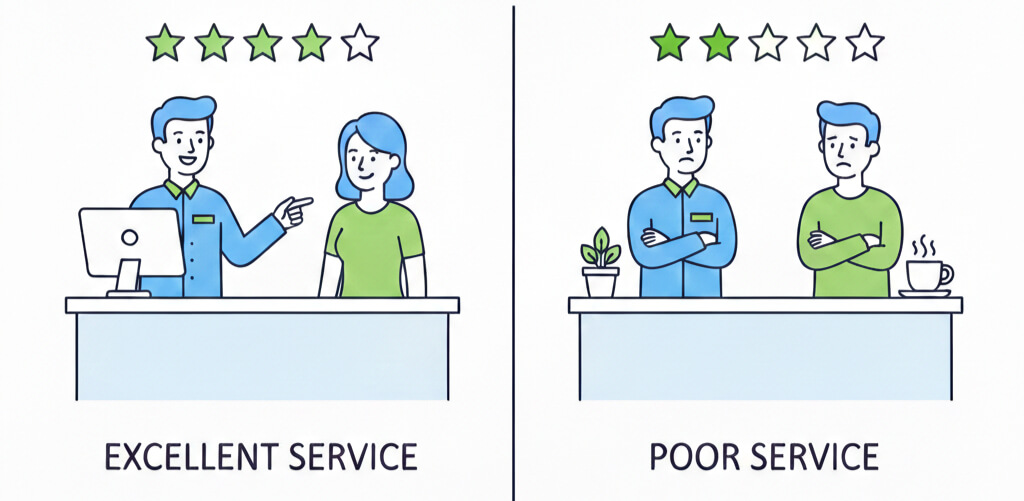
Research from Cornell Hospitality Quarterly found that employee attitudes and guest-oriented behavior rank among the strongest predictors of guest satisfaction, stronger in many cases than physical factors like room quality or hotel amenities. When staff commit to their role in the service process, guest satisfaction rises measurably. When they disengage, satisfaction drops regardless of how well-appointed the rooms are.
The specific service behaviors that affect guests most negatively include staff who interrupt or dismiss guest concerns before hearing them fully, front desk teams who give different answers to the same question, and requests that pass between departments with no one taking ownership.
Cornell researchers also found that coworker support directly lifts the guest-oriented behavior of staff. In practical terms, a team that respects and helps each other delivers a noticeably better experience to guests. Culture on the floor shows up in the reviews.
Consistency is what most hotels struggle with. Three staff members can be exceptional while one treats guests as a low priority. That single interaction can undo every positive moment that came before it. Clear service standards, regular training, and managers who hold the same standard for themselves as they do for their teams are what close that gap.
Communication Gaps Frustrate Guests More Than the Problems Themselves
Many negative hotel reviews are not complaints about the hotel’s physical condition. They are complaints about feeling ignored or uninformed.
A guest who assumes early check-in is available shows up at 10 am and finds their room is not ready and will be frustrated, even though the hotel did nothing wrong. The problem was never early check-in. The problem was that no one set that expectation clearly. Similarly, a guest who submits a maintenance request, hears nothing back for four hours, and checks out assuming the hotel ignored them will write a review that reflects abandonment, not just a faulty tap.
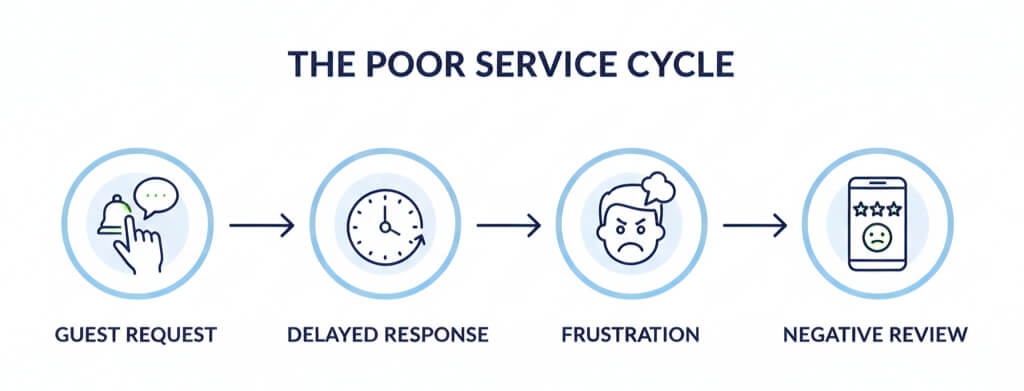
A thematic analysis of guest reviews published in a 2025 hospitality study identified three communication failures that appeared most consistently across hundreds of verified negative reviews: staff taking too long to acknowledge requests, guests receiving different information from different team members, and no clear way for guests to reach the right person during their stay.
None of these failures requires expensive systems to fix. They require consistent habits. Send guests a pre-arrival message two to three days before check-in. Include the check-in time, parking details, what the rate covers, and a clear prompt to ask questions. During the stay, give guests one reliable and monitored channel to reach your team. When a request comes in, please confirm receipt within the hour, even if the resolution will take longer. Guests who feel heard will wait. Guests who feel invisible will not.
“Guests who feel heard will wait. Guests who feel invisible will not.”
Slow Problem-Solving Turns Small Issues Into Negative Reviews
The First Fifteen Minutes Matter Most
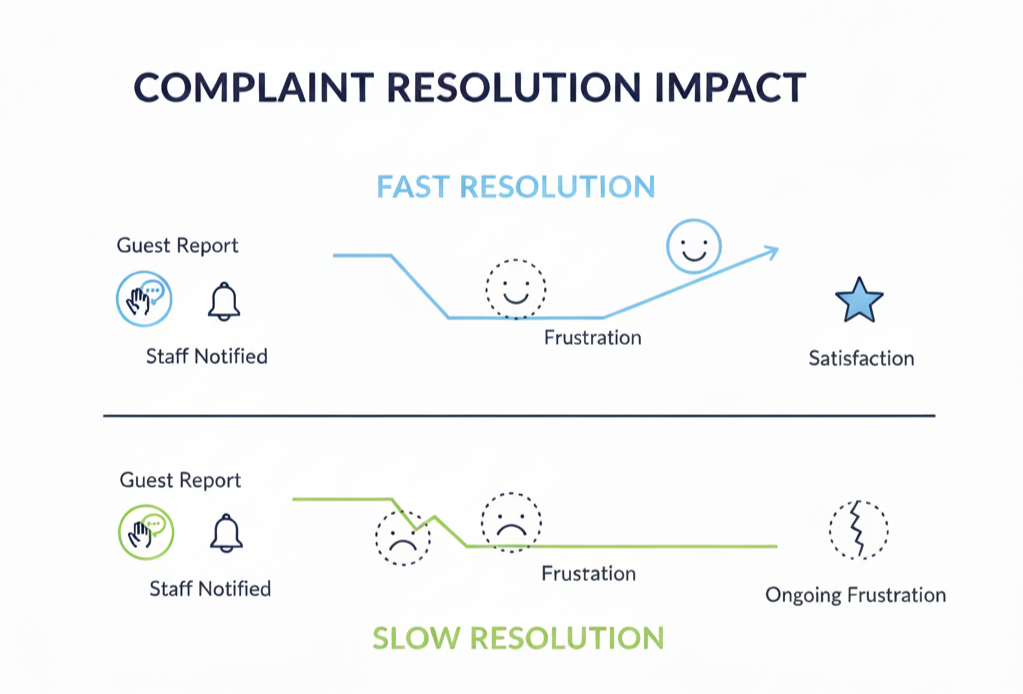
When a guest raises a problem during their stay, the next fifteen minutes largely determine whether the experience ends in a complaint or a compliment.
Research from Cornell Hospitality Quarterly examined the link between how quickly hotels responded to service failures and how guests behaved afterwards. Hotels that resolved service complaints promptly saw significantly higher return intentions and far less negative word of mouth than those that handled the same complaints slowly. When service recovery was fast, guests moved on and continued their stay without dwelling on the issue. When complaint resolution dragged on, guests did not move on. They remembered the delay and were more likely to share the experience with others.
A guest who reports a noisy room at 9 pm and gets moved within thirty minutes is unlikely to write a negative review. A guest who follows up twice and gives up at midnight feeling unheard is almost certain to.
Speed Changes Emotional Memory
Research published in the International Hospitality Review in 2025 adds an important detail. Even when a hotel handles a recovery well, the emotional weight of the original failure can still influence what a guest says afterwards.
The solution is urgency. Act fast enough that the positive emotion from the recovery outweighs the negative emotion from the failure. A strong recovery delivered quickly will almost always reduce the likelihood of a damaging review.
Speed does not just solve the issue. It reshapes how the guest remembers it.
Give Staff Clear Authority to Act
In practical terms, staff need more than a general instruction to “handle it.” They need clarity.
They should know:
- Who to escalate a complaint to
- What they are authorized to offer without waiting for approval
- How quickly that offer must reach the guest
Train teams to treat the first two minutes after a complaint as the most important part of their shift. Small issues handled immediately rarely grow into public criticism. Delayed action is what turns inconvenience into a review that lives online for years.
First Impressions and Final Impressions Shape the Whole Stay
Psychologists describe something called the peak-end rule: people judge an experience based on its most intense moment and its final moment, not the average of everything in between. For hotels, the most intense and final moments are almost always check-in and check-out.
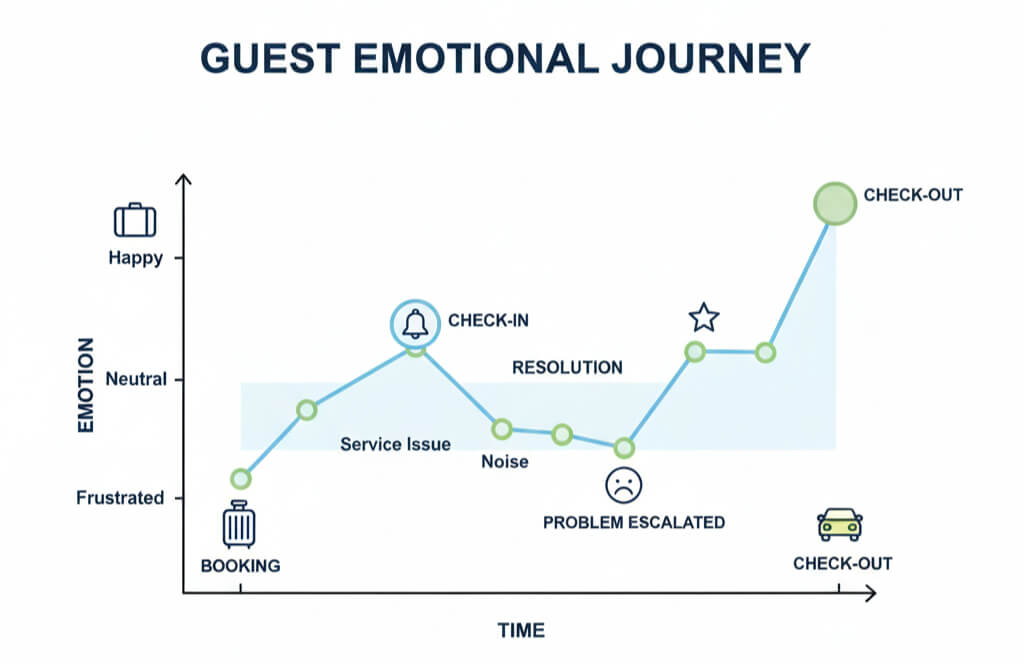
A guest who waits forty-five minutes to check in after a long journey starts their stay frustrated. That frustration does not reset when they reach their room. It colors how they interpret everything that follows: the noise from the corridor, the delayed room service, and the slightly scratchy towels. Each minor inconvenience confirms the initial disappointment rather than existing on its own.
Research from the International Journal of Hospitality Management on hotel service attributes found that check-in problems appeared consistently among the factors most negatively associated with poor guest reviews. The front desk interaction carries emotional weight that extends well beyond its practical purpose.
Consider aligning front desk staffing with peak arrival times instead of relying solely on general shift schedules. If guests queue every Friday afternoon, that queue is a staffing problem, not a coincidence. At checkout, review the bill before presenting it to the guest. Saying “I have already checked your bill, and everything looks right” builds confidence and prevents the friction of a dispute initiated by a confused or tired guest.
Ignoring Reviews After They Go Live Damages Trust Further

Once a negative review appears online, your response tells future guests more about your hotel than the complaint itself does.
Research published in Hotel Management magazine found that hotels where managers responded to online reviews saw average ratings increase over time. Separately, findings published in the International Journal of Hospitality Management showed that a 10% rise in a hotel’s average review score links to more than a 5% increase in online bookings. Each response you write is a small investment in your next hundred bookings.
Leaving a negative review unanswered signals one of two things to anyone reading it: the hotel did not see the complaint, or the hotel saw it and chose not to engage. Neither interpretation encourages a booking. A specific, honest, and calm response shows potential guests that the hotel listens, takes responsibility, and acts.
A strong response covers four things specifically: an acknowledgement of what the guest described, a sincere apology for the impact it had, a brief explanation of the specific change or action the hotel has taken, and a genuine invitation to return. Keep the response short. Keep it specific to the reviewer’s complaint. Avoid using the same phrasing across multiple reviews.
Research on managerial response strategies in the International Journal of Hospitality Management found that copy-pasted or generic responses produce less engagement and fewer follow-up reviews than genuine, personalized replies. Guests recognize a template, and so do the future travellers reading it.
“Your response tells future guests more about your hotel than the complaint itself does.”
Most Negative Reviews Point to Problems That Were Already Repeated
A 2025 study analyzed more than 80,000 negative hotel reviews from a major booking platform and found a clear pattern: negative complaints are not isolated. They repeat. The same issues appear across multiple guests over time because the hotel has not addressed the root cause.
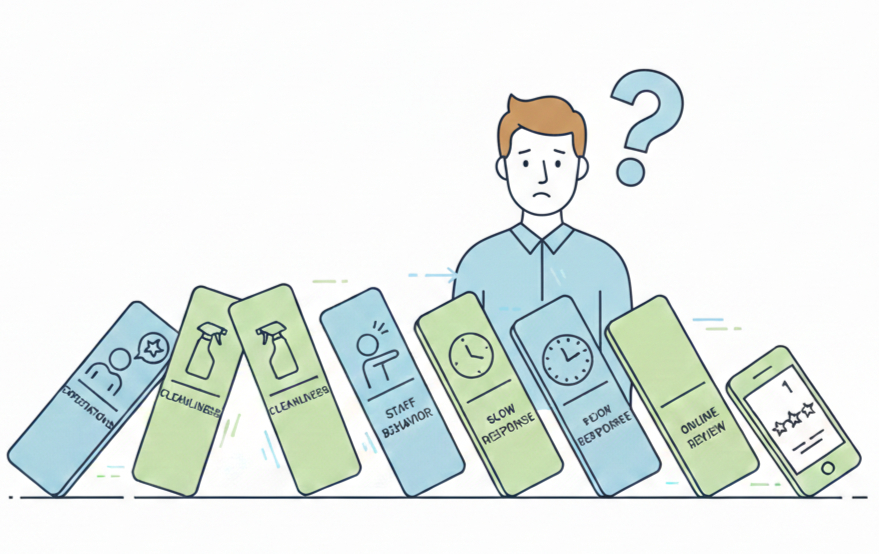
The researchers traced the pattern back to two specific problems: limited operational capacity and slow management action on feedback.
Translated into plain terms: most negative reviews describe problems that a previous guest already flagged and that the hotel did not fix in time for the next guest. The guest who found hair in the shower, the guest who waited too long at the front desk, and the guest who received no reply to their maintenance request, these are not unrelated incidents. They are the same unresolved problem seen by three different people.
Negative reviews become genuinely useful when hotel managers read them as operational signals rather than reputation threats. The specific complaints that repeat across multiple reviews are not noise. They are instructions. Act on them, and the next cycle of similar reviews stops before it starts.
A Practical Starting Point
The causes covered in this post are unmet expectations set by inaccurate listings, cleanliness failures under peak-season pressure, inconsistent staff behavior, communication gaps before and during the stay, slow responses to in-stay complaints, poor check-in and check-out experiences, and ignored online reviews.
None of these requires expensive renovations or complex technology. They require clear processes, consistent habits, and a team that understands why each guest’s experience matters, not just to the review score, but to every potential guest who reads it.
Hotels with strong reputations are not hotels that never have problems. They are hotels that catch problems early, respond to them calmly and quickly, and fix the things that keep coming up.
That approach prevents negative reviews. And over time, it builds the kind of trust that brings guests back.

Explore our website to get started and equip your team with the tools to manage guest concerns efficiently.