Why do some hospitality teams achieve more in less time while others struggle?
What if the secret to a productive year is not about doing more but doing things more smartly?
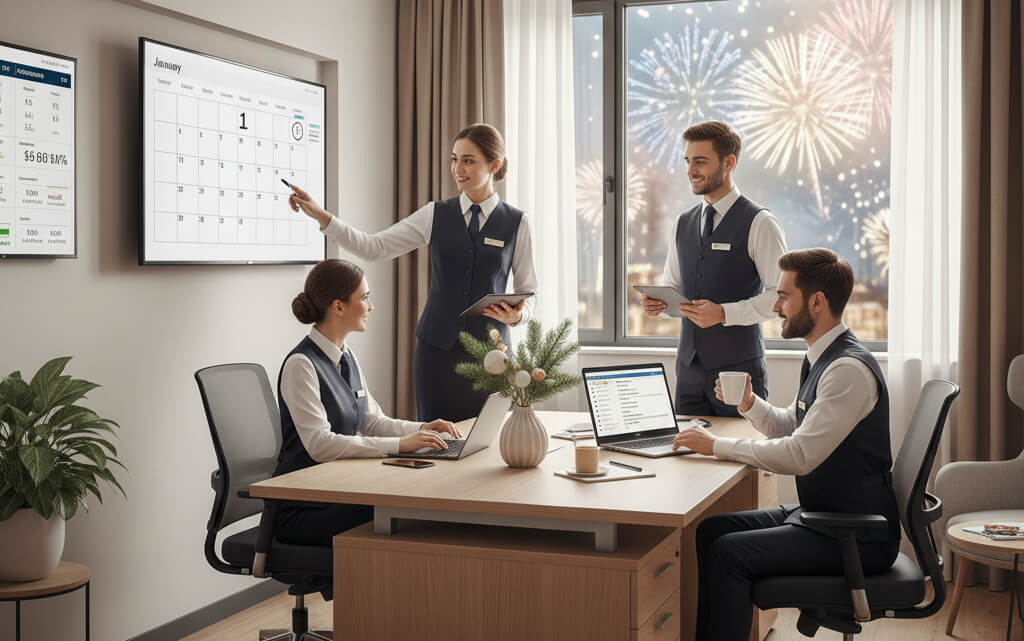
The New Year is the perfect moment to rethink how your hotel or property handles tasks, guest requests, and team coordination. Small shifts made now can shape a far more efficient year ahead.
What Can Last Year Teach You?
Before new bookings, projects, or guest programs begin, take time to reflect on the previous year. Which tasks felt challenging or time-consuming for your team?
Where did communication challenges make it a bit harder for the front desk or housekeeping to stay in sync?
Which issues kept repeating during peak seasons? Once these patterns are clear, it becomes easier to plan improvements that support smoother operations throughout the year.
Are Some Tasks Taking Longer Than Expected?
Hotels and resorts often lose countless hours to repeated work such as updating checklists, assigning rooms, sending staff reminders, or tracking maintenance requests.
Research shows teams can recover up to 20 percent of their work hours by automating routine tasks. This gives staff more time to focus on creating better guest experiences, solving problems quickly, and managing busy days with less stress.
Many workplace studies reveal that automation helps teams shift their energy from repetitive work to creative problem-solving and better decision-making.
Could Better Communication Change Everything?
Miscommunication is a common issue in hospitality. The housekeeping team may not receive a request in time, the maintenance team may miss a service need, or staff may delay a guest follow-up. These small gaps can lead to bigger problems.
Imagine a workflow where updates are clear, responsibilities are visible, and teams stay aligned from shift to shift.
By keeping communication organized and ensuring every task has a clear owner, hotels can reduce errors, improve response times, and keep guests happier.
How Can Data Help You Make Smarter Decisions?
Guessing often leads to slowdowns. Looking at data from last year can help identify your busiest times, common guest complaints, slow turnaround moments, or repeated service issues.
Insights like these help you plan ahead, set better staffing levels, and fix recurring problems before they grow.
Data becomes a guide that points out what needs attention and what is already working well.
A Real-World Example from the Hospitality Industry
A mid-sized business hotel saw its housekeeping team struggle during early check-ins because staff delayed room updates. Guests had to wait longer, and supervisors had to run back and forth to share updates.
After reviewing last year’s patterns, the hotel introduced a simple central task system that kept room status and requests visible in one place.
The team did not change their workload, but the clarity helped them reduce delays, speed up room turnovers, and cut guest waiting time.
These small changes led to higher guest satisfaction and smoother daily operations.
What Small Steps Could Transform Your Year?
You do not need to change everything at once. Start with simple improvements like setting clear goals, automating repetitive work, improving communication between departments, and tracking progress over time.
These small steps build momentum and help create a smoother, more organized, and less stressful work environment for your team, setting the stage for a successful year in hospitality.