
Consider a straightforward scenario. A business traveller books a room two weeks in advance and records her preferences: a high floor, a firm mattress, and a room away from the elevator bank. She expects the property to act on this.
She arrives after a five-hour flight. The room is on the third floor, directly adjacent to the elevator. A soft mattress. No acknowledgement, no note.
She contacts the front desk and waits three minutes before someone addresses the issue. The matter is resolved. But those three minutes, and the absence of any acknowledgement, had already established her perception of the property. No subsequent gesture substantially alters it.
This is the foundation of modern guest expectations. Travellers do not demand flawless execution. They expect staff to receive, retain, and act on their stated preferences with access to the relevant information.
Guests Arrive with a Fixed Frame of Reference
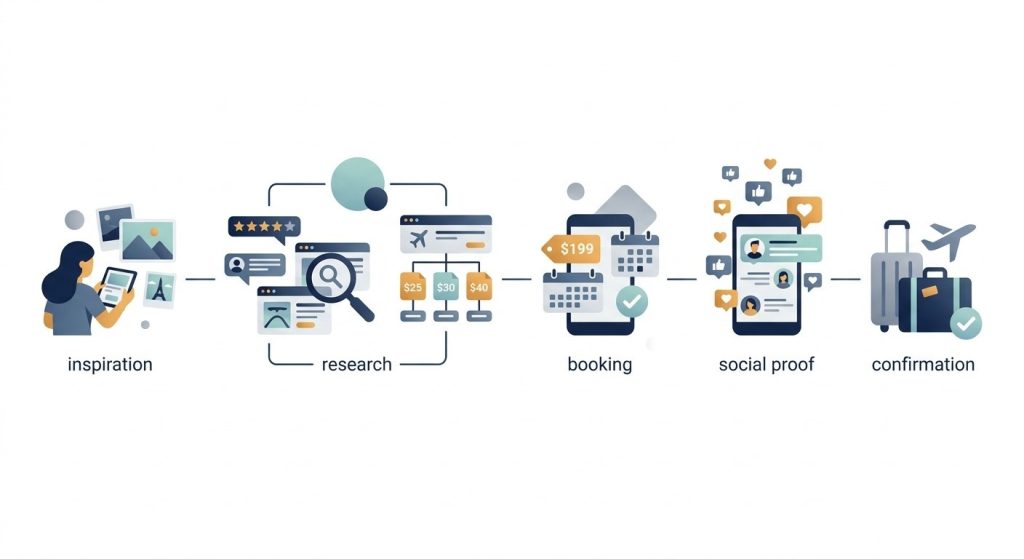
A decade ago, guests evaluated properties primarily on arrival. A clean room, functioning amenities, and courteous staff were sufficient. That standard no longer holds. Today’s guests form their expectations before they reach the property.
They have reviewed ratings across multiple platforms, examined amenity comparisons, and read recent visitor accounts. By the time they approach the front desk, they carry a formed judgment of what the stay should deliver. The hotel’s role is not to create that impression but to confirm it. When experience falls below expectation, guests do not recalibrate. They record their dissatisfaction and distribute it.
The Shiji ReviewPro 2024 Guest Experience Benchmark Report, drawn from over 39 million reviews across 11,200 properties in 61 review platforms and 68 languages, found that global guest satisfaction has grown steadily since mid-2022, with the Global Review Index rising 1.1 points in the first quarter of 2024 compared to the same period in 2023. The World Travel and Tourism Council reported that the global hospitality industry contributed a record $11.1 trillion to global GDP in 2024, while the UN Tourism World Tourism Barometer confirmed that 1.4 billion tourists travelled internationally in 2024, an increase of 11% over 2023.
Source: Shiji ReviewPro Guest Experience Benchmark Report 2024 | WTTC 2024 | UN Tourism World Tourism Barometer 2025
When a hotel fails to meet expectations, it does not simply lose a rating. It loses the recommendation a guest was prepared to give to everyone in their professional and personal network.
Operational Efficiency Is a Non-Negotiable Baseline

Operational efficiency is an expectation that applies across all guest segments. Business travellers, leisure visitors, and those combining both purposes assess a hotel’s competence through the quality of its arrival and departure process. Lengthy check-in procedures, manual key card systems, and paper-based documentation register as indicators of broader operational deficiency, not isolated inconveniences.
Guests who manage daily transactions through digital tools apply the same standard to hotel interactions. A check-in queue communicates that the property has not invested in processes proportionate to what it charges.
The Deloitte European Hotel Industry and Investment Survey 2024, conducted across leading hotel executives in the United Kingdom and the Netherlands, found that 75% of hospitality organizations are investing in data analytics, 70% in digital services and products, and 67% in future-of-work capabilities to close the gap between guest expectations and operational delivery. Euromonitor International’s Top Global Consumer Trends 2024 report found that more than 40% of consumers are comfortable with voice assistants offering personalized recommendations, signalling an accelerating appetite for technology-enabled service across all consumer sectors, including travel.
Source: Deloitte European Hotel Industry and Investment Survey 2024 | Euromonitor International Consumer Trends 2024
The arrival experience is not a courtesy. It is a statement of operational intent. Guests read it as evidence of how the rest of the stay will be managed.
Personalization Is an Expected Standard, Not a Differentiator
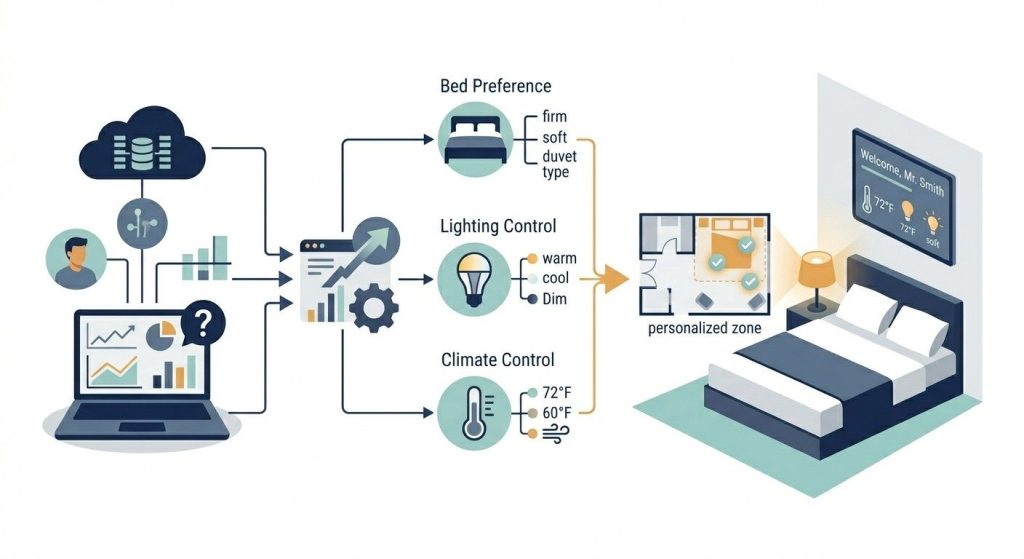
Personalization has shifted from a service differentiator to a baseline expectation. Guests encounter individualized experiences across retail, entertainment, and digital services. When a hotel with access to a guest’s booking history, stated preferences, and loyalty records treats that guest as a new visitor, it produces an unfavourable contrast that guests attribute to indifference rather than process failure.
Properties that treat guest data as operational infrastructure demonstrate what consistent personalization produces. The Ritz-Carlton Hotel Company uses its Mystique system to record preferences across all global properties, applying requirements noted in Miami automatically in Tokyo. IHG Hotels and Resorts, headquartered in Windsor, United Kingdom, reported that guests chose to spend an additional $22 per night on average simply to customize their room to their preferences. Marriott’s Bonvoy program maintains preference records across more than 8,000 properties worldwide. Effective personalization begins with addressing guests by name, acknowledging loyalty standing, and ensuring preference records are accessible to relevant staff before arrival.
A PwC hospitality report found that 76% of hospitality executives identify personalizing the customer experience to boost loyalty as a high priority, compared to 61% across all industries. Coach Omnium, the French hospitality research institute, found that 45% of hotel guests cite uniformity as a primary source of dissatisfaction, pointing to repetitive design, undifferentiated services, and procedural check-in as specific concerns.
Source: PwC Hotel Industry Digital Transformation Report 2023 | IHG Hotels and Resorts | Coach Omnium 2022
A returning guest who must reintroduce themselves to a property receives a clear signal. The hotel did not consider the information worth retaining.
Digital Communication Requires Real-Time Responsiveness

Guests now communicate with service providers through text-based messaging as a default. Hotels that restrict service requests to telephone-based channels are operating outside the expectations of a significant portion of their guests.
The expectation associated with messaging is rapid response. When a hotel activates a WhatsApp channel or in-app chat function, it signals continuous availability. A 45-minute response to a routine request does not meet that expectation. It amplifies dissatisfaction by presenting the appearance of accessibility that the property then fails to deliver.
Euromonitor International found that fewer than one in five consumers feel comfortable using automated bots to answer complex customer service questions, even as digital channel expectations accelerate. This signals a critical threshold: guests accept technology for simple tasks but require human competence for anything that demands judgment.
The Deloitte European Hotel Industry and Investment Survey 2024 found that 70% of hotel organizations are actively investing in digital services and products, reflecting broad industry recognition that communication infrastructure is no longer optional. The Shiji ReviewPro 2024 report found that average hotel review response times dropped from more than six days in 2022 to approximately four days in 2024, a meaningful improvement, but one that still trails the near-instant anticipation guests carry from other digital interactions.
Source: Euromonitor International Consumer Trends 2024 | Deloitte European Hotel Industry and Investment Survey 2024 | Shiji ReviewPro 2024
An understaffed messaging channel does not improve service. It exposes an unfulfilled commitment to every guest who uses it.
Physical Standards Determine the Wellness Experience
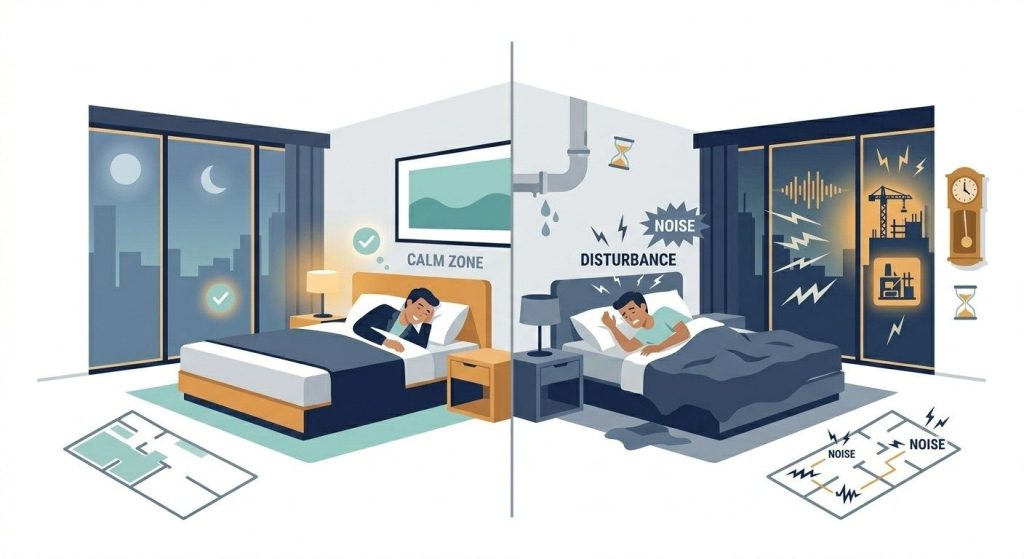
Wellness is now a standard evaluation criterion for hotel accommodation, not a premium category reserved for spa-equipped properties. Guests assess cleanliness, sleep environment, and food provision as indicators of a property’s operational standards. A hotel does not require dedicated wellness facilities to satisfy this expectation. It requires consistent execution of fundamental physical standards.
Sleep quality is among the most consequential and most frequently underestimated of these. Noise, poor temperature control, or an unsupportive mattress disrupts a guest’s sleep, and the guest attributes the failure to the property as a whole.
The Shiji ReviewPro 2024 Guest Experience Benchmark Report found that positive assessments of room quality have increased across all major global regions, while value-for-money perception has declined notably in Europe, Latin America, and Africa. The same report identified that no other major department score recorded as sharp a reversal in the value-for-money index in 2024, pointing to a widening gap between what properties charge and what guests perceive they receive in return. Asia-Pacific and Middle Eastern markets, by contrast, maintained the most consistent guest satisfaction performance across the two-year period analyzed.
Source: Shiji ReviewPro Guest Experience Benchmark Report 2024
Guests measure all amenities against the quality of their sleep. Most amenities do not measure up.
Sense of Place Has Become a Competitive Consideration
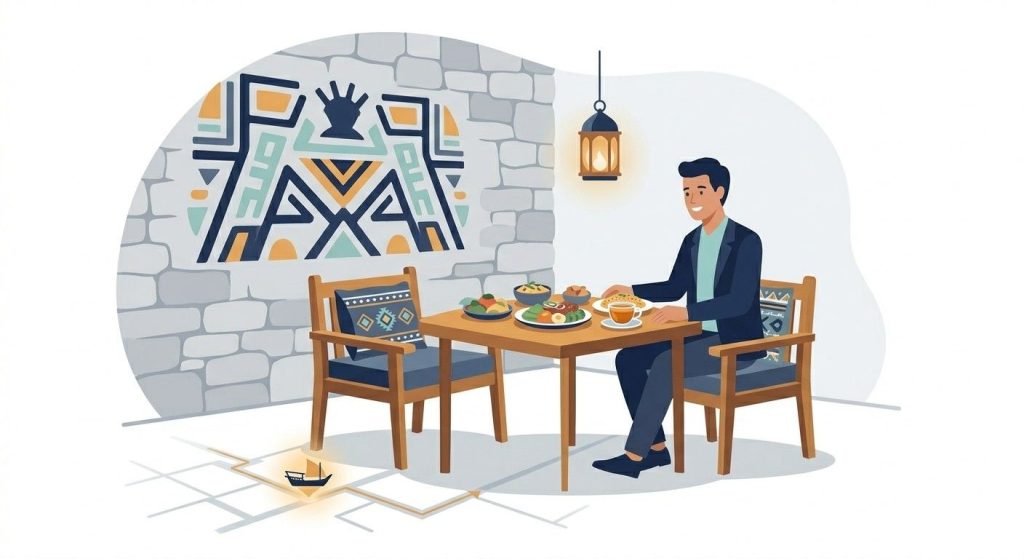
The uniform hotel experience served a functional purpose for decades. Predictability reduced booking risk and built brand confidence. A growing segment of today’s travellers, however, rejects this model. They seek accommodation that reflects the character of their destination rather than one that insulates them from it.
Branded chains have responded by incorporating local artists, regional cuisine, and community-focused concierge services. Hilton’s Cartagena property integrates local artists and cultural contributors to deliver an experience that reflects the destination specifically. These are not decorative additions. They are operational commitments that require coordination across departments to execute consistently.
Recent studies show that most travellers now prefer authentic local experiences and see hotel stays as an extension of the destination rather than a separate, branded environment.
A guest who departs with the sense that they experienced the destination, rather than simply occupied accommodation within it, attributes that value directly to the hotel. No standard amenity produces the same result.
Sustainability Credibility Requires Verifiable Evidence
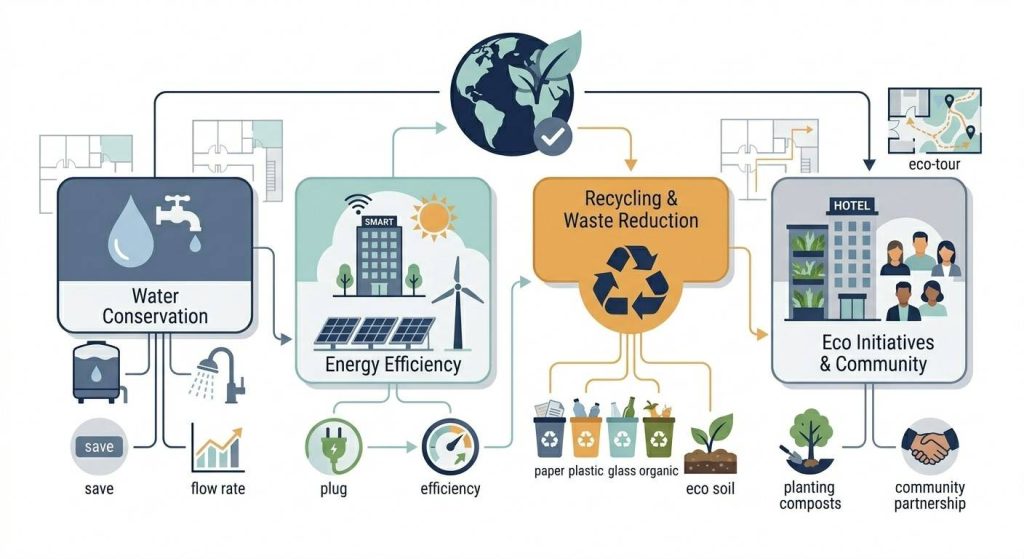
Environmental responsibility has become a material consideration for a significant portion of travellers, many of whom indicate willingness to pay a premium for credible sustainability credentials. The critical variable is evidence. Guests consistently find properties that communicate environmental commitment through generic language or token gestures unconvincing.
Many travellers say they want to make more sustainable choices, but they remain sceptical about whether hotels are genuinely committed. This gap between intent and trust is the main challenge hotels face when communicating sustainability efforts.
Guests do not require hotels to resolve environmental issues. They require evidence that the hotel has taken concrete, specific, and measurable steps toward responsible operation.
Staff Performance Determines the Overall Guest Assessment

Satisfaction research consistently identifies staff interaction as the most determinative variable in a guest’s overall assessment of a stay. Technology investments, physical improvements, and programming produce measurable effects, but none override the impression formed through direct human contact.
Guests accommodate physical limitations. They accept smaller rooms, dated furnishings, and limited facilities. They respond negatively when they are treated as undifferentiated. What they consistently report as the defining positive memory of a stay is being addressed by name, assisted without prompting, and regarded as an individual rather than a reservation record.
Research published in the International Journal of Contemporary Hospitality Management (Emerald Publishing, UK) found that service quality, not physical facilities, ranks as the primary driver of both guest delight and dissatisfaction across all hotel categories, with inconsistent service having a measurably growing negative impact on international guests. The Shiji ReviewPro 2024 report further confirmed that staff service and room quality are the two factors that most directly determine a property’s Global Review Index performance, with properties that invest in both recording the clearest consistent improvements over time in satisfaction gains.
Source: International Journal of Contemporary Hospitality Management, Emerald Publishing 2020 | Shiji ReviewPro Guest Experience Benchmark Report 2024
Staff competence and attentiveness are the single factor that no investment in physical infrastructure or digital technology can substitute for. The guest standing at the desk is evaluating a person, not a platform.
Operational Communication Determines Service Consistency
High-performing properties operate from a shared understanding that guest information requires active management across departments and shifts. The guest experience is produced by the sequential transfer of relevant information between teams, and the quality of that transfer determines whether the guest’s needs are honoured throughout the stay.
Effective properties formalize the shift handoff. Rather than relying on verbal briefings between departing and incoming staff, they maintain written records documenting open service matters, pending requests, and guest preferences from the previous period. Staff review these records before their first guest interaction. They ensure information does not remain within the department that receives it. A dietary requirement noted during reservation should reach the restaurant and room service before the guest unpacks. A preference communicated at check-in should appear on the housekeeping brief. When a guest reports a service failure, a follow-up confirmation that the matter has been resolved and will not recur distinguishes properties that manage service recovery from those that only respond to it.
The Shiji ReviewPro 2024 report found that hotel review response rates have increased steadily alongside improvements in response speed and that properties that actively engage with guest feedback across all platforms record consistently higher Global Review Index scores than those that address reviews selectively. The correlation between internal communication discipline and external reputation performance is direct.
Source: Shiji ReviewPro Guest Experience Benchmark Report 2024
A hotel delivers consistent service only when information moves. When it does not, service breaks down regardless of the capability of the staff involved.
Conclusion
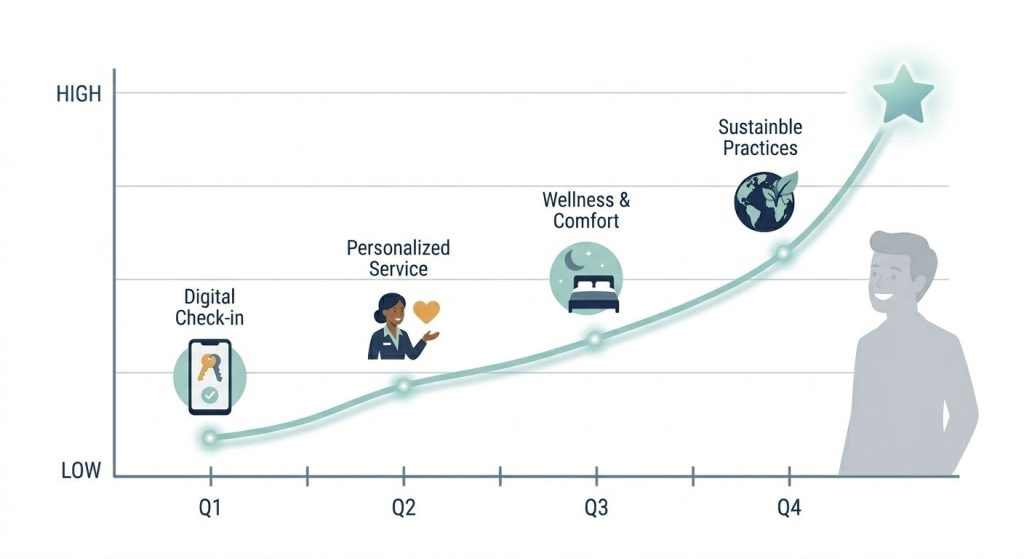
Contemporary hotel guests do not present unreasonable demands. They expect their stated preferences to be honoured, their time to be respected, and the service delivered to reflect the standard communicated during booking.
The research examined in this article identifies consistent patterns. Satisfaction correlates with staff quality. Loyalty is produced by individualized service. Review scores reflect whether physical standards meet pre-arrival expectations. Technology generates satisfaction when it functions reliably and frustration when it creates unmet expectations. Sustainability credibility requires specific, documented action, not a communication strategy.
Properties that address these dimensions systematically build a guest relationship that sustains occupancy through variable market conditions and produces the most reliable source of future revenue: guests who return and bring others.
That outcome begins with an accurate understanding of what guests expect on arrival.