
Picture a busy hotel morning. The front desk greets guests, housekeeping rushes through room inspections, engineering handles maintenance requests, and guest services juggles multiple demands. Everything looks fast-paced and busy. However, by midday, progress slows down, and problems pile up. What’s really causing these delays?
“Every hotel staff member loses nearly an hour daily on tasks that do not move the property forward.” Hotel Management Research, 2024
The problem isn’t lazy staff or lack of skills. Instead, poor workflows, old systems, and broken processes hide these issues. If managers tracked exactly how staff spend their time, they’d discover just how many hours slip away without notice.
This article looks at the hidden ways hotels lose time, backed by research and real examples, plus ways hotels are taking back these hours to work better and serve guests better.
Busy vs. Efficient: The Real Difference
Staff may stay constantly active, but bad systems force them to waste energy on tasks that don’t really matter.
“Being busy does not mean getting things done.” Hospitality Institute
A 2024 report from the Hospitality Institute reveals that hotel workers spend 45 to 60 minutes daily on repeat tasks or paperwork that doesn’t improve guest satisfaction. In a 100-room hotel with 30 staff members, this adds up to over 30 hours lost daily, or more than a week’s worth of wasted work every month.
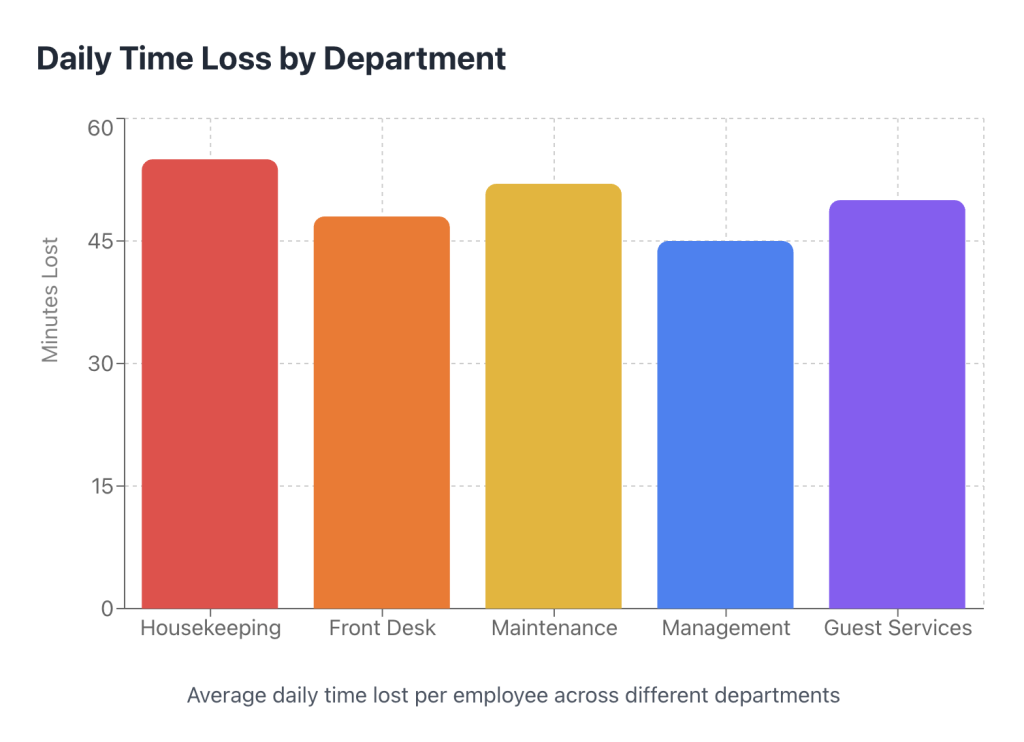
Broken workflows force staff to double-check information across multiple systems, repeat messages between departments, hunt down missing data, and verify task completion multiple times. These small problems pile up into weeks of lost work, creating the illusion of being busy without delivering real results.
Consider how a housekeeping supervisor starts their day. They check paper logs from the night shift, then log into the computer system to see which rooms need cleaning. Next, they send texts or make calls to housekeepers about priority rooms. Then the front desk calls asking about room status.
Later, they must update the system again as rooms finish. Finally, they write another paper report for the evening shift. This cycle repeats every day, consuming time that could strengthen quality checks, train staff better, or help guests directly.
One mid-sized hotel discovered housekeeping staff spent nearly 30 minutes daily just figuring out room readiness. After adding a central communication system, they slashed this time to under 10 minutes, saving more than 50 hours monthly.
The Technology Problem
Hotels often use different systems for bookings, housekeeping, engineering, guest messages, and reports. When these systems don’t talk to each other, staff must type the same information into multiple tools, call other departments to confirm updates, and recheck whether tasks are complete.
According to Hospitality Net (2025), hotel managers lose 322 to 470 hours yearly because disconnected systems create chaos. That’s over a month of productive work vanishing just because systems can’t communicate.
“An internal audit of a four-star hotel revealed that their team spent over 12 hours each week simply following up on pending tasks, checking progress rather than completing them.”
The problem extends beyond wasted time. When systems don’t connect, information gaps create confusion and mistakes. A guest might request extra towels through the mobile app, but if that request doesn’t flow automatically to housekeeping’s system, it vanishes. The guest then calls the front desk to ask again. The front desk agent writes it down and calls housekeeping. By the time towels arrive, the guest has waited 45 minutes and feels frustrated.
Hotels that use fully connected property management software complete tasks up to 18% faster and receive fewer guest complaints about delays. They redirect the time saved toward training, preventive maintenance, and personal guest interactions.
One 150-room hotel discovered that front desk staff spent 20 minutes per check-in confirming room readiness. After connecting the front desk and housekeeping systems, check-in time dropped to 8 minutes, saving over 60 staff hours monthly.
Better Work Hours Equal Better Results
The 2025 report shows that when hotels match work hours to workflow needs, they achieve remarkable results. Guest services hours per occupied room drop 13.5%, housekeeping hours fall 7.1%, and management hours decrease 14.6%.
These reductions do not mean teams do less work. Instead, improved workflows allow teams to achieve the same results with greater efficiency.
“Overall productivity increased by 9 percent across all evaluated hotel roles when labor hours were aligned with workflow efficiency.” – 2025 Hotel Labor Costs and Trends Report
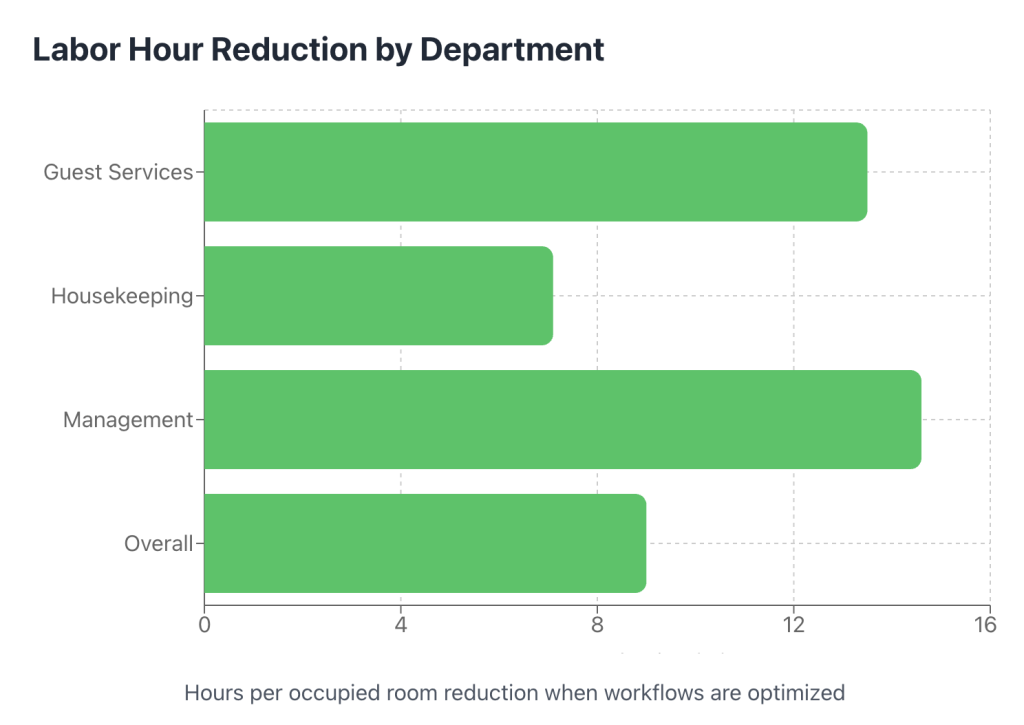
Smart workflows let staff focus on important tasks like engaging with guests, preventing maintenance problems, and solving operational issues. Daily team meetings and digital dashboards slash repeat follow-ups by 25%, freeing teams to focus on meaningful work.
Research demonstrates that matching work hours to workflow needs reduces slow points and boosts tasks completed per shift by 10 to 15%.
After implementing these methods, one mid-sized hotel increased its room turnover rate by 12%, directly improving guest satisfaction during busy periods.
Communication Gaps Cost Hours
When departments can’t see real-time updates, staff waste time tracking information, checking requests, and fixing errors instead of finishing tasks.
Research data reveals staff spend up to 40% of work hours on repetitive, low-value tasks. Automation frees staff to focus on operations and guest interactions.
“Delayed updates and unclear communication cause hotels to lose tens of hours every month.” – Guest Experience Research Institute, 2024
Consider morning briefings in many hotels. Department heads gather to share updates, scribble notes, and then rush back to tell their teams. Staff often record this information manually, enter it into multiple systems, and share it across different channels.
By the time everyone receives the information, morning has turned into afternoon, and some details have disappeared or changed.
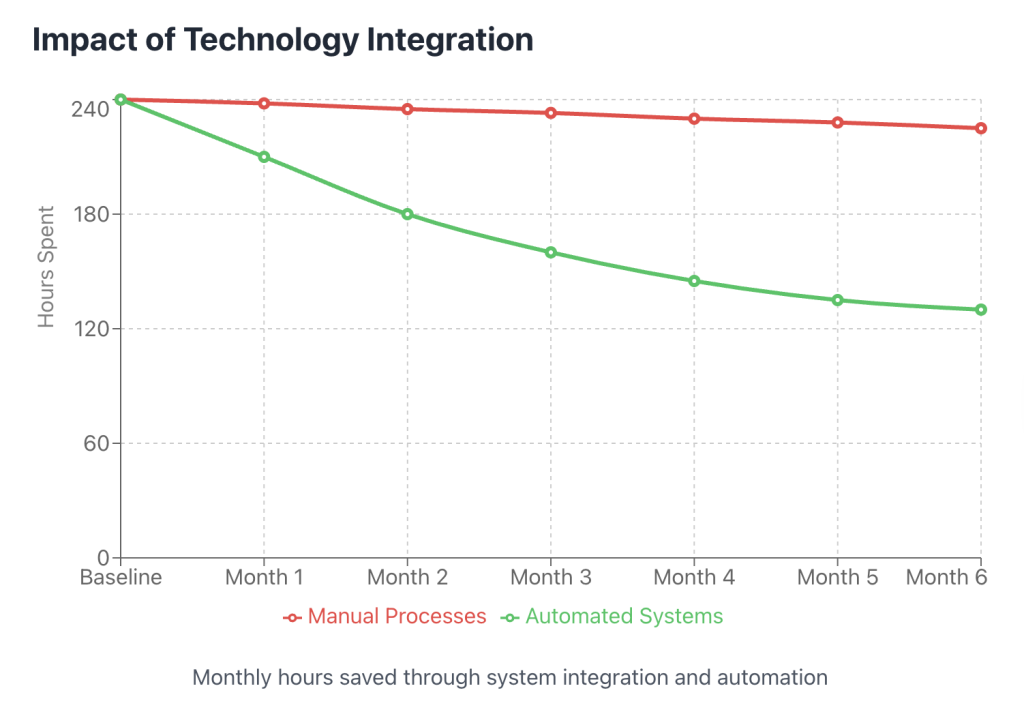
Digital platforms built for hotels transform this process. Updates entered once become instantly visible to everyone who needs them. Managers assign tasks, set priorities, and track completion in real time. Most importantly, everyone works from the same accurate, current information.
In one 200-room hotel, automating shift reports eliminated 30% of repetitive clerical work, freeing over 80 hours of staff time monthly.
Paper Logs vs. Digital Systems
Many hotels still use handwritten logs for maintenance, inspections, and shift changes. While paper feels familiar and easy, copying these notes into digital systems destroys hours daily.
Staff write information down, then someone else types it into a computer, and often a third person checks it for accuracy. This triple-handling of the same information wastes precious resources.
Beyond time waste, paper logs create serious problems. Sometimes handwritten notes become difficult to read, leading to misunderstandings. Papers get lost, damaged, or misfiled. Finding old information means flipping through stacks of papers instead of running a quick computer search.
Resorts using real-time digital reporting have slashed daily reporting from four hours to under one hour. Digital systems capture information once, at the source, eliminating redundant data entry.
Staff can attach photos to document issues or finished work. The system automatically records when tasks finish and who completes them. Managers generate reports with a few clicks instead of spending hours gathering information manually.
The Cost of Repeat Problems
Issues such as delayed room readiness, poor communication, and ongoing maintenance problems tend to repeat, pushing staff to redo work continuously. In busy hotels, unsolved operational issues trigger 27% of guest complaints, according to the Guest Experience Research Institute (2024).
Preventive maintenance schedules, structured task handovers, and early problem spotting dramatically cut repetition. Hotels usingstructured preventive maintenance plans experience up to 25% fewer guest complaints and achieve higher staff efficiency.
Consider a typical repeat problem. An air conditioning unit starts making noise. A guest complains. Maintenance arrives and adjusts it. The noise returns. Another guest complains. This time, maintenance replaces a part. The unit fails during peak season.
Now maintenance must scramble to find a replacement while the hotel deals with an unhappy guest and potentially relocates them or discounts their stay. A proactive inspection schedule could have identified the failing unit weeks earlier, allowing for planned replacement during a slow period.
One 120-room hotel slashed repeat AC complaints by 70% through preventive checks, saving over 60 staff hours monthly.
Impact on Guests
Guests rarely see behind-the-scenes problems, but they definitely feel the effects. Delays in check-ins, room readiness, and service responses directly damage satisfaction scores.
Research suggests that each minute of delay can reduce guest satisfaction scores by 0.5 to 1.0 points on standard hotel rating scales.
Hotels using smooth workflows and real-time tracking consistently achieve higher guest satisfaction. One luxury hotel slashed response times from 25 minutes to under 10 minutes, boosting satisfaction scores by 12% within three months.
The connection between smooth operations and guest experience extends beyond response times. When staff escape the trap of paperwork and system juggling, they gain more energy for genuine guest interactions.
They remember guest preferences, anticipate needs, and provide personal service that creates memorable experiences.
The Money Impact
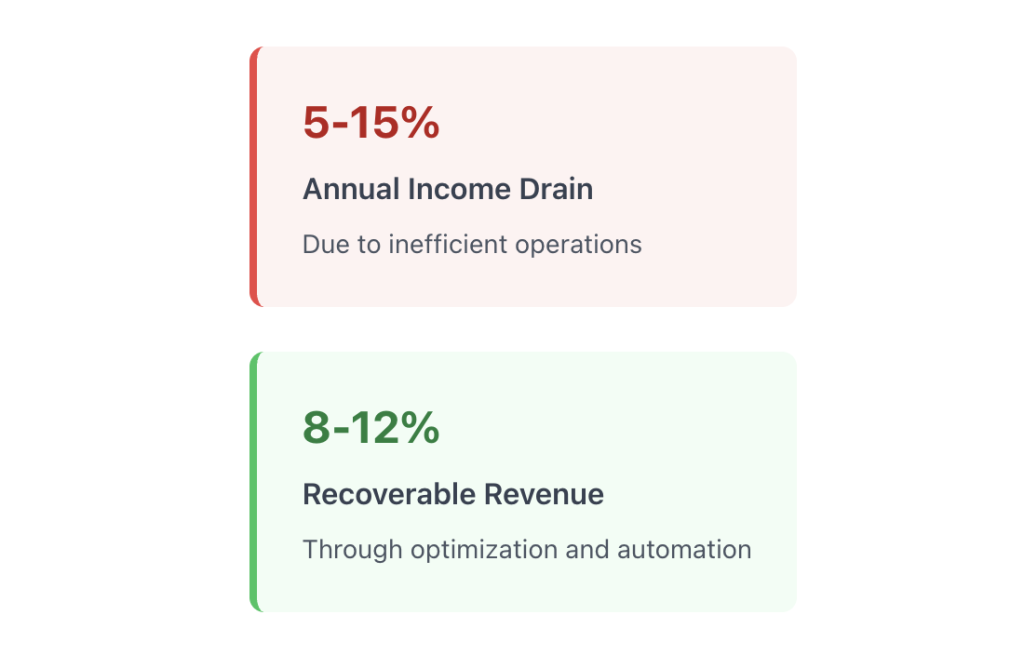
Time lost to poor workflows reduces staff availability for money-making activities like upselling, guest engagement, and preventive maintenance. For a hotel generating $5 million yearly, that represents $250,000 to $750,000 in lost potential income.
“Inefficient operations quietly drain 5 to 15 percent of a hotel’s annual income due to small delays and repetitive tasks.” – Hospitality Financial Research, 2024
Financial analysis demonstrates that hotels using workflow optimization and automation recover up to 8 to 12% of potential revenue yearly. This recovered money flows from multiple sources.
Staff gain more time to suggest room upgrades, promote spa services, recommend restaurant bookings, and highlight local experiences.
Faster room turnovers let hotels accommodate early check-ins, creating goodwill and potential additional charges. Reduced equipment downtime means fewer rooms sit out of service and more inventory stays available for sale.
One 200-room hotel missed upsell opportunities worth $15,000 monthly because delayed housekeeping left them scrambling. When rooms weren’t ready on time, front desk agents focused on managing frustrated guests instead of suggesting upgrades or additional services.
Staff Happiness and Keeping Good Workers
Hidden problems significantly hurt staff well-being. Workers spending hours on repeat or low-value work report higher stress, exhaustion, and disengagement.
Research shows hotels with poor workflows experience 18 to 25% higher staff turnover. Replacing a single employee costs $3,000 to $5,000 when you factor in recruitment, training, and lost productivity.

Worker satisfaction improves dramatically when hotels automate repetitive administrative work, leading to higher retention and lower recruitment costs. Staff members who feel their time matters demonstrate higher engagement, deliver better performance, and show greater loyalty to their employer.
One resort implementing automation and clear task ownership reduced burnout signs by 30 percent while simultaneously improving guest satisfaction and service consistency.
Measuring Time Use
Many hotels fail to track how staff spend their time. Without measurement, problems stay invisible and continue draining resources. Consistent time-tracking and workflow adjustments boost productive work hours by 15 to 20%, leading to measurable gains.
One 100-room hotel conducted a time-tracking audit and discovered staff lost over 20 hours per week on repeat checks and unnecessary communication. Improving workflows reclaimed nearly 80 hours per month.
The audit process itself helped staff become more aware of how they spent time, sparking self-directed improvements even before management made formal changes.
Smart Scheduling
Static schedules don’t match real-time operational needs, causing idle time and slow points. Predictive scheduling uses occupancy forecasts and real-time data to position workers efficiently.
Hotels using predictive scheduling achieve18 to 20% lower idle hours and deliver more consistent service quality.
Research demonstrates that predictive labor planning cuts overstaffing by 10 to 12% and reduces understaffing by 8 to 10%, creating smoother operations.
The technology behind predictive scheduling has become sophisticated, analyzing factors like past occupancy patterns, seasonal trends, local events, weather forecasts, and real-time booking data.
One 180-room hotel implemented predictive scheduling and slashed room turnover delays by 15%, improving both staff productivity and guest experience simultaneously.
Clear Operations Show Hidden Problems
Hotels often struggle with slow points invisible to management. Clear dashboards and workflow viewing tools let managers spot delays in housekeeping, maintenance, and front desk operations.
Research demonstrates that operational transparency eliminates 10 to 15% of wasted staff hours while improving communication across departments.
One hotel group using live operations dashboards reduced room readiness delays by 20% and improved department communication by 18%. Managers could instantly see which rooms teams were cleaning, which required maintenance, which were ready for guests, and where delays were forming.
This visibility enabled proactive intervention before minor delays became major problems.
Transparency also strengthens staff accountability and motivation. When everyone can see progress toward shared goals, teams naturally coordinate better and support each other more effectively.
Why Every Minute Matters
Time is a valuable resource in hotel operations. Smart management shapes guest experience, staff satisfaction, and operational efficiency simultaneously. When staff spend less time chasing updates and doing repetitive tasks, both productivity and morale improve naturally.
Efficient time management becomes a competitive edge, separating average hotels from exceptional ones.
The cumulative impact of small time savings throughout an organization creates real transformation. Five minutes saved here and ten minutes saved there multiply into hours daily and hundreds of hours yearly.
Those reclaimed hours represent opportunities for better service, deeper guest connections, improved maintenance, enhanced training, and ultimately, stronger financial performance.
Conclusion: Time Wins
Hidden time loss affects every part of operations and guest experience. Smooth workflows, automation, and smart staffing let hotels improve satisfaction, reduce stress, and increase profits simultaneously.
“The goal is not harder work, but smarter, more impactful work.” – Hospitality Management Insights, 2024
Time equals money in the hotel business. Managing it wisely separates great hotels from good ones, ensuring staff, guests, and operations all thrive together.