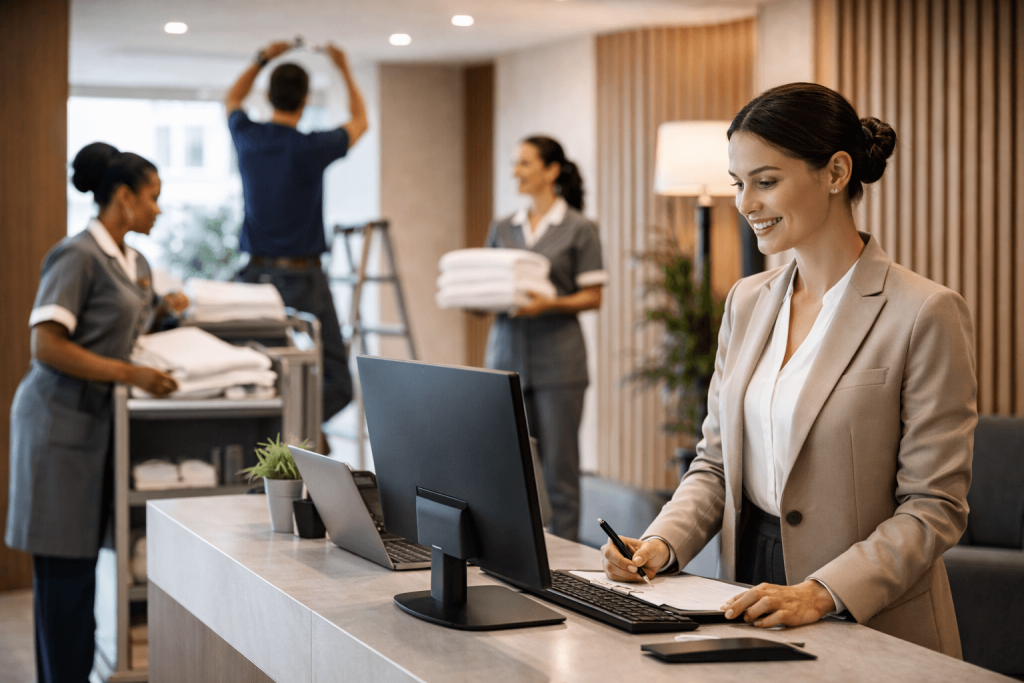
It’s 8 a.m. on a busy weekday. The front desk handles a rush of check-ins. Housekeeping teams hurry to prepare rooms. The maintenance team works through guest requests that come in overnight.
In the middle of this rush, a guest in a premium suite calls about a broken air conditioner. The front desk notes the issue, but during check-outs, breakfast coordination, and housekeeping updates, someone misplaces the note.
By mid-morning, no one had fixed the problem. The guest grows frustrated, and the staff scrambles to respond.
This situation plays out in many hotels every day. Teams work hard, but delays, poor communication, and repeated effort waste valuable time. Being busy does not always mean being productive. Guests feel the delays, staff feel the pressure, and these inefficiencies damage both performance and reputation.
Why Time Waste Matters in Hotels
Hotels lose more than time when operations slow down. They lose guest trust, staff energy, and revenue.
When a guest waits too long for help, frustration builds. That guest may leave a negative review or choose not to return. Over time, these small delays hurt the hotel’s reputation and reduce repeat bookings.
Poor organization also wears down staff. When teams lack clear processes, employees spend extra time checking on tasks, repeating work, or following up on missed requests. This leads to longer hours, higher stress, and less focus on guest service.
Even on quiet days, small mistakes add up. A delayed room cleaning, a missed service request, or a forgotten maintenance issue may seem minor. But when these issues happen often, they slow operations and put constant pressure on staff.
In a hotel, every minute counts. Wasted time slows service, frustrates guests, exhausts staff, and directly affects profits.
When managers understand how wasted time impacts daily operations, they see why better organization and clear processes matter. Strong systems keep guests satisfied and make work easier for employees.
The Hidden Cost of “Being Busy”
Many hotel managers assume that constant activity means productivity. When staff answer calls, move quickly, and respond to guests, operations may look efficient on the surface.
In reality, constant busyness often hides poor organization. Staff react to problems instead of preventing them. They spend time coordinating tasks rather than completing meaningful work.
Guests notice when service takes longer than expected. At the same time, staff morale drops as repeated issues and unclear workflows frustrate everyone.
Reducing wasted time does not mean pushing staff to work harder. It means helping teams work smarter. Clear systems remove unnecessary coordination and allow staff to focus on what truly improves the guest experience.
Implementing an Effective Task Management System
Hotels reduce wasted time by replacing scattered, memory-based workflows with a centralized task management system.
Complaint and task management tools help hotels organize work, track tasks in real time, and assign clear responsibility across departments. These systems create clarity, reduce repeated work, and help teams work together smoothly.
1. Clear Task Assignment
The system assigns every guest request to one staff member with a clear deadline. Everyone knows who owns the task and when they must complete it.
For example, when a guest reports a room issue, the system immediately sends the task to housekeeping or maintenance. The right person sees it at once and takes action.
This approach removes confusion, avoids duplicate work, and reduces constant follow-ups.
2. Real-Time Visibility
Staff and managers see all tasks in one place. They can quickly check what is pending, what is in progress, and what the team has already completed.
This visibility helps teams respond faster to urgent requests. Staff no longer waste time calling or messaging others for updates. They focus on completing work instead of tracking it.
3. Automated Alerts and Reminders
The system automatically sends reminders when tasks approach deadlines or remain unfinished.
These alerts prove especially helpful during peak hours and shift changes. Staff no longer rely on memory or verbal handovers. Important tasks stay visible and on track, even on the busiest days.
4. Cross-Department Collaboration
A shared system connects the front desk, housekeeping, and maintenance teams. Everyone works from the same information in real time.
When a maintenance issue affects room readiness, the system alerts all relevant teams immediately. This prevents delays, reduces miscommunication, and keeps operations moving smoothly.
5. Performance Insights Over Time
Over time, the system highlights patterns in daily operations. It shows which tasks take the longest, which issues appear most often, and where delays usually occur.
Managers use this data to improve processes, adjust staffing, and fix recurring problems. These insights make operations more predictable and efficient for both staff and management.
Practical Impact: A Realistic Example
A mid-sized hotel adopted a centralized task management system to improve daily operations. Before the change, housekeeping and maintenance teams worked separately, which often delayed room readiness.
Staff shared tasks verbally or wrote them down, which made it easy to miss important requests.
Within three months, the hotel reduced average room preparation time by 18 percent. Guest complaints related to room issues dropped by 25 percent. Staff reported feeling calmer, more organized, and more in control of their workload.
This example shows how small changes in workflow create real results. Clear ownership, fewer steps, and real-time visibility improve both efficiency and guest satisfaction across the property.
Turning Operational Challenges into Opportunities
Hotel operations will always stay busy, but hotels can run them efficiently.
Every delayed task, missed request, or repeated follow-up offers a chance to improve processes. When hotels adopt systems that bring clarity, accountability, and visibility, chaotic days turn into organized and confident operations.
Improving efficiency does not require more staff or added pressure. It allows existing teams to work smarter, serve guests faster, and focus on what matters most.
With the right systems in place, staff feel confident, guests enjoy smoother experiences, and managers maintain control without micromanaging.
Hotels ready to move from constant busyness to real productivity can start by exploring tools like Geedesk. Efficiency is not just an operational goal. It is a long-term advantage that strengthens staff morale, improves performance, and enhances guest satisfaction over time.