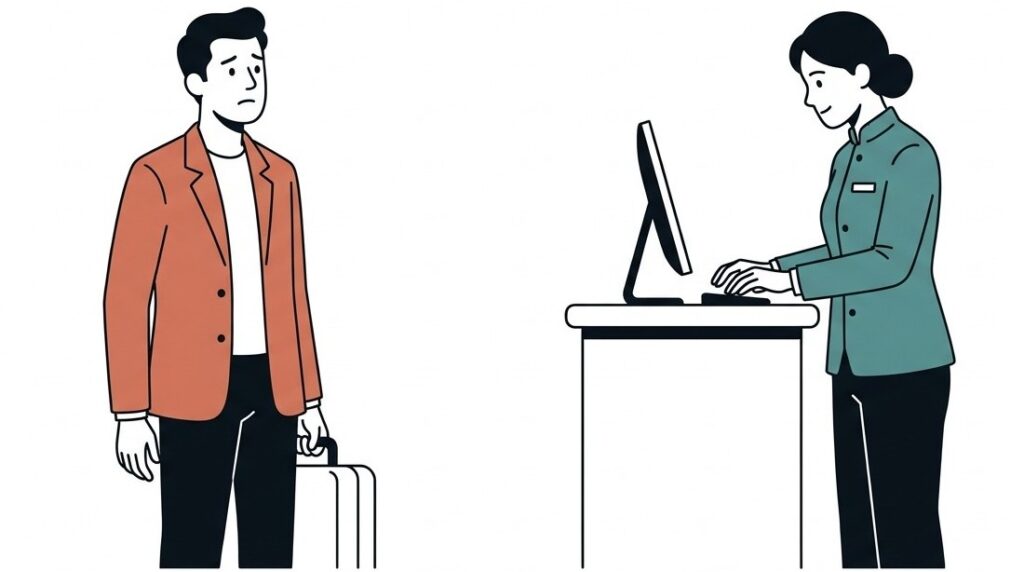
A hotel can run a great front desk and still lose guests over a small problem. Think of a slow air conditioner repair, a towel request that never arrived, or a noisy corridor that nobody followed up on. The guest does not remember the delay. Instead, they remember that nobody seemed to care.
This walkthrough follows a typical busy city hotel as it moves from phone calls and logbooks to Geedesk. The hotel in this story is an example built from how many properties handle complaints. Likewise, the figures are example numbers that show what to measure and what a good result can look like. They are not results from a named property.
First, you will see how complaints move before the switch. Next, you will see what changes after go-live. Finally, you will see which numbers tell you whether it worked.
How complaints move before Geedesk
Most hotels in this position rely on phone calls, WhatsApp groups and a shared logbook at the front desk. In addition, every department has its own habits. Front office writes requests in the log. Housekeeping hears about them through a supervisor. Engineering gets a call, sometimes a message, and sometimes nothing.
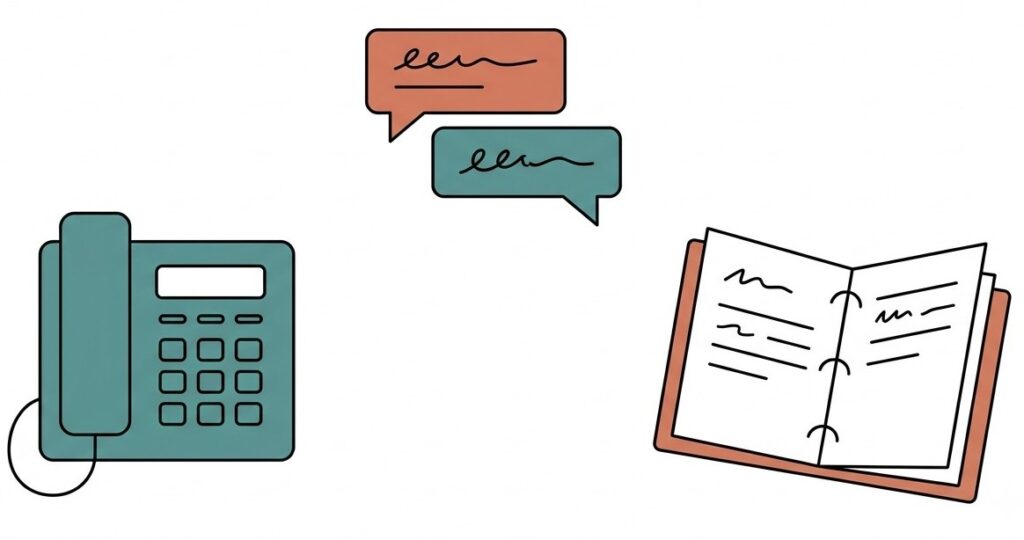
The team works hard, but the system does not help them. Three problems keep coming back.
First, nobody can say who owns a complaint. A guest calls about a leaking tap, and three people hear about it. Each one assumes another person has acted.
Second, the general manager has no live view. Morning meetings run on memory and handwritten notes. As a result, a complaint raised at 9 pm can sit until the next afternoon before a senior person hears about it.
Third, patterns stay hidden. If one room has the same fault three times in a month, no report shows it. Each visit looks like a fresh problem.
Guests feel all of this. For example, reviews rarely mention the original fault. They mention the slow or missing follow up.
Why hotels look for a change
The trigger is rarely one big incident. Rather, it is a slow build of small ones. The team sees the same complaint types in review after review, yet nobody can prove how long fixes really take. Without numbers, every debate in the morning meeting turns into opinion.
A general manager in this spot usually wants three things. First, every complaint should have one owner. Second, every request should have a clear timer. Third, the whole property should show up on one screen, so nobody waits for a verbal update.
There is a business reason too. Cornell School of Hotel Administration research links stronger review scores to better revenue per available room. Therefore, complaint handling is a revenue topic, not only a service topic.
The first weeks after go-live
A sensible rollout does not switch everything on at once. In this example, the hotel starts with front office and housekeeping. Then it adds engineering once the first two groups feel comfortable. Because of this approach, the live property keeps running while people learn the tool.
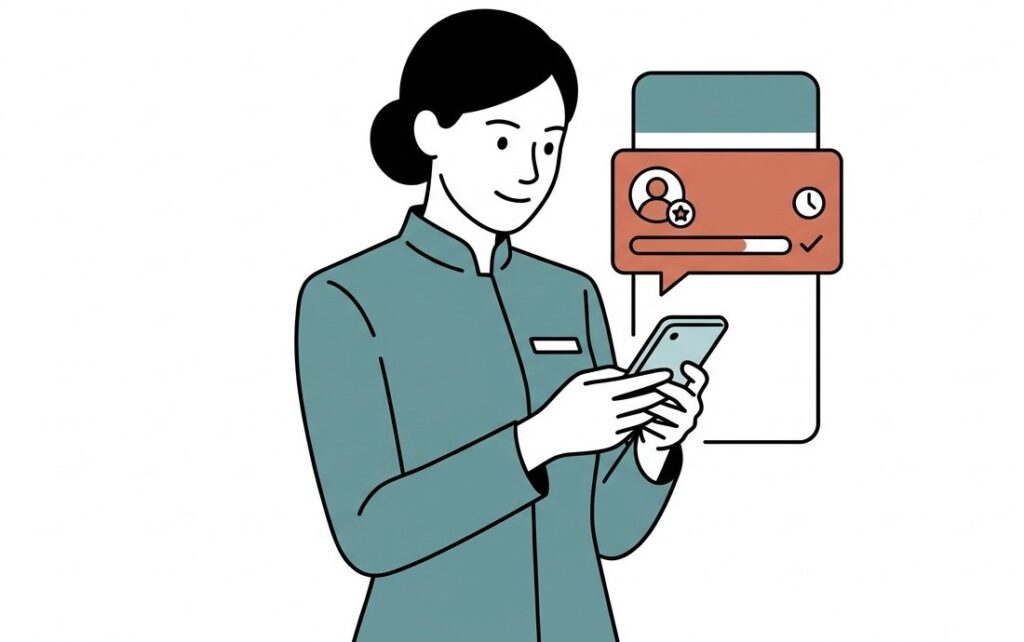
After that, staff enter complaints and requests in Geedesk instead of the logbook. The platform then takes over the routing.
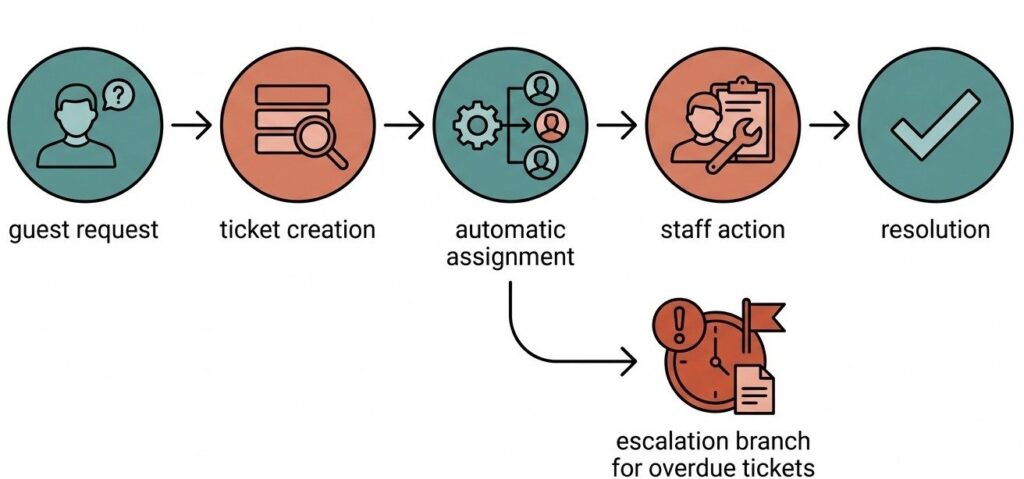
Automatic assignment sends each ticket to the right department and the right person, based on rules the hotel sets up. For instance, a request for a blocked sink goes to engineering, and a request for extra pillows goes to housekeeping. Nobody has to relay the message by phone.
Escalation policies handle the part that used to fail most often. If a ticket sits without action past its time limit, the system pushes it up to a manager. Alerts reach people by SMS, WhatsApp or the Geedesk mobile app, so the team does not need to sit at a desk to see them. Moreover, Geedesk works on feature phones, which matters for staff who do not carry smartphones on shift.
VIP alerts flag requests from priority guests the moment they come in. As a result, senior staff see those tickets first and can step in early.
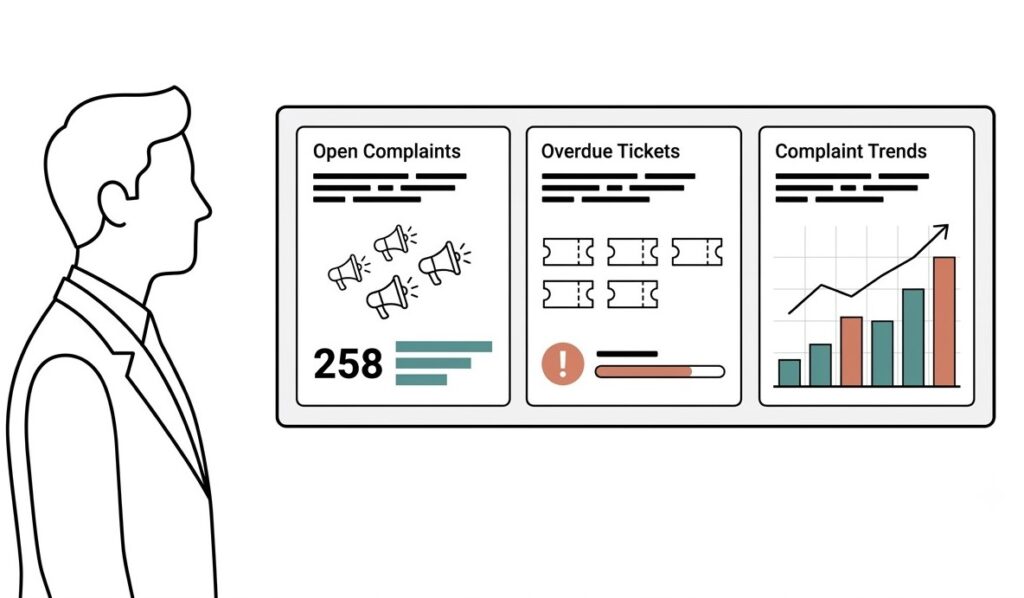
Meanwhile, the GM dashboard gives the general manager a live view of open tickets, overdue tickets and complaint trends by department. Consequently, the morning meeting changes from “what happened last night” to “what is still open right now.”
What the numbers can show
A hotel should measure four things for six months after go-live and compare them with the six months before. The figures below are examples of what a strong result can look like.
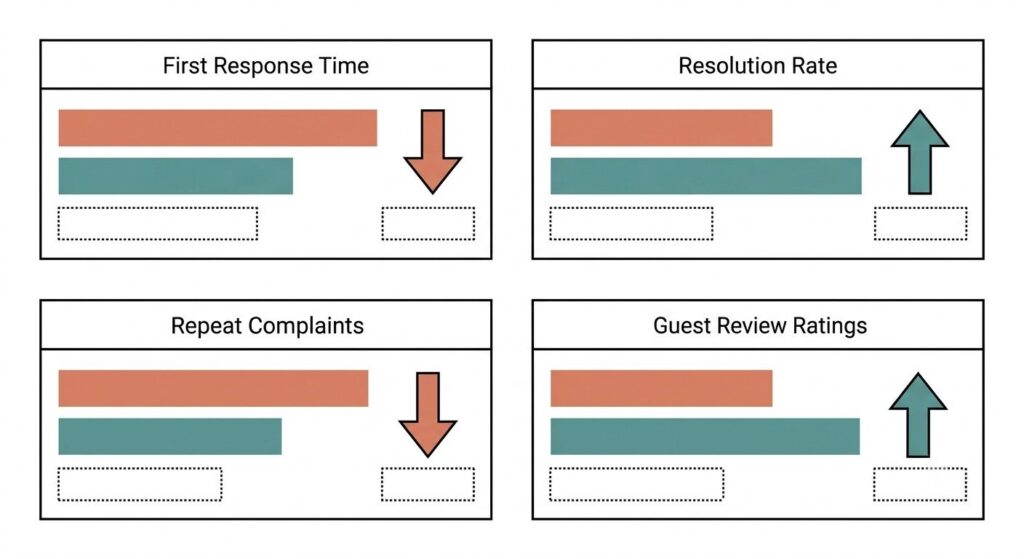
Response time comes first. In this example, average first response to a guest complaint falls from 38 minutes to 9 minutes. Automatic assignment removes the relay step, and escalation closes the silent gaps.
Resolution rate comes next. The share of complaints resolved within the hotel’s own time limit rises from 61% to 92%. Fewer tickets slip past their deadline because every ticket has a visible timer and a named owner.
Repeat complaints also drop. Repeat issues in the same room fall by about 30%. Once the team can see the history, engineering fixes root causes instead of patching symptoms.
Finally, review scores move. The average rating on major review sites climbs from 4.1 to 4.4. At the same time, reviews that mention slow follow up decrease, and more guests write about helpful, quick staff.
However, a word of caution is fair here. Review scores move for many reasons, including season, renovations and pricing. No complaint tool deserves full credit for a rating change. Still, a hotel can track its own complaint handling closely and see whether guests respond.
What each team tends to notice
Different roles feel the change in different ways.
The general manager notices control first. Problems show up on the dashboard while the issue is still open, instead of arriving later through a guest letter or a review.
The front office team, on the other hand, notices the end of guesswork at the desk. They can see who holds a request and how long it has been open. Because of that, they give guests a straight answer instead of a vague promise.
Housekeeping supervisors notice that they stop chasing information. The task arrives on the phone with the room number and the time limit, so they get on with the work.
Engineering notices the history. Since every past ticket for a room is visible, the team catches faults that keep returning and fixes a few of them properly for the first time.
Every team also meets a small hurdle. Staff must log requests instead of relying on a quick phone call, and some people resist at first. Fortunately, the fix is simple. Explain the reason, keep the entry steps short, and let the data show results within the first month.
What other hotels can take from this
Three lessons stand out for any property thinking about a similar move.
Start with ownership. A complaint with no clear owner will always be slow, no matter how skilled the team is. So fix this before you add any other rule.
Phase the rollout. Starting with two departments gives your team time to learn without risking live guest service. Then add the rest once the habit is set.
Measure from day one. A hotel can only show change if it recorded its starting point. Therefore, note your current response time and resolution rate now, even if the figures are rough.
The bigger point is about how a tool fits into hotel culture. Geedesk does not replace the team’s judgment. Instead, it removes the relay work, the memory work and the chasing, so people can spend their time fixing the problem in front of them.
Where Geedesk fits for your property
Every hotel has its own mix of departments, shifts and systems. If your team still tracks complaints through calls, chat groups and a logbook, you likely see the same gaps described above: unclear ownership, no live view and hidden patterns.
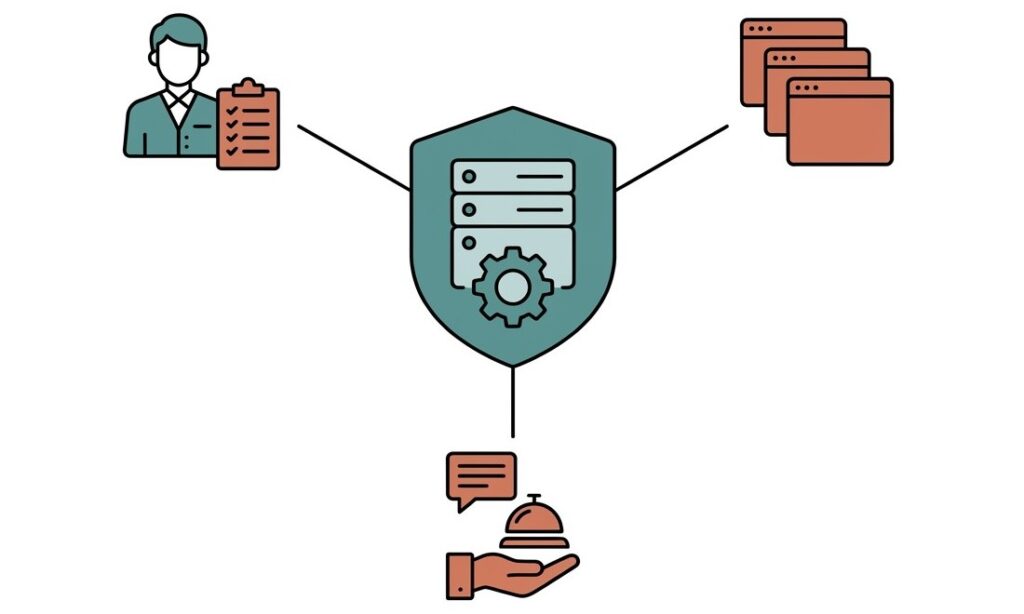
In addition, Geedesk connects with systems such as Oracle Opera, WinHMS and IDSNext, so your complaint workflow can sit beside the tools your staff already use.
The easiest way to see how this would work for you is to watch it run on your own scenarios. Book a demo with the Geedesk team, bring a few real complaints from last month, and see how each one would move through the platform.