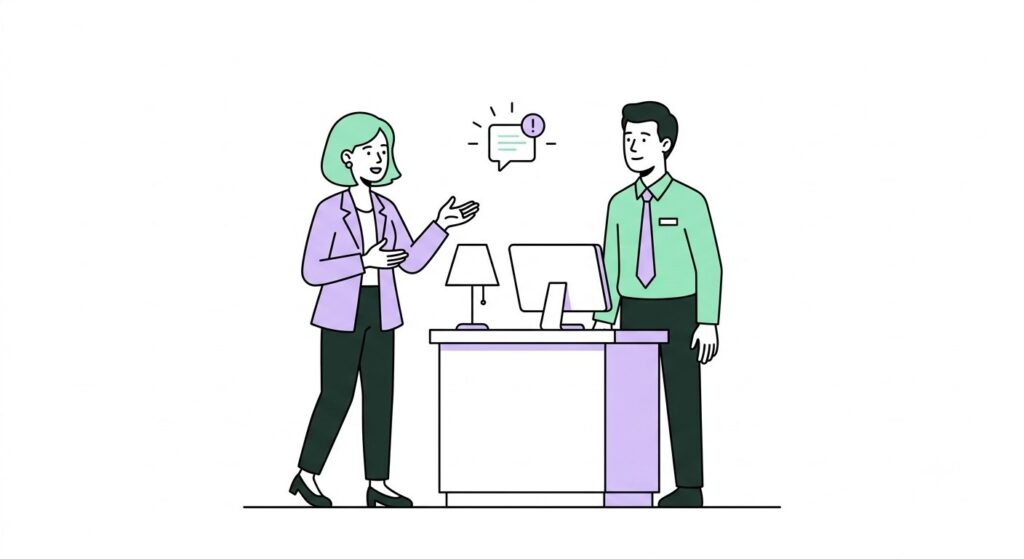
When a guest calls the front desk at 11 PM to report a broken air conditioner, three things need to happen fast. The right person on duty logs the request, takes ownership, and confirms the resolution before the guest needs to call again.
In a hotel, that chain has to work across departments, across shifts, and under pressure.
Most hotels that outgrow spreadsheets and group chats reach for a familiar name in help desk software. The tools look polished, include solid documentation, and stay easy to set up. They work well for a while, but operational gaps eventually start to appear.
This is not a knock on those platforms. They were built for a specific environment, and they perform well there.The issue is that hotels are not that environment, and the gap between the two is wider than most property managers realise until they are already inside it.
What Generic Help Desk Tools Actually Do
Most help desk platforms focus on customer support environments in which agents sit at desks, follow predictable schedules, and respond to customer questions via email, chat, or phone.
The model follows a straightforward path. A customer submits a ticket, an agent takes ownership, resolves the issue, and closes the ticket.
That model works when your support team has stable login sessions and consistent availability across a shift. It also assumes that the person raising the ticket and the person resolving it operate in the same timezone of urgency. Hotels do not work that way.
Please direct a housekeeping request raised at 8 AM to a floor attendant, not a manager or the front desk. A maintenance fault logged mid-afternoon needs to reach whoever is on shift right now, not whoever handled the previous assignment. A guest complaint about noise at midnight needs an escalation path that does not depend on a supervisor checking their inbox.
Generic tools overlook these operational realities. They provide ticket queues, while hotels need operational routing.
The Shift Problem
Why off-duty assignments cost you more than you think
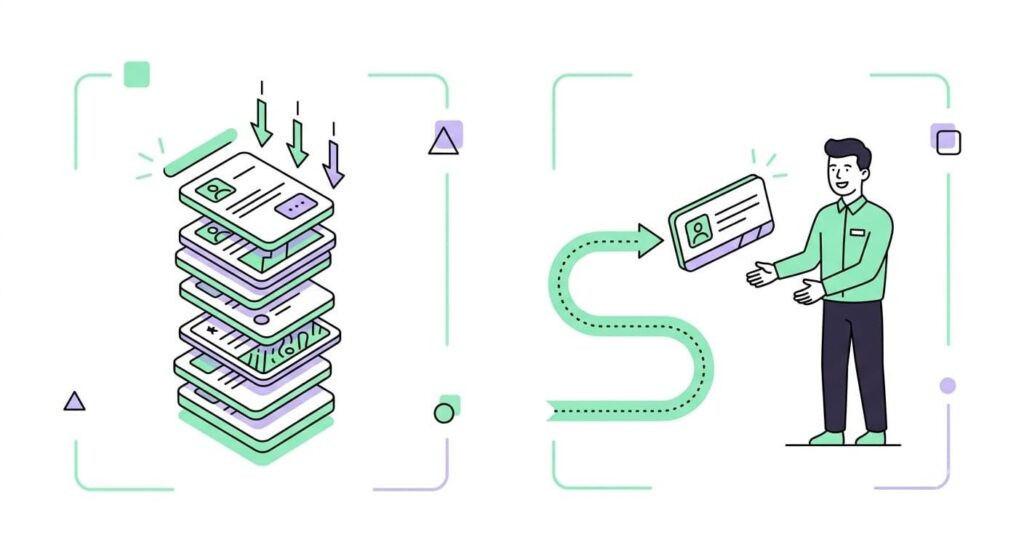
In a hotel, staff rotate across three shifts. Who is on duty changes every eight hours. Most help desk platforms revolve around named agents and persistent queues.
When a system routes a ticket to a room attendant who clocked out two hours ago, the ticket sits unresolved, the guest keeps waiting, and valuable time passes before someone notices and reassigns it.
Geedesk routes tasks based on who is actually on duty at the moment the request comes in. When a shift ends, open tasks do not sit idle. They move to the next responsible person automatically. The system knows the roster, the department, and routes accordingly.
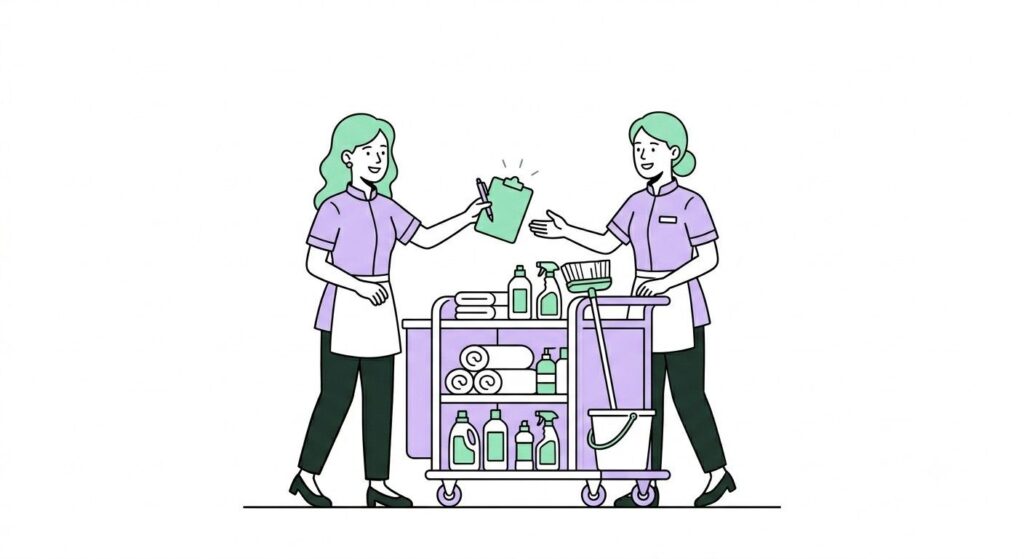
What seems like a minor operational detail can cost hotels hours of resolution time every day as requests sit with off-duty staff instead of reaching employees who are available to act.
In a property where room turnovers, maintenance windows, and service delivery all run on tight schedules, an hour of avoidable delay compounds across the day.
The problem is also invisible until you look for it
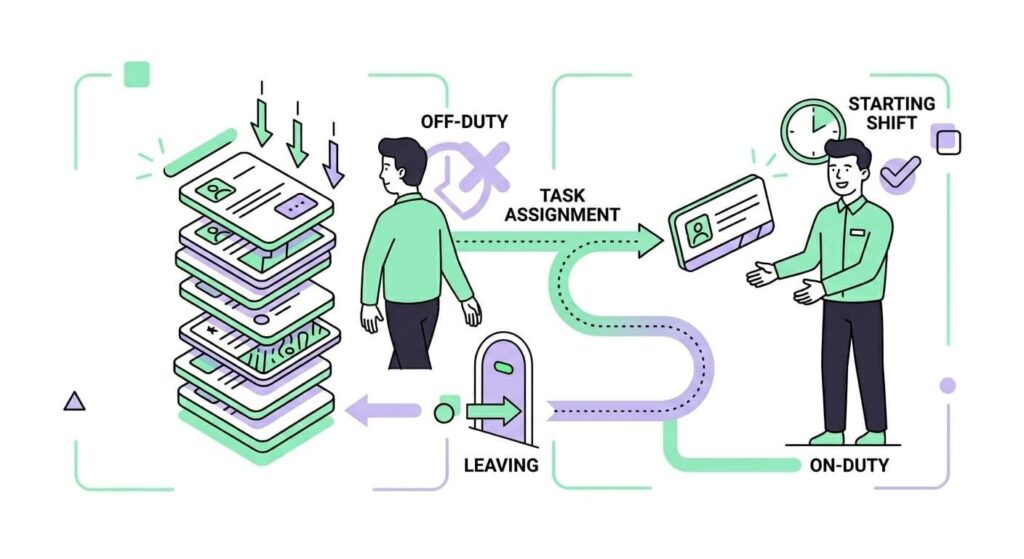
Most properties running generic platforms do not have a clean way to measure how many tasks stall at shift boundaries. They see the symptom, a guest complaint or a late resolution, without connecting it back to the routing gap that caused it.
Department-Specific Workflows
One platform, five departments, zero confusion
A hotel runs several parallel operations at the same time: housekeeping, maintenance, food and beverage, front office, and security. Each has its own task types, its own urgency levels, and its own escalation logic.
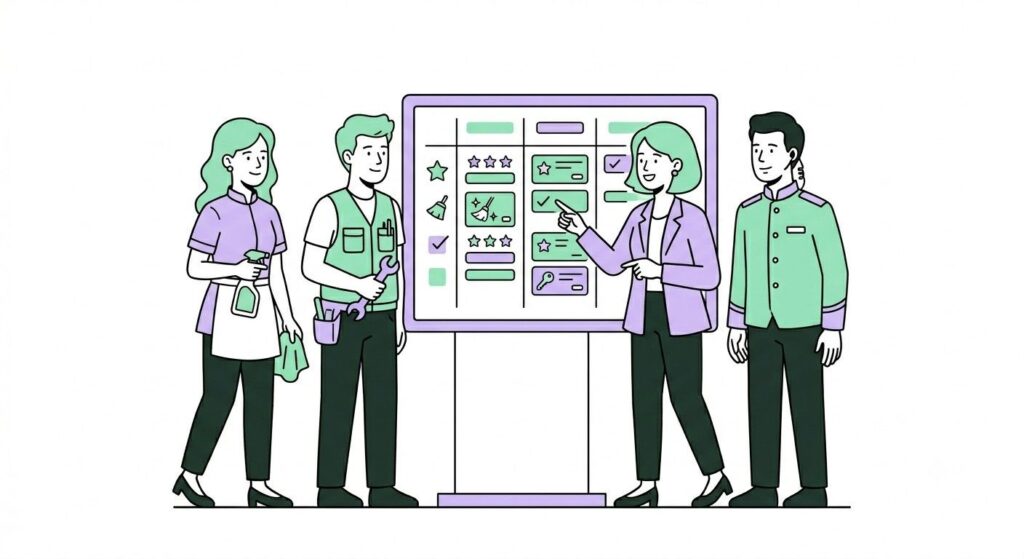
Hotels can configure generic platforms to support department-specific routing to a certain extent. It is possible, but it takes significant setup time and ongoing maintenance. Every roster change, every new department rule, and every shift adjustment requires someone to rebuild the logic in the platform.
For most hotel operations teams, that is not a realistic ask.
Geedesk ships with hospitality workflows built in. Housekeeping tasks look different from maintenance requests, which look different from guest complaints, because they are different. An operations manager can adjust department rules, reassign task categories, or update escalation triggers without touching a configuration panel that requires technical knowledge.
The cost of generic tools grows with your portfolio
A single-property hotel with a small team can absorb the friction of manual configuration. A hotel group running multiple properties cannot.
When a workflow breaks at one site, someone from IT or operations has to diagnose and fix it. When that happens across five or ten properties, the maintenance burden becomes a real cost that never appears on the original software evaluation.
A purpose-built platform stays aligned with how the property actually runs, not one that drifts out of sync every time something on the floor changes.
Escalation Rules That Reflect Hotel Operations
Context changes everything
In a standard support environment, escalation usually means moving a ticket from a frontline agent to a senior one. The path is predictable, and the hierarchy is flat. Hotel escalation is more conditional.
A noise complaint at 10 PM might go to security. The same complaint at 2 AM might go directly to the duty manager. A maintenance issue open for 30 minutes on a busy Friday may need a different response than one open for the same time on a quiet Tuesday. A VIP guest request carries different urgency than a standard room request, even if the task type is identical.
Geedesk builds that context into escalation logic. Time of day, department, request type, elapsed time, and guest category all factor into how a task moves through the system. Nothing needs to be managed manually.
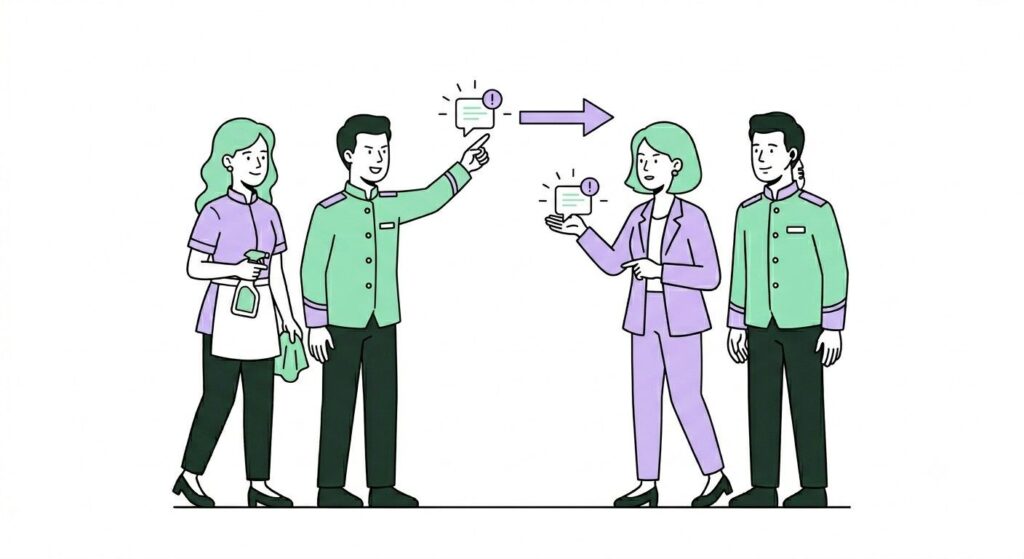
Why verbal escalation chains break down
Many properties still handle escalation through phone calls and WhatsApp messages. Verbal chains are fast when they work. When someone misses a call or leaves a message unread, the request falls through the cracks because teams have no record to track it and no fallback to keep it moving.
A system-driven escalation path creates accountability at every step without adding friction to the team.
What Hotels Report After Switching
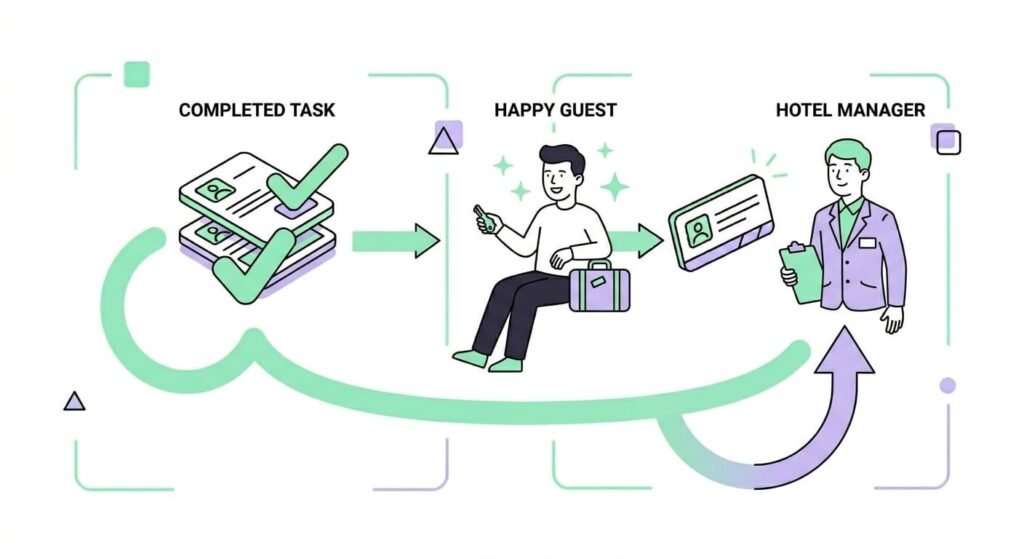
The operational changes that follow a move to a hospitality-first platform tend to show up in three consistent areas.
Resolution time drops
When tasks reach the right person on the first attempt, the back-and-forth that eats up resolution time disappears. Staff are not manually reassigning tickets. Supervisors are not chasing open requests.
At a 200-room independent property in South India, the housekeeping supervisor spent the first 90 minutes of every shift redistributing tasks that the overnight team had assigned to off-duty staff. After the hotel moved to Geedesk, shift-aware routing automatically assigned tasks to available employees, freeing up the supervisor’s mornings. As a result, the housekeeping team completed more rooms before the 11 AM checkout window during the first week after go-live.
Reconfiguration stops being a project
A mid-size business hotel built custom routing rules in their previous platform. When they restructured their maintenance shift schedule, the existing rules no longer matched the new roster. The system routed tasks incorrectly for nearly three weeks before the team identified and fixed the issue. The fix required outside technical help and took longer than the restructure itself.
After migrating to Geedesk, the same operations manager updated the new shift structure through the platform’s department settings in under an hour, without a single support ticket.
Guest complaints decrease
A significant share of guest complaints in hotel operations are not about the original problem. They are about the wait.
When a guest reports a cold shower and the ticket sits in the wrong queue for three hours, the complaint that follows is about the response, not the shower. Faster routing reduces the window for that second complaint to form. It also gives the front desk something concrete to tell the guest: the team logged the request, assigned it to the right staff member, and is actively handling it. That alone changes how a guest experiences a service failure.
Staff get their time back
When the platform does not fit the operational environment, staff must step in to correct routing errors, handle missed escalations, and resolve stale tickets. That intervention adds up across a week. When the platform routes correctly from the start, that time goes back to the people who need it.
The Right Question to Ask
When evaluating task and request management software for a hotel, the right question is not which platform has the most features or the most recognisable name. What matters is whether the platform matches the environment you actually operate in.
Most help desk vendors build their tools for support agents who work at desks. Geedesk supports staff who work across hotel floors. That difference shapes every part of the product, from task routing and shift management to escalation workflows and the amount of ongoing maintenance a property needs to keep the system running effectively.
Hotels using tools built for other industries are not using bad software. They are using software built for a different problem. The cost of that mismatch does not show up on a pricing comparison. It shows up in resolution times, in guest feedback, and in the hours each week that operations staff spend correcting a system instead of running a hotel.
If your property carries that overhead today, see how your teams operate when software supports the realities of hotel operations. Geedesk offers a guided walkthrough for operations teams who want to compare their current setup against a hospitality-first workflow. No sales pitch. Just a look at how the two approaches handle the same scenarios your team deals with every day.