Every spring, billions of people around the world decorate eggs, eat chocolate, attend church services, and spend time with family. Some do all of these things. Others do just one or two. But almost everyone calls it Easter.
So what exactly is Easter? Where did it come from? And why do rabbits and eggs show up at a Christian holiday? Please allow us to walk you through all of it, step by step.
What Is Easter?
Easter is one of the most important holidays in Christianity. It marks the resurrection of Jesus Christ, which Christians believe happened three days after his crucifixion.
According to the Bible, Jesus died on a Friday (now called Good Friday) and rose from the dead on Sunday morning. That Sunday is Easter.
For Christians, the resurrection is the foundation of their faith. It is not simply a historical event that they remember once a year. It is the moment they believe changed everything about life, death, and what comes after.
People around the world celebrate Easter warmly, even outside religious traditions.For them, it is a spring festival, a time for family, and a perfectly good reason to enjoy a lot of chocolate.
Both versions of Easter exist side by side in most countries, and both are entirely welcome.
When Does Easter Happen?
This is where things get a little interesting.
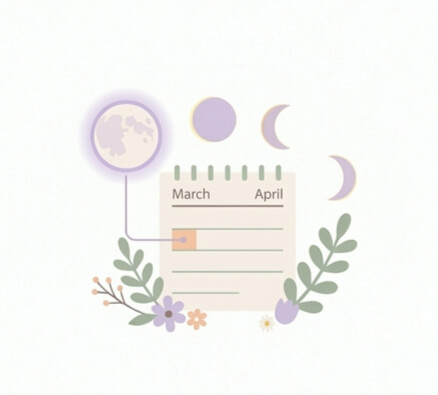
Easter does not fall on the same date every year. It moves around between late March and late April.
The reason goes back to an old formula tied to the lunar calendar. Easter Sunday falls on the first Sunday after the first full moon that occurs on or after March 21, the spring equinox in the Northern Hemisphere.
That rule was established at the Council of Nicaea in 325 AD, and most Western churches still follow it today.
Eastern Orthodox Christians, however, follow a different calendar (the Julian calendar rather than the Gregorian one), so their Easter often falls on a different date. In some years, the two Easterlings coincide beautifully. In other years, they are several weeks apart.
The Story Behind Easter
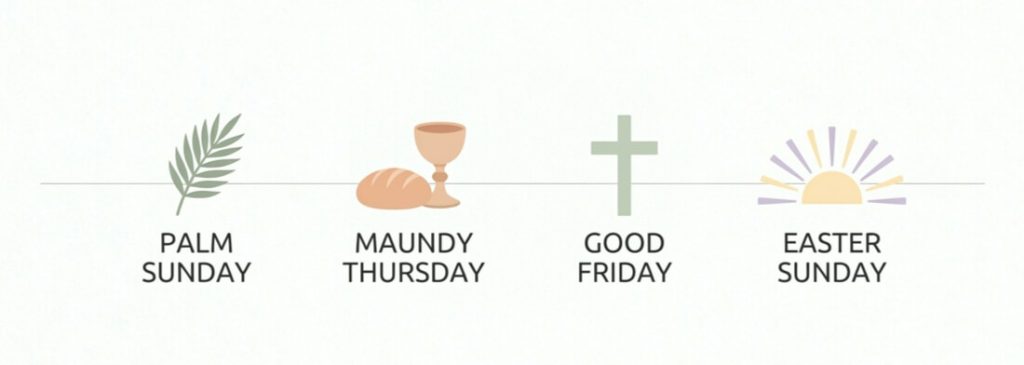
To truly appreciate Easter, it helps to start with Holy Week, the seven meaningful days that lead up to it.
Palm Sunday opens the week. Christians remember the day Jesus rode into Jerusalem on a donkey while crowds waved palm branches and welcomed him with great joy.
Maundy Thursday (also called Holy Thursday) marks the Last Supper, the final meal Jesus shared with his disciples before his arrest. At this meal, Jesus washed his disciples’ feet and introduced what Christians now call Communion, or the Eucharist, sharing bread and wine as symbols of his body and blood.
Good Friday is one of the most solemn and reflective days in the Christian calendar. Jesus was arrested, tried, and crucified on this day. Despite its name, Good Friday is a day of deep reverence. The word “good” here is believed to come from an older English usage meaning “holy.”
Holy Saturday is a quiet day of waiting and reflection.
Then comes Easter Sunday, the day of great celebration and joy.
Where Did the Word “Easter” Come From?
This is a question historians still discuss with great curiosity.
The most widely shared theory traces the word to Eostre (or Ostara), a Germanic goddess of spring and fertility. The 8th-century monk Bede mentioned her in his writings. Some scholars accept this connection. Others respectfully suggest that Bede may have exaggerated it and that the word simply comes from the Old English word for “east,” referring to the direction of the rising sun.
In many other languages, the word for Easter has no connection to any of this. In French it is Pâques, in Spanish it is Pascua, and in Italian it is Pasqua. These all come from the Hebrew word Pesach, meaning Passover. That connection makes a great deal of sense, since Jesus’s crucifixion took place during Passover, the Jewish holiday that commemorates the Israelites’ liberation from Egypt.
So in most of the world, Easter is linguistically tied to Passover. In English and German, it simply took a different path.
Why Are There Eggs and Rabbits?
This is the question almost everyone asks at some point, and it is a very fair one.
Eggs have symbolized new life and rebirth across many cultures for thousands of years, well before Christianity.
Early Christians adopted the egg as a symbol of the resurrection because, much like a sealed tomb, an egg appears closed and still, yet life breaks out of it with quiet wonder. In some Eastern Orthodox traditions, eggs are dyed red to represent the blood of Christ.
The art of decorating Easter eggs goes back centuries. In many European countries, it is a deeply respected craft. Ukrainian pysanky eggs, for example, are covered in intricate geometric patterns and have been lovingly made for over a thousand years.
The Easter Bunny is a more recent tradition, and its origins are a little less clear. Rabbits have long been gentle symbols of spring and new life in European folklore. The specific idea of a gift-giving Easter Bunny appears to have come from German immigrants who brought the tradition of “Osterhase” (the Easter Hare) to America in the 18th century. Children would make small nests for the hare to fill with colored eggs. Over time, the nests became baskets, and the eggs became candy and toys.
There is no direct religious connection between the Easter Bunny and Christianity. It is a folk tradition that grew into something the whole family could enjoy together.
How Different Countries Celebrate Easter
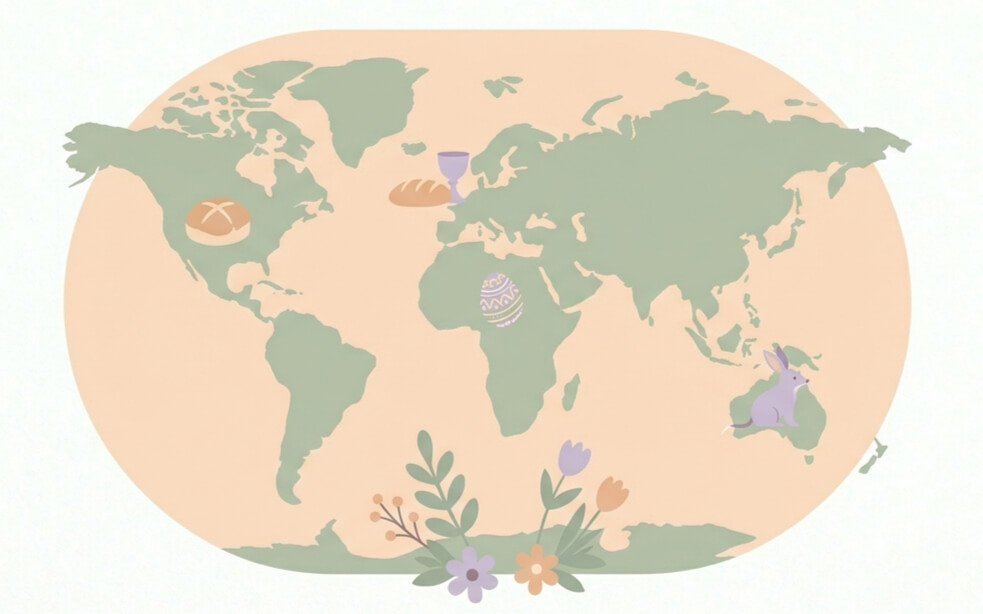
Easter looks beautifully different depending on where you are in the world.
In the United States and Canada, Easter Sunday typically means church services in the morning, Easter egg hunts for children, and family dinners in the afternoon. The Easter Bunny brings baskets of candy and small gifts. Hot cross buns and ham are common and much-loved foods.
In the United Kingdom, Simnel cake (a fruit cake topped with marzipan) is a cherished Easter tradition. Children and adults alike enjoy rolling hard-boiled eggs down hills.
In Greece and other Orthodox countries, Easter (Pascha) is the most important holiday of the entire year, celebrated even more grandly than Christmas. Midnight church services mark the moment of resurrection, and families come together to crack red-dyed eggs. Slow-roasted lamb is the heart of the Easter meal.
In Ethiopia, Easter (Fasika) follows a 55-day fast observed with great discipline. The celebration includes church services that continue through the night, followed by joyful feasting with family and community.
People in the Philippines observe Holy Week with deep reverence. Some communities stage live reenactments of the crucifixion as a sincere expression of faith and devotion.
In Sweden, children dress up as Easter witches called Påskkärringar and go door to door to collect treats. It is a charming and lighthearted tradition that many Swedish families treasure.
In Poland, Śmigus-dyngus (Wet Monday) falls on the day after Easter, when people cheerfully splash each other with water. Everyone thoroughly enjoys the chaotic fun.
In Australia and New Zealand, Easter arrives in autumn rather than spring. The Easter Bilby has also emerged as a sweet local alternative to the Easter Bunny, since wild rabbits unfortunately cause ecological harm in Australia.
Easter Foods Around the World
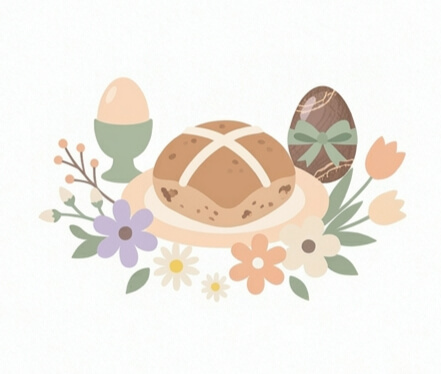
Food plays a warm and central role in Easter celebrations everywhere you look.
Hot cross buns appear across Britain, Australia, and the Commonwealth.
People traditionally enjoy these soft, spiced buns with a cross on top on Good Friday.
Lamb is a common choice across Mediterranean and Middle Eastern Christian communities, where it carries the meaningful symbol of Jesus as the “Lamb of God.”
Easter bread takes many wonderful forms: Italian colomba (shaped like a dove), Greek tsoureki (beautifully braided), and Russian kulich (a tall, sweet ceremonial bread).
Chocolate Easter eggs became popular in the 19th century after chocolatiers like John Cadbury found a way to mold chocolate into hollow shells. Today, chocolate Easter eggs bring joy to people of all ages and represent a truly global tradition.
Easter and Sustainability: A Thoughtful Conversation
Recently, many families and communities have begun thinking about the environmental footprint of Easter. Billions of plastic Easter eggs find their way into landfills each year, and excess packaging from chocolate adds to the concern.
Some households have lovingly shifted toward more thoughtful celebrations: wooden eggs, natural dyes made from vegetables, and less single-use plastic.
It is a small but meaningful movement, and it shows how even the oldest traditions can grow in kinder directions.
Easter in Numbers
To appreciate just how wide this holiday reaches:
The National Retail Federation has estimated that Americans alone spend over 20 billion dollars on Easter each year. Chocolate sales rise sharply in the weeks before the holiday. More than two billion Christians celebrate Easter in some form around the world. The holiday supports enormous and thriving industries in food, tourism, and retail.
Why Easter Still Matters
Whether you celebrate Easter for religious reasons or simply enjoy the season, this holiday touches something genuinely meaningful. It speaks of renewal. Spring returns. Flowers bloom. Days grow longer and warmer. For Christians, it carries the powerful story of hope beyond death. For secular celebrators, it offers a welcome reason to gather, share a meal, and remind one another that warmth always follows the cold.
That is a message that travels across cultures, languages, and beliefs with very little translation needed.
Easter endures because it reaches toward one of the oldest and most deeply felt human hopes: that endings are not truly endings, and that new life waits patiently on the other side of every difficult season.
A little chocolate along the way makes the celebration even better.
Wishing you a season of fresh starts, brighter days, and joyful moments.
Happy Easter from Team Geedesk.